
B2B Replatforming: 7 mistakes to avoid before migrating
Planning a B2B replatforming project? Discover the 7 mistakes that lead to failure and learn how to secure a successful migration.
Article summary
- 90% of replatforming projects deliver increased revenue post-migration, and 92% of merchants report satisfaction with their new platform.
- 83% of projects fail during the data migration phase: underestimation of complexity, insufficient testing, ill-equipped target platform.
- A well-prepared migration generates +40% organic traffic by month 3 due to performance gains and preservation of SEO equity.
- 73% of B2B buyers now expect a digital experience equivalent to B2C: self-service, transparent pricing, real-time order tracking.
- The B2B e-commerce market will reach $36 trillion by 2026, with a CAGR of 14.5%, making inaction riskier than migration itself.
.jpg)
Replatforming is not just a simple migration. Migration consists of transferring data and workflows from one system to another. Replatforming also questions the architecture, the operational model, and the purchasing experience. This nuance changes everything: a project treated as a technical swap reproduces the same constraints in a more modern interface. A project treated as a strategic reset breaks the invisible frictions that have slowed down business for years. In B2B, the stakes are multiplied by business complexity: pricing grids by client, hierarchical purchase order validation, ERP integration, 30 or 60-day payment terms.
B2B Replatforming: what to understand before starting
Migration vs. replatforming: two distinct ambitions
A migration moves what exists to a new foundation. A replatforming rethinks the architecture, the buyer journey, and the commercial operation. Concrete example: a company moving from Magento Open Source to Shopify Plus while transferring its 50,000 SKUs without touching the catalog structure is performing a migration. A company that restructures its catalog, rethinks its distributor self-service, and connects its ERP in real-time bidirectional sync is performing a replatforming.
7 mistakes that cause a replatforming project to fail
Projects that go off track rarely have a technology problem. The problem comes from governance, framing, and execution discipline. Here are the seven recurring mistakes observed on B2B replatforming projects, with their quantified consequences and the countermeasures to activate.
- Choosing the platform before defining requirements. Selecting based on demos or publisher notoriety leads to a poor functional match. Define critical workflows first (RFQ, negotiated prices, multi-validation), then compare.
- Underestimating data migration. 83% of failures come from this. Products, clients, orders, history, negotiated prices: plan an iterative recovery plan with completeness checks.
- Treating SEO at the end of the project. Without a 301 redirect plan prepared in advance, losses reach 40 to 70% of organic traffic. Map all strategic URLs before going live.
- Excluding salespeople from the project. If the sales force is not associated with the framing, client adoption will fail. Integrate a sales representative into the project committee from month 1.
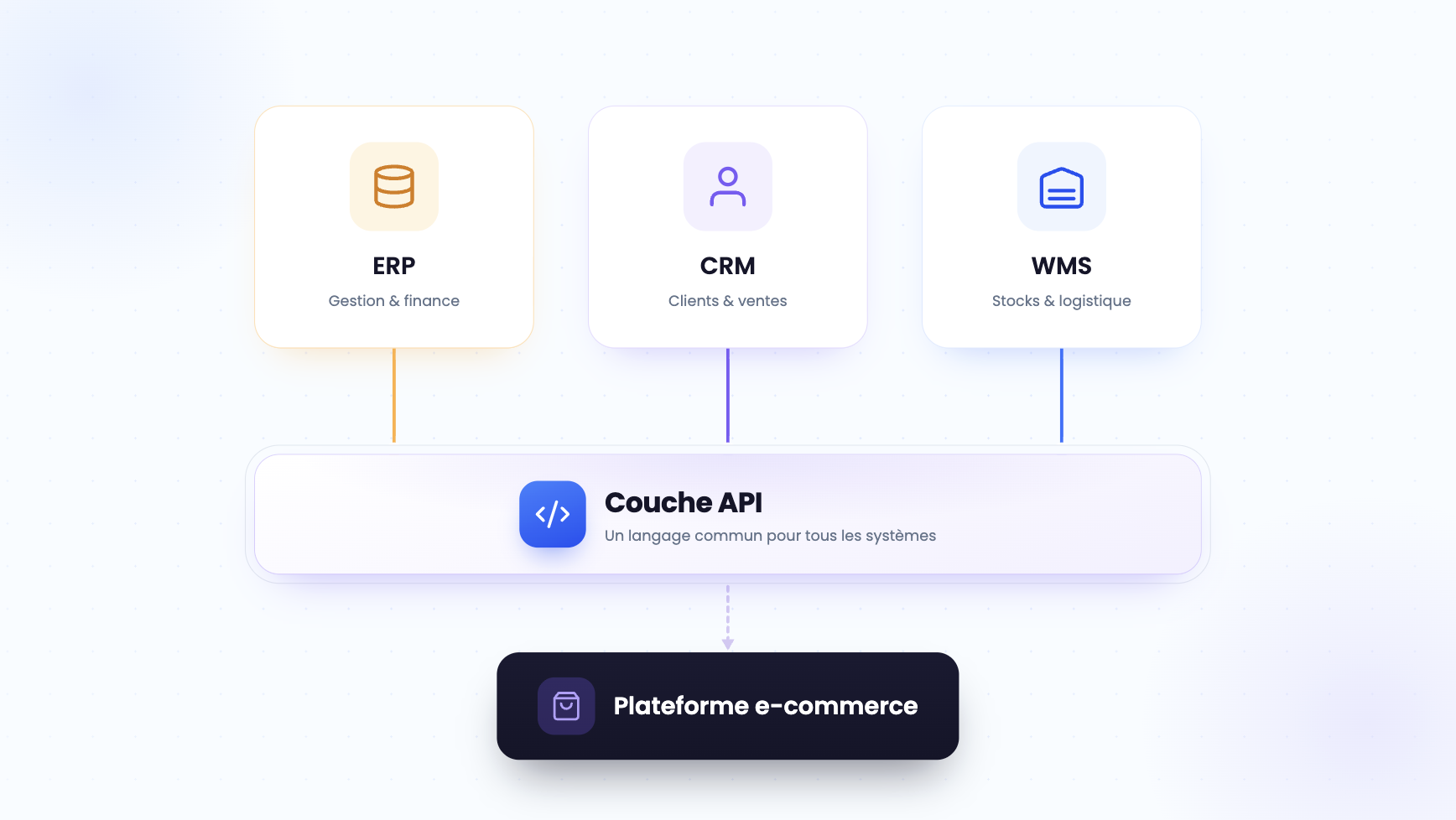
- Neglecting ERP integration. Connecting SAP, NetSuite, Sage, or Oracle represents 30 to 50% of the project budget. Map bidirectional flows before the RFP.
- Underfunding change management. A platform adopted by 30% of B2B buyers is a failure. Plan for training, documentation, and post-launch support for at least 90 days.
- No monitoring 90 days after go-live. Critical anomalies (errors in orders, misconfigured accounts, virtual stock shortages) appear in the first 60 days. Daily monitoring is mandatory during this period.
5-step framing method to secure the project
Rigorous framing halves the risk of failure. Here is the sequence to follow before choosing an integration partner. Each step produces a concrete deliverable, usable by your steering committee and by competing agencies. The goal is not to plan everything in detail but to structure the variables to make decisions traceable and defensible.
On the projects we support, framing phases represent 15 to 20% of the total project duration, but prevent 70% of incidents in the production phase. The temptation to shorten the framing to advance faster is one of the most frequent causes of failure. For a market overview and a comparison of solutions, consult our article on which B2B eCommerce platform to choose.
Measuring replatforming success: 6 KPIs to follow
A project without clear success indicators inevitably slides toward a subjective reading at the time of review. Six indicators structure a steering dashboard usable from the moment of go-live. They cover the technical, business, and buyer experience dimensions. Add these to the chosen B2B site software before go-live to have a repository usable in weekly steering committees.
- B2B Conversion Rate. Measured based on logged-in sessions, excluding anonymous visitors. Target: maintenance or improvement vs. the old site from month 2.
- Organic Traffic. Daily tracking post-migration in Search Console. Tolerance of -20% in month 1, return to equivalent by month 3, +40% expected by month 6 if SEO optimization is well conducted.
- Self-Service Adoption. Percentage of orders placed in autonomy vs. sales-driven order taking. Target: 50% by month 6, 70% by month 12.
- Processing time per order. Before/after replatforming. Typical gain: going from 5 minutes to 30 seconds per order on self-service flows.
- Billing error rate. Gap between price displayed online and invoiced price. Zero tolerance after month 1.
- Net Promoter Score for buyers. Quarterly survey of active B2B accounts, to be compared to the pre-migration baseline.
FAQ
What is the difference between migration and replatforming?
Migration moves data and content from one platform to another. Replatforming is a deeper change: new architecture, new operational model, new buyer experience. A project treated as a simple migration reproduces existing constraints. A well-conducted replatforming is the opportunity to overhaul commercial and operational processes.

How long does a B2B replatforming project take?
For a mid-market B2B project, count 6 to 9 months between framing and go-live. For an enterprise project with ERP integration, multi-entity, and marketplace, the delay increases to 9 to 18 months. The framing phase represents 15 to 20% of the time, development 50%, acceptance and production 20%, post-launch support 10%.
How to avoid losing SEO traffic during a replatforming?
Three levers: a page-by-page 301 redirect plan, validated before production, based on a full crawl of the old site crossed with Search Console and Ahrefs; preservation of structured data (Product, FAQPage, BreadcrumbList); daily monitoring over 90 days post-go-live with automatic alerts.
What budget should be planned for a B2B replatforming?
For a mid-market B2B project, plan for €100,000 to €350,000 in year 1 (license, integration, development, support), then €50,000 to €150,000 per year for run. For enterprise projects, the ticket can exceed €500,000. The total 36-month cost must be systematically modeled before any RFP.


.png)