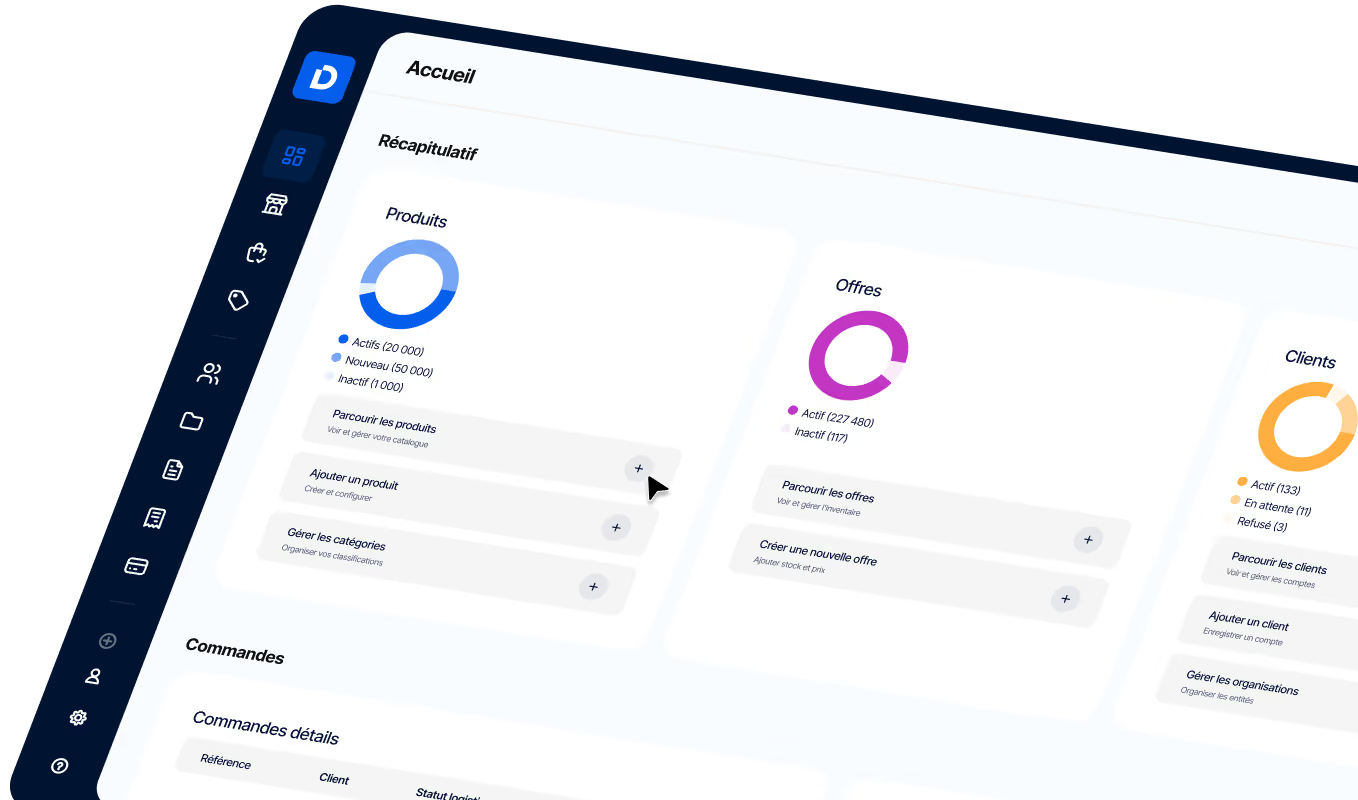
B2B Orders: How AI Can Turn Chaos Into Control
In a time when businesses operate within an increasingly complex supply chain ecosystem, effective order management is essential to success. Traditionally, order processing, fulfillment, and tracking were labor-intensive tasks that were prone to errors and unexpected disruptions. But the rise of artificial intelligence (AI) has transformed order management, bringing new levels of automation, accuracy, and efficiency. This article explores how AI optimizes order processing, fulfillment, and tracking, with real-world examples and academic insights into the role of AI-powered solutions in modern commerce.
Article summary
In an era where businesses operate in an increasingly complex supply chain ecosystem, efficient order management is critical to success. Traditionally, order processing, fulfillment, and tracking have been labor-intensive, prone to errors, and affected by unpredictable disruptions. However, the advent of Artificial Intelligence (AI) has transformed order management, introducing unprecedented levels of automation, accuracy, and efficiency.
This article explores how AI optimizes order processing, fulfillment, and tracking, providing real-world examples and academic insights into the role of AI-driven solutions in modern commerce.

How AI Is Revolutionizing Order Management: From Chaos to Control
In an era where businesses operate in an increasingly complex supply chain ecosystem, effective order management is essential to success. Traditionally, order processing, fulfillment, and tracking were labor-intensive tasks prone to errors and unpredictable disruptions. But the rise of artificial intelligence (AI) has transformed order management, bringing new levels of automation, accuracy, and efficiency.
This article explores how AI improves order processing, fulfillment, and tracking, with real-world examples and academic insights into the role AI-powered solutions play in modern commerce.
AI in Order Processing: Automating and Optimizing Workflows
Order processing is one of the most time-sensitive parts of supply chain management. AI-powered systems are changing the game by automating tasks such as data entry, validation, and invoicing, reducing human intervention and minimizing errors.
Key Applications of AI in Order Processing
- Intelligent order routing: AI algorithms analyze factors such as inventory levels, demand forecasts, and supplier reliability to determine the most efficient fulfillment center for each order.
- Chatbots and virtual assistants: AI-powered customer service tools help customers place, modify, and track orders, improving response times and the user experience.
- Natural language processing (NLP): AI systems use NLP to interpret and process purchase orders, reducing manual data entry and streamlining approval workflows.
Example: Amazon's AI-Driven Order Management
Amazon optimizes order processing through predictive analytics and robotic process automation (RPA). AI enables dynamic inventory allocation, ensuring products ship from the nearest warehouse, which reduces delivery times and costs.
Academic Perspective
A study by Ivanov et al. (2021) in the International Journal of Production Economics highlights how AI-based predictive analytics improves order accuracy and cuts processing time by up to 40%.
AI in Order Fulfillment: Improving Speed and Accuracy
AI plays a critical role in improving the efficiency of order fulfillment operations, from warehouse management to last-mile delivery.
Key Applications of AI in Order Fulfillment
- Warehouse automation: AI-driven robots and automated guided vehicles (AGVs) optimize picking, packing, and sorting processes.
- Demand forecasting: Machine learning (ML) models analyze historical sales data, market trends, and external factors such as weather conditions and economic indicators to predict demand and optimize inventory levels.
- Supply chain optimization: AI-powered solutions strengthen collaboration with suppliers, reducing lead times and ensuring smooth order fulfillment.
Example: Walmart's AI-Optimized Fulfillment Strategy
Walmart uses AI and robotic process automation (RPA) in its distribution centers to reduce picking and packing times. AI-driven warehouse management systems (WMS) use real-time data to optimize inventory placement, reducing retrieval times.
Academic Perspective
According to a 2022 study by Faccio et al. published in the Journal of Business Logistics, AI-based warehouse management systems can improve order fulfillment efficiency by up to 30%, reducing stockouts and overstock issues.
AI in Order Tracking: Real-Time Visibility and Predictive Analytics
Order tracking has evolved from simple shipping updates into sophisticated AI-driven systems that deliver real-time visibility and intelligent forecasting.
Key Applications of AI in Order Tracking
- Real-time shipment monitoring: AI integrates IoT sensors and GPS tracking to provide instant updates on order location.
- Predictive ETA (estimated time of arrival): AI-powered predictive analytics anticipates delivery times by factoring in traffic conditions, weather forecasts, and historical data.
- Proactive issue resolution: AI systems detect potential delays and automatically recommend alternative routes or solutions to minimize disruptions.
Example: DHL's AI-Driven Tracking System
DHL uses AI-powered predictive analytics to optimize delivery routes and estimate ETAs with greater accuracy. The company's AI system anticipates potential disruptions and dynamically reroutes shipments to help ensure on-time delivery.
Academic Perspective
A 2023 study by Xu et al. published in Supply Chain Management Review shows that AI-enhanced tracking systems increase delivery accuracy by 20% and reduce customer complaints by 35%.
AI is transforming order management from a chaotic, error-prone process into an intelligent, streamlined system. By automating order processing, optimizing fulfillment, and improving tracking, AI doesn't just boost efficiency — it also improves customer satisfaction and business profitability. Companies that adopt AI-powered solutions gain a competitive edge, helping them stay agile and resilient in an increasingly complex supply chain.
As AI technology continues to evolve, its impact on order management will only grow, paving the way for a future where real-time decision-making, automation, and predictive intelligence redefine how businesses operate.
References
- Ivanov, D., Dolgui, A., & Sokolov, B. (2021). "Artificial Intelligence in Supply Chain Resilience: A Review and Future Directions." International Journal of Production Economics.
- Faccio, M., Gamberi, M., & Bortolini, M. (2022). "The Role of AI in Optimizing Warehouse Management Systems." Journal of Business Logistics.
Xu, Y., Li, C., & Zhang, P. (2023). "AI-Enhanced Tracking Systems: Impact on Delivery Performance and Customer Satisfaction." Supply Chain Management Review.





.jpg)