B2B Customer experience: build a modern buying journey
Learn how to design a modern B2B customer experience that boosts loyalty, retention, and revenue across digital and human touchpoints.
Article summary
- B2B customer experience now mirrors B2C expectations: buyers demand seamless, personalized, omnichannel journeys while managing complex purchasing processes.
- CX directly drives revenue and retention in B2B: better experiences increase order value, cross-sell potential, and long-term customer lifetime value.
- Six core pillars define modern B2B CX excellence: customer understanding, omnichannel consistency, fulfillment reliability, personalization, feedback loops, and scalable technology.
- Modern, modular commerce platforms enable CX at scale: API-first, headless architectures break data silos, support agility, and unify digital and human touchpoints.

Business customers now expect the seamless, personalized service they receive in B2C interactions. About 70% of B2B buyers prefer to purchase online, and two-thirds want as much personalization at work as they get in personal shopping. These changes raise a fundamental question for many organizations: what is B2B experience today, and how should it be managed across digital and human touchpoints? This evolution reflects a broader B2B digital transformation, where organizations investing in buyer-centric journeys consistently outperform their peers.
Why B2B customer experience matters more than ever
Evolution of B2B buying behavior: from transactional to relational
B2B purchasing has become increasingly complex and relationship driven. Younger, digitally savvy buyers now bring consumer expectations into business decisions, seeking the same convenience and fluidity they enjoy as consumers. McKinsey reports roughly ten channels per buying journey, and more than half of buyers demand a seamless omnichannel experience. However, despite these expectations for speed and simplicity, B2B purchases still involve large teams and tailored requirements, which lengthen the sales process considerably.
Because buying journeys now unfold across numerous digital and human touchpoints, sellers can no longer control them through direct sales interactions alone. Buyers lead their own research, form opinions before ever speaking with a representative, and expect a consistent experience across every channel. Given this shift in buyer behavior, sellers must evolve from one-off transactions to building ongoing partnerships that continue to provide value well beyond the initial sale.
The traditional approach of relying solely on sales representatives no longer satisfies modern buyer expectations. Today’s B2B buyers conduct extensive research independently. They expect real-time access to accurate information and the flexibility to engage through their preferred channels at any stage of the journey. Companies that recognize this evolution and adapt their B2B customer experience strategy accordingly position themselves for long-term success.
Impact of CX on loyalty, retention, and lifetime value in B2B
In B2B markets, the quality of customer experience influences both loyalty and revenue. A 20% improvement in customer satisfaction can increase cross-sell rates by 15 to 25 percent. Retaining customers is also far more profitable than acquiring new ones, as most growth comes from existing relationships. Replacing a lost account can demand three times as much effort.
In practice, B2B buyers who benefit from superior experiences place more frequent and higher-value orders. Research from Harvard Business Review shows that these customers spend about 140 percent more than those with weaker relationships. Strong customer experience drives higher renewal rates, larger order sizes, and greater lifetime value.
The six pillars of B2B customer experience excellence
Delivering a superior B2B experience depends on mastering six areas throughout the buyer's journey.
1. Understanding your customers: data, segmentation & personas
Start with deep customer insight. Collect account data (industry, company size, order history, usage patterns) and build buyer personas for each segment. Then, use these personas to customize product catalogs, pricing, and communication for each group.
For example, a high-volume distributor may need bulk pricing and dedicated support, while a small reseller might prefer online ordering and fast delivery. Tailoring your approach with data-driven segmentation helps your team understand what each client truly needs.
2. Seamless omnichannel & consistent user journey
Today's B2B buyers engage across many channels (website, mobile app, sales representatives, email, and phone), often within one purchase cycle. They expect a unified experience: product information, pricing, and brand messaging must remain consistent no matter how they interact with your company.
Integrate all channels so data flows freely across your organization. For instance, an item saved to a web storefront should appear in the mobile cart and vice versa. By aligning systems, you prevent confusion and build trust. True omnichannel means the customer can switch modes (online to in-person, live chat to phone call) without losing context or progress. This seamless customer journey reduces friction and demonstrates your commitment to customer centricity.
3. Speed, reliability, and transparency in order fulfillment
Buyers expect their bulk orders delivered on time and in fulL Delays or errors damage the relationship and increase customer churn. Ensure every order ships accurately and meets promised schedules. Provide transparency through tools like :
- Real-time order tracking
- Live inventory status
- Proactive notifications when changes occur.
When customers can monitor shipment progress and know what to expect, they feel in control of the process.
4. Personalized service & self-service tools for B2B buyers
Modern B2B buyers expect personalization at work just as they do in personal shopping. Use account data to tailor each experience. For example, automatically highlight frequently ordered products or apply negotiated discounts without manual intervention. Personalization alone, however, is not enough. Today’s buyers also expect autonomy in how they engage with suppliers.
Empower customers with robust self-service tools. A well-designed B2B customer portal lets clients :
- View their prices,
- Reorder supplies,
- Check invoices,
- Access their knowledge base,
- Request quotes at any time.
When buyers can handle routine tasks online, customer satisfaction increases and your team can focus on complex, high-value interactions.
5. Continuous feedback & experience measurement
You cannot improve B2B customer experience without measuring it. Regularly collect customer feedback and track key performance metrics. Focus on the following practices:
- Gather direct feedback using surveys such as the Net Promoter Score (NPS) and Customer Satisfaction Score (CSAT) after major touchpoints like implementation or customer support interactions.
- Monitor engagement metrics including account retention and repeat purchase rates to identify whether clients remain loyal. A decline in NPS or renewals signals areas that need immediate attention.
- Combine qualitative and quantitative data by analyzing churn rates, upsell volumes, and deal cycle times to gain a complete view of performance.
- Act promptly on insights to close the feedback loop.
Together, these indicators reveal where the experience excels and where friction occurs, helping you focus improvements on the areas that deliver the greatest business impact.
6. Agile operations & tech stack supporting CX (scalable backend)
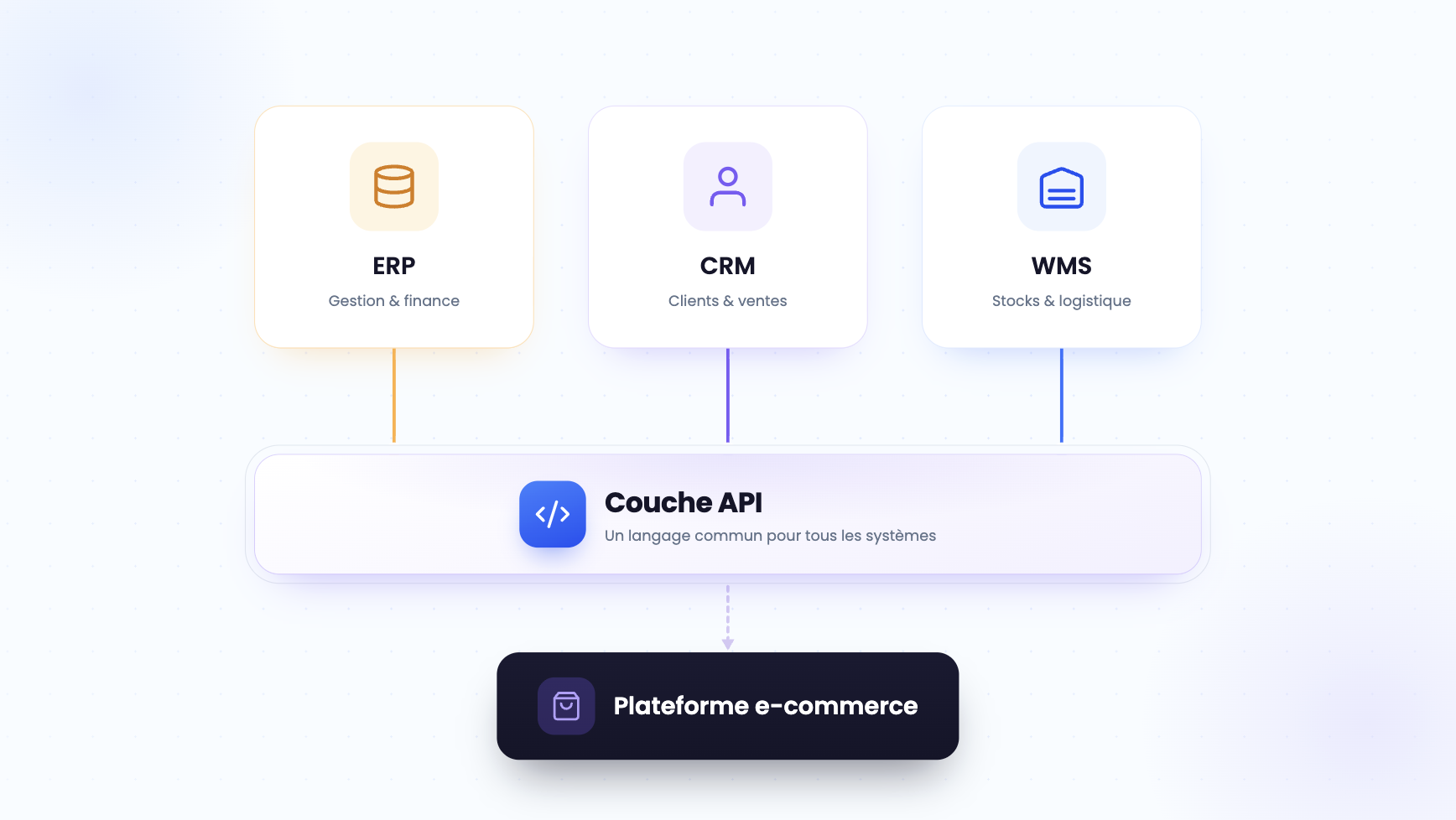
Behind every great customer experience is a flexible, modern technology foundation. Many B2B companies struggle with outdated ERP and legacy platforms. Traditional monolithic systems store data in silos and require extensive coding to implement changes, resulting in slow innovation.
The solution is an agile, cloud-based tech stack with open APIs and modular components. For example, an enterprise headless commerce platform lets you update your website or mobile app independently of core order logic.
Common pitfalls and challenges in B2B CX implementation
Even with a solid B2B customer experience strategy, many organizations encounter common roadblocks when improving CX.
Legacy systems and siloed data hindering personalization
Outdated ERP and CRM systems combined with fragmented data impede the development of a unified customer view. With product, pricing, and customer data locked in separate legacy platforms, companies cannot present a unified view of the customer or automate pricing accurately. Inconsistent information (one price on the website, another in a quote) frustrates buyers and erodes trust.
Complex organizational structures & internal resistance
Large B2B companies often have misaligned teams. Marketing, sales, IT, and operations may each pursue different priorities, creating internal conflicts. For example, marketing might advocate for a modern online portal, while sales fears losing control of customer relationships.
Lack of visibility over customer lifecycle and feedback loops
Some organizations focus on individual touchpoints (leads or support tickets) but miss the full customer journey. This narrow view hides drop-offs and pain points. For instance, you might not notice customers leaving after onboarding if you only track sales calls.
How to Build a B2B CX Roadmap Step by Step
Improving B2B customer experience requires strategic planning and continuous iteration. Follow these steps to build an effective roadmap.
Step 1 – Map the customer journey and identify friction points
Begin by charting every stage of the buyer's journey from initial research to ordering, delivery, and renewal. List all touchpoints, including website visits, sales meetings, customer service calls, and email communication. Then, use customer interviews and behavioral data to pinpoint where buyers struggle.
Customer journey mapping often reveals unexpected bottlenecks, such as a confusing quote process or slow response times. Visualizing the entire journey highlights exactly where to focus improvement efforts for maximum impact.
Step 2 – Define KPIs and success metrics for CX
Determine how you will measure progress and align metrics with business goals. Typical B2B CX KPIs include customer satisfaction scores (NPS/CSAT), retention and renewal rates, and account growth metrics. Also track process indicators like quote-to-order time, on-time delivery rates, and customer support resolution times.
For each KPI, set specific target. For example, "increase NPS by 5 points" or "reduce quote turnaround by 20%."
Step 3 – Prioritize quick wins and long-term improvements
Not all improvements require equal effort or deliver equal impact. Start with easy, high-impact quick wins: simplifying a form, fixing a common website issue, or adding a self-help article to your knowledge base. These deliver immediate benefits and build organizational momentum. Simultaneously, plan strategic projects requiring more time. You need to balance short-term fixes with long-term initiatives to maintain continuous improvement while tackling more complex challenges.
Step 4 – Select the right technology & tools
Choose systems that enable your B2B CX strategy. This typically includes a modern B2B e-commerce platform with API connectivity, a customer portal for self-service, and integrated CRM and analytics tools. Also, ensure your commerce platform can pull live pricing and stock levels from your ERP. The goal is to automate manual processes, deliver accurate data to customers, and gain actionable insights from connected systems.
Step 5 – Pilot, gather feedback, and iterate
Rather than launching everything simultaneously, roll out changes to a small group first. Follow these steps :
- Introduce a new portal to one sales region or selected accounts.
- Collect feedback through surveys, usage analytics, and account reviews.
- Compare results against your KPIs. Did NPS improve? Are orders processing faster?
- Use these learnings to refine the solution before full deployment.
This iterative cycle (launch, measure, adjust) validates ideas and prevents costly mistakes.
Role of modern commerce platforms in enhancing B2B CX
A modern commerce platform serves as the foundation for excellent B2B customer experience. Legacy ERPs and monolithic systems were not built for today's customer expectations.
Why legacy ERP / monolithic Pplatforms fall short
Traditional ERPs and older commerce suites focus on transactions rather than customer experience. They typically lack accessible APIs and require heavy custom coding for modifications. Adding a new sales channel to a legacy system can take months of development effort.
These systems also create data silos: marketing and sales cannot share real-time customer information effectively. The result is slow adaptation to market changes and inconsistent experiences across channels. Many B2B organizations recognize this limitation, which drives their migration away from monolithic architectures.
How a modular, headless, data-driven platform supports CX
A modern platform is composable and headless. This architecture decouples the front end (customer interface) from the back end (orders, inventory, pricing). You can update or replace the website, mobile app, or portal independently of core order logic.
For instance, you could deploy a new self-service portal without modifying your ERP. Similarly, you can integrate new microservices like AI tools for e-commerce via APIs. Data flows seamlessly across channels, enabling personalization engines and analytics to leverage comprehensive customer information.
Example: What a platform like DJUST can bring to B2B CX
DJUST illustrates these advantages effectively. It is a unified B2B e-commerce platform that brings together all sales channels (web store, distributor catalogs, dealer portals) into a single system. Customers see consistent catalog and negotiated prices regardless of access point.
Because DJUST is fully headless, companies can customize front-end experiences without disrupting core order processing. Features like automated recurring orders, personalized catalogs, and self-service account management are built in.
Measuring success: KPIs and metrics for B2B customer experience
To prove CX value, track both customer-focused and operational metrics.
- Customer Retention & Repeat Orders: monitor renewal and reorder rates. Higher retention or growth in repeat business indicates satisfied clients and successful customer relationship management.
- Order Accuracy, Fulfillment Time & Returns Rate: track on-time delivery percentage and shipment accuracy. Improvements reduce customer effort and build confidence in your service.
- Customer Satisfaction and NPS/CSAT for B2B Clients: gather customer feedback at major milestones such as post-implementation, renewal, and after support interactions. Increases in NPS and CSAT scores demonstrate improvement from the buyer’s perspective.
- Operational Efficiency Gains and Cost Savings: measure internal metrics like support ticket volume, quote response time, and process automation rates. Efficiency gains free resources for proactive CX initiatives and reduce operational costs.
Each metric should have clear targets. With solid tracking in place, leadership can assess whether CX initiatives deliver results.
Looking ahead: future trends shaping B2B customer experience
AI / Machine learning for personalization & predictive analytics
McKinsey reports that 19 percent of sales teams already use generative AI, and another 23 percent are currently experimenting with it. These tools enable deeper personalization and predictive recommendations, allowing account managers to focus on more complex, high-value deals. AI can analyze past orders to suggest the next likely purchase or automate price quotes based on customer history.
AI and customer experience go hand in hand, enabling companies to serve buyers more proactively and efficiently while gaining a competitive advantage in their market.
Omnichannel integration & unified commerce experience
Buyers will continue expecting seamless experiences across all touchpoints. The next evolution is true unified commerce: all sales, marketing, and service data connected in one platform. A customer could start an order on a mobile app, complete it via a sales representative, and track delivery in a browser with every interaction synchronized in real time.
Sustainability, transparency & ethical business practices
B2B buyers increasingly factor company values into purchasing decisions. They expect transparency about environmental impact and ethical sourcing practices. Integrating sustainability into CX means displaying carbon footprint information or fair-trade certification alongside products.
A buyer might filter products by sustainability score or review ecological impact during selection. Providing this information builds trust and aligns with your customers' own corporate values.
B2B customer experience is a differentiator. Buyers compare suppliers on ease of use, personalization, and trust just as they do in consumer markets. The goal now is to create a buying journey that truly delights business customers. Continuous measurement and iteration lock in gains over time. The result is a smarter, more seamless B2B buying experience that drives loyalty, increases revenue, and supports sustainable growth.
FAQ
How does a unified B2B commerce platform improve customer experience?
A unified platform centralizes product catalogs, pricing, inventory, and orders across all sales channels. With a solution like DJUST, customers see consistent information whether they buy through a web portal, a distributor, or a sales representative, reducing friction and building trust throughout the buying journey.

Why is omnichannel consistency critical for B2B customer experience?
B2B buyers move fluidly between digital and human touchpoints. When platforms are disconnected, customers face inconsistent pricing, missing products, or repeated data entry. DJUST addresses this by synchronizing all channels in real time, allowing buyers to switch channels without losing context or progress.
How does DJUST support personalization in B2B customer journeys?
DJUST enables account-level personalization by managing negotiated pricing, customer-specific catalogs, and purchasing rules. This ensures each buyer sees relevant products, prices, and workflows based on their profile, while still benefiting from self-service capabilities.


.png)