Replenishment: 5 Levers for Franchises
See how the right B2B replenishment platform can improve franchise management, especially when it comes to procurement, scaling, customer satisfaction, and order processing.
Article summary
- If you are a franchisor: Centralized ordering boosts your operations team’s efficiency, simplifies procurement through automation, maintains consistency in product sourcing, ensures on-time deliveries, and reduces administrative tasks and costs.
- If you are a franchisee: Replenishment software helps you drive growth, automate order processing, reduce errors, free up time for strategic initiatives, and deliver a seamless ordering experience.
- If you manage in-store operations: Data-driven decisions support the success of each franchisee. They provide valuable insights through analytics, optimize processes, create a consistent brand identity across franchises, and help each franchisee make informed decisions for efficient growth.

In the early days of your franchise, existing systems can seem like an attractive option. But as your franchise grows, they’ll quickly start to slow you down. A lot.
Keeping those systems in place during rapid expansion creates a number of complex challenges, and any one of them can be fatal for your franchise.
The challenges of franchising
Manual tasks
Every second a franchise team member spends on an unnecessary manual task is a second lost. Inefficiencies like these will hold your franchise back. By contrast, automating repetitive tasks and other day-to-day activities gives every member of your franchise more time to focus on what matters: growing your business.
The result? Lower productivity and slower growth.
Archaic, analog processes
Traditional B2B buyers may once have preferred to place orders by phone, but the new generation of younger buyers expects to handle every purchasing task online. That’s why it’s essential to invest in digital processes and solutions if you want to meet the expectations of both your customers and your own procurement teams.
The result? Unhappy customers, unhappy franchisees, and a limited digital footprint.
Poor data management
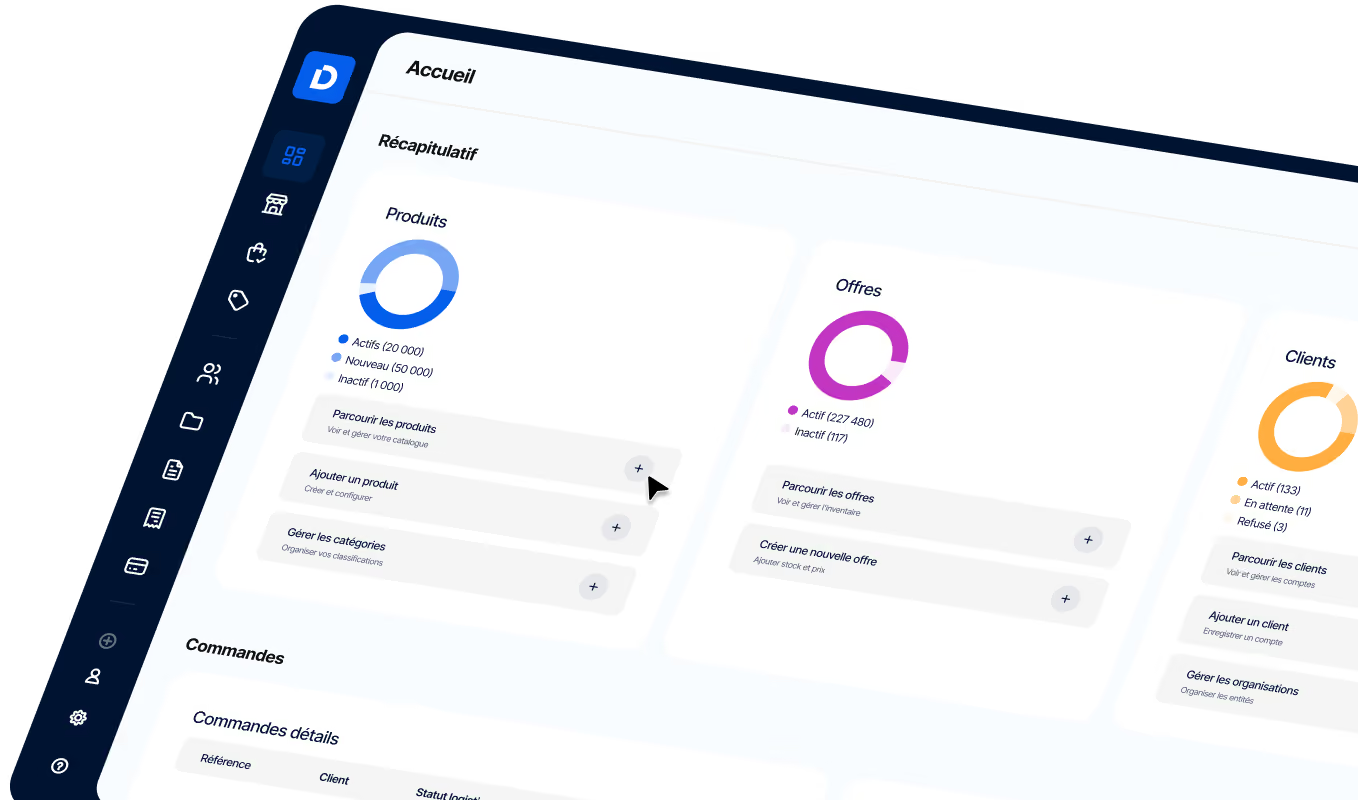
Without effective digital solutions, your franchise will be less able to track important metrics such as customer retention, seasonal trends, and inventory levels. Putting dedicated reporting and analytics capabilities in place will help you uncover new insights across your entire franchise network.
The result? Poor decision-making caused by limited visibility and inaccurate information.
No centralized order management
If you don’t route all your orders through a central system, you risk ending up with an overly complex, underperforming supply chain where each franchisee orders only for themselves. By centralizing orders, you can manage them in one place, improving visibility and reducing procurement and delivery costs.
The result? An overextended supply chain and inefficient costs.
Decentralized control
The more franchisees you add to your network, the harder they are to manage — and the more likely they are to start doing things differently. While that may give franchisees more autonomy, it reduces oversight, leading to inconsistencies across your business network.
The result? Inconsistent quality, branding, and customer experience.
Personalization challenges
Another downside of poor data management is that it limits your ability to tailor your offer to different buyers, making it harder to improve the offer during a sale. With better customer insight, you can deliver targeted product lists, price promotions, and bulk orders at the right time.
The result? Generic, one-size-fits-all products, offers, and experiences.
Ineffective customer support
If you can’t communicate effectively with customers through their preferred digital channels, you won’t be able to provide the right support when they need it most. Every franchisee needs the tools and training required to deliver high-quality customer service.
The result? Disappointing experiences and lower customer loyalty.
How can franchises benefit from B2B commerce?
- Simplified supply chain management: The right B2B commerce platform can help franchisors and franchisees streamline supply chain management. Franchisors can set up centralized purchasing and distribution systems, ensuring consistency and quality across franchise locations. Franchisees can easily order products, equipment, and supplies through the platform, reducing administrative overhead and ensuring on-time delivery.
- Brand and product consistency: Consistent branding and product offerings across your franchise network are essential for building trust with both your business and your customers. Franchisors and franchisees can easily create digital catalogs, pricing structures, and marketing materials that align with brand guidelines. Franchisees can access these resources, ensuring a uniform product selection and customer experience.
- Franchisee onboarding and training: Onboarding new franchisees is a complex task, but it can be far more efficient with a B2B commerce platform. Franchisors can provide comprehensive training materials, product guides, and operational resources through the platform. This helps new franchisees quickly understand and follow brand standards, product offerings, and ordering processes.
- Improved communication and collaboration: Franchisors and franchisees need to communicate effectively to share information, announcements, promotions, and best practices. Franchisees can also communicate with one another, fostering a sense of community and knowledge sharing. All of this happens on a digital platform that centralizes orders, history, training, and communications.
- Effective reporting and analytics: Knowledge drives better insight and better performance. That’s not always easy with siloed systems or no visibility across franchise networks. In modern B2B commerce, you can track sales, inventory levels, product performance, and customer behavior across multiple locations. This data-driven approach helps identify trends, support smarter decisions, and drive operational improvements.
- Pricing and promotion management: Franchisors can define pricing agreements, volume-based discounts, and promotional offers specific to each franchise location or franchisee group. Franchisees can access and use these pricing structures, ensuring consistency while maximizing profitability.
- Efficient order processing and fulfillment: Existing processes can be automated in B2B commerce to simplify order processing and fulfillment for franchisees. Franchisees can place orders directly through the platform, reducing manual errors and delays. This streamlines the entire process from order to delivery, ensuring efficient inventory management and customer satisfaction.
- Scalability and growth: By providing a robust order and supply chain management system, franchisors can attract potential franchisees and grow their business with confidence. B2B commerce makes growth easier by providing the infrastructure needed to support a larger franchise network.
By adopting B2B commerce solutions, franchises can streamline supply chain management, build a consistent brand, communicate effectively, make data-driven decisions, control pricing, and support scalable growth. B2B commerce platforms help optimize operations and strengthen collaboration between franchisors and franchisees, resulting in a more efficient and higher-performing franchise system.



.jpg)