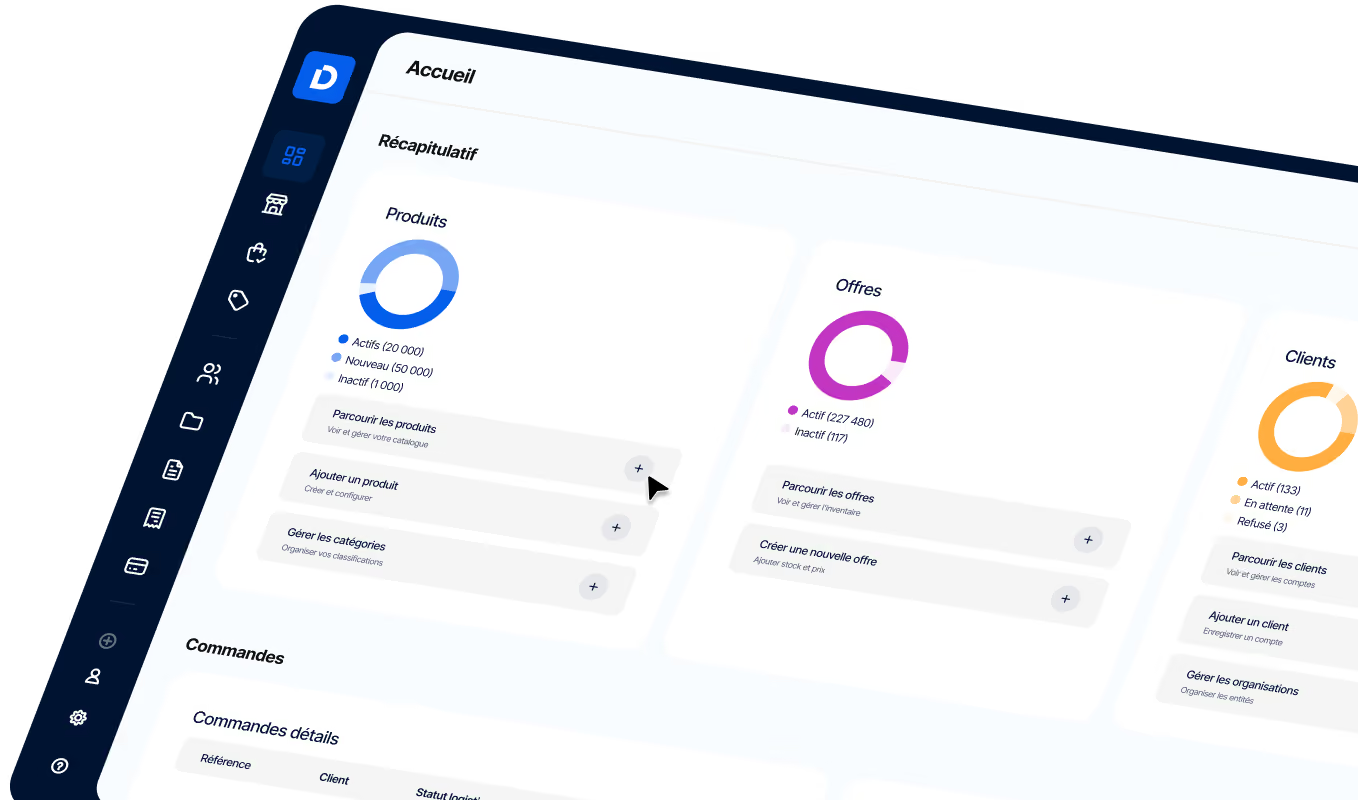
Monolithic architecture
Monolithic Architecture: Understanding the Fundamentals and Applications
Monolithic architecture, often discussed in software development and application design, refers to a unified software solution where multiple components are interconnected and interdependent. In a monolith, different business functions are executed within a single codebase.
A monolithic system can be compared to a cake baked in a single pan, making it difficult to separate the layers once it is finished.
In this article, we will examine the concept of monolithic architecture, its pros and cons, its practical applications, and how the DJUST e-commerce solution can be used within this framework.
What is monolithic architecture?
At its core, monolithic architecture is a software design approach where all of an application's features and components are integrated into a single unit. These components often include the user interface, data processing, and data storage. Each part works together seamlessly, but does not easily allow for modifications or independent operation.
Key Characteristics
- Single codebase : All application functions reside in one codebase, making deployment and management easier.
- High interdependence : Components are dependent on one another, meaning changes in one section can impact the entire system.
- Centralized deployment : The application is deployed as a single unit, simplifying management in terms of hosting and scaling.
Advantages of monolithic architecture
Monolithic architectures offer several advantages, particularly for certain types of applications:
- Simplicity : With a single codebase, development and deployment are often simpler than in a microservices architecture.
- Performance : Since everything is tightly integrated, communication between components is faster than in a microservices architecture, where requests must travel over networks.
- Simplified testing : Testing a single application is simpler than ensuring that multiple independent services work correctly together.
Disadvantages of monolithic architecture
However, monolithic architecture also has drawbacks, limiting flexibility and scalability:
- Difficulty scaling : To scale a monolithic application, you often have to replicate the entire application rather than individual components.
- Limited flexibility : Changes or updates require a full redeployment of the application, which can cause downtime and complicate version control.
- Technical debt : Over time, the accumulation of code variations can make future development complex.
Practical applications of monolithic architecture
Monolithic architectures can be very effective in certain scenarios, particularly for small to medium-sized applications or when the development team is small or less experienced:
E-commerce platforms
If you are running a small e-commerce platform, a monolithic architecture allows your team to maintain a single codebase that integrates shopping features, payment processing, order management, and customer service seamlessly.
DJUST is designed to handle e-commerce operations even if the infrastructure is initially monolithic. Its product catalog and order management systems can function within a monolithic structure, allowing retailers to efficiently manage bulk orders and requests from a single interface.
Content Management Systems (CMS)
In the case of a CMS, a monolithic system can simplify the workflow, ensuring that all features—editing, publishing, and versioning—are linked and work together without issues.
DJUST offers robust data management tools that can integrate product information, pricing, and inventory management into a cohesive system, benefiting organizations that prioritize performance and ease of maintenance.
Best practices for monolithic architecture
To get the most out of a monolithic architecture, consider the following best practices:
- Maintain clean code : Regularly refactor code to ensure clarity and maintainability, thereby avoiding the pitfalls of technical debt.
- Use version control : Implement a robust version control system (such as Git) to manage code changes and maintain a history of updates.
- Automate testing and deployments : Use continuous integration/continuous deployment (CI/CD) practices to simplify deployments and detect issues early.
- Plan for scalability : Even with a monolithic setup, plan for how to handle traffic increases by focusing on database optimization and coding best practices.
Transitioning from a monolithic architecture to microservices
In his book Monolith to Microservices, Sam Newman advises companies:
"You should consider migrating to a microservices architecture to achieve something that your current system does not allow."
In other words, the return on investment (ROI) must be clear before undertaking such a transition.
A common reason for transitioning is when the application exceeds the maintenance capabilities of a monolith.
Netflix, for example, gradually migrated to microservices in the 2000s after its monolithic system reached its scalability limits.
Using DJUST with a monolithic architecture
DJUST offers a powerful B2B commerce platform that can operate effectively within a monolithic architecture. Thanks to its built-in integration capabilities, you can manage various operations—from inventory to orders—within a single system. As your business grows, DJUST's modular architecture can support you in an eventual, gradual transition to a more distributed system if needed.
In summary, while monolithic architecture has its limits, it remains viable for many companies, especially those with limited resources. By using platforms like DJUST, you can improve operational efficiency while anticipating future scalability challenges.
Understanding monolithic architecture helps you make informed decisions about infrastructure design and implementation, ensuring your digital processes are aligned with your business goals.