B2B2C model in eCommerce
Understanding the B2B2C model in eCommerce
Defining the B2B2C model
The B2B2C (business-to-business-to-consumer) model is based on a collaboration between two companies to provide products or services to end consumers. In this setup, one company (Business A) manufactures or supplies products that another company (Business B), acting as a retailer or service provider, then offers to customers. For example, a company producing organic skincare (Business A) might sell its products to a specialty boutique (Business B), which then sells them directly to consumers.
Benefits of the B2B2C model
- Increased market reach and penetration: Business A benefits from the distribution channels established by Business B, allowing it to reach various consumer segments more quickly.
- Resource and expertise sharing : Both companies can pool their skills: Business B provides its marketing techniques and distribution network, while Business A focuses on product development.
- Focus on core competencies : By delegating the customer relationship to Business B, Business A can focus on manufacturing and innovation.
Challenges of the B2B2C model
- Control over the customer experience:The manufacturer (Business A) has limited influence over how Business B manages the relationship with the consumer, which can impact product perception and the quality of customer service.
- Dependence on partnerships: The success of Business A relies heavily on the sales efficiency and distribution capabilities of Business B.
- Logistical and management complexities: Coordination between multiple entities can complicate inventory management, logistics, and the alignment of operational processes.
Practical applications and implementation
- Market research: Before embarking on a B2B2C relationship, it is crucial to conduct market research to understand consumer needs, competitive positioning, and industry trends.
- Building strong relationships: Choosing the right partner is essential; compatible business goals and regular communication are necessary to ensure the success of the partnership.
- Technological integration: System integration, particularly for stock and inventory management, enables efficient synchronization between Business A and Business B, ensuring that product information is always up to date.
The value of DJUST in a B2B2C context
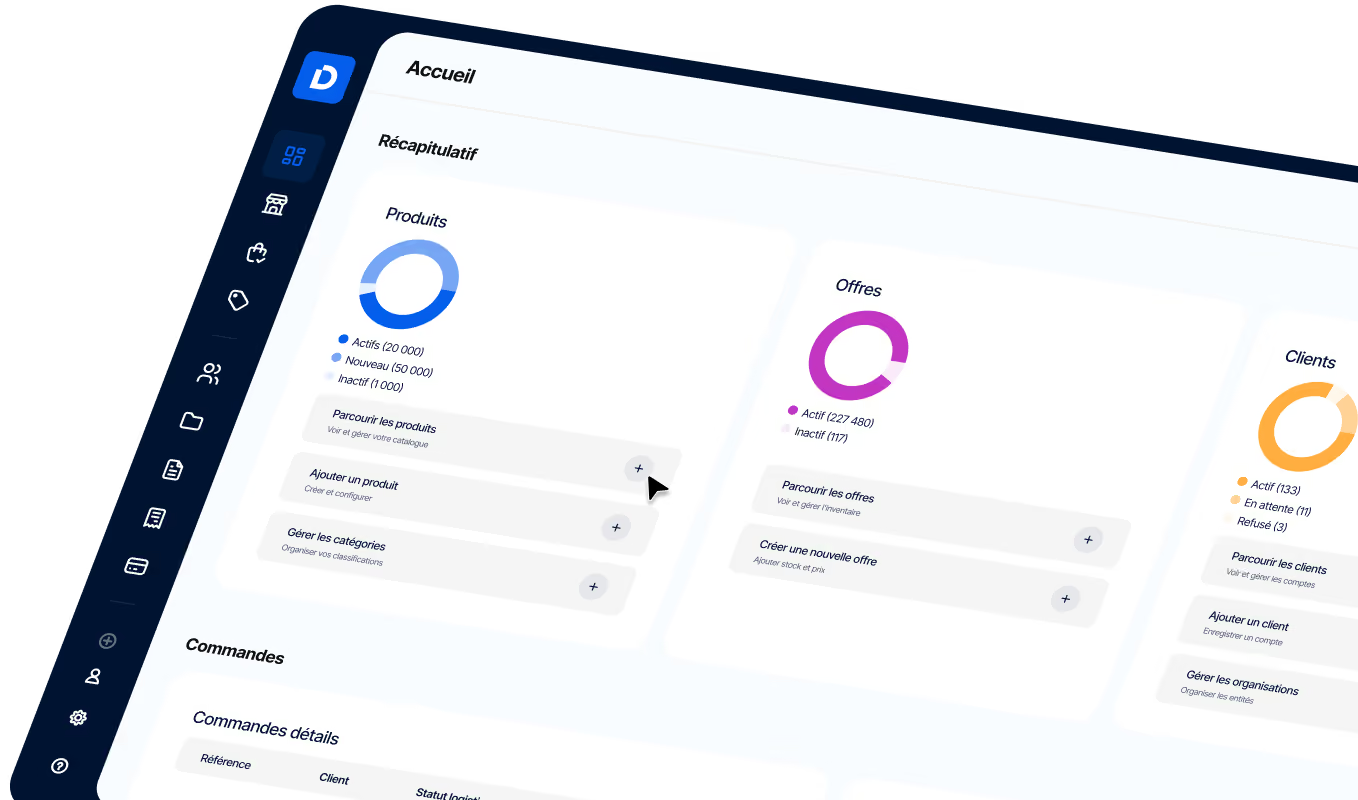
DJUST is designed to meet the needs of B2B companies looking to adopt the B2B2C model. Its key features include:
- Unified commerce platform: DJUST centralizes all sales channels, ensuring real-time visibility into inventory and consistent order management.
- Customizable features: Companies can create product catalogs tailored to different consumer segments, allowing Business A and Business B to maintain their identity while leveraging their respective strengths.
- Advanced analytics: Built-in analytics tools provide detailed insights into consumer behavior, sales trends, and market demand, helping to refine sales and marketing strategies.
Conclusion
The B2B2C model represents an innovative approach that allows companies to effectively reach the end consumer through strategic partnerships. While challenges such as managing the customer experience and logistical complexity exist, the benefits in terms of market reach and operational synergies are significant. By integrating modern solutions like DJUST.io, companies can simplify these interactions, optimize their operations, and establish successful B2B2C relationships in a constantly evolving market.