CPQ (Configure, Price, Quote)
What is CPQ?
When your sales team needs to provide quotes for complex B2B products, CPQ (Configure, Price, Quote) software speeds up the process and improves accuracy. This technology transforms what was once a manual, error-prone process into a streamlined digital workflow.
CPQ software keeps track of all your products, their pricing, and customer-specific deals. For B2B companies selling configurable products, such as industrial equipment or custom software, CPQ eliminates the endless back-and-forth usually required to generate accurate quotes.
In this article, we will explore how CPQ systems work, their importance for B2B eCommerce, and best practices for implementing them effectively in your business.
The components of CPQ
The CPQ process mirrors how experienced sales representatives work with their clients to build the ideal solution. Let’s break down each component:
- Configure
This step involves collaborating with clients to develop exactly what they need. For example, a manufacturing company can help its clients select machine specifications, add safety features, or choose integration options. Modern CPQ systems guide the user through each choice by displaying only compatible options to prevent ordering errors. - Price
Once the configuration is complete, pricing calculations are performed automatically. The system applies company rules, volume discounts, and customer-specific pricing agreements. For instance, if you sell industrial equipment, your CPQ can account for quantity tiers, long-term contract rates, and special pricing for strategic accounts. - Quote
This step consolidates all information into a professional format. Beyond a simple price list, modern CPQ systems generate detailed proposals including product specifications, delivery timelines, and service terms. This documentation helps clients understand exactly what they are purchasing and speeds up the approval process.
Why is CPQ important in B2B?
Most B2B purchases involve complex products, multiple stakeholders, and unique pricing agreements. CPQ systems help manage these challenges by standardizing and automating key steps in the sales process.
- Streamlining the sales process
In B2B eCommerce, the sales process can be long and complicated. CPQ tools simplify and accelerate this process by allowing sales reps to generate quotes quickly. This enables clients to make purchasing decisions faster, thereby improving their satisfaction and potentially increasing conversion rates. - Reducing errors
Manual pricing can lead to inconsistencies and errors, damaging trust between buyers and sellers. By automating the pricing and quoting process, CPQ solutions minimize the risk of errors, ensuring that clients receive accurate quotes and consistent pricing strategies. - Personalizing the customer experience
The customization options offered by CPQ allow companies to tailor products and pricing to each customer's individual specifications. This personalization enhances the customer experience and increases the likelihood of repeat purchases.
Best practices for implementing CPQ
The success of your CPQ solution implementation relies on careful planning and ongoing maintenance. Here are some recommended practices to maximize your return on investment:
- Integration with existing systems
When deploying a CPQ tool, ensure it integrates seamlessly with existing systems, such as CRM and ERP. This integration enables better data management and provides sales teams with access to customer information, pricing strategies, and stock levels, thereby accelerating the quoting process.
Expert tip: Map out all your data flows before starting the CPQ integration. Document the location of product information, pricing rules, and customer data in your current systems to identify potential bottlenecks and ensure smooth synchronization. - Keeping pricing up to date
Regularly review and update your pricing structures in the CPQ system to reflect market changes, supplier costs, and promotional offers. Many advanced CPQ tools support scheduled pricing updates, allowing companies to remain competitive.
Expert tip: Set up automated pricing alerts to notify relevant team members when prices have not been reviewed within a set timeframe. - Training your sales team
Ensure your sales team is well-trained on the CPQ system. Proper training allows sales representatives to fully leverage the system's capabilities, leading to faster quote generation and better customer interactions.
Expert tip: Record short video tutorials on common CPQ tasks and make them available in an accessible space so sales reps can quickly refresh their knowledge.
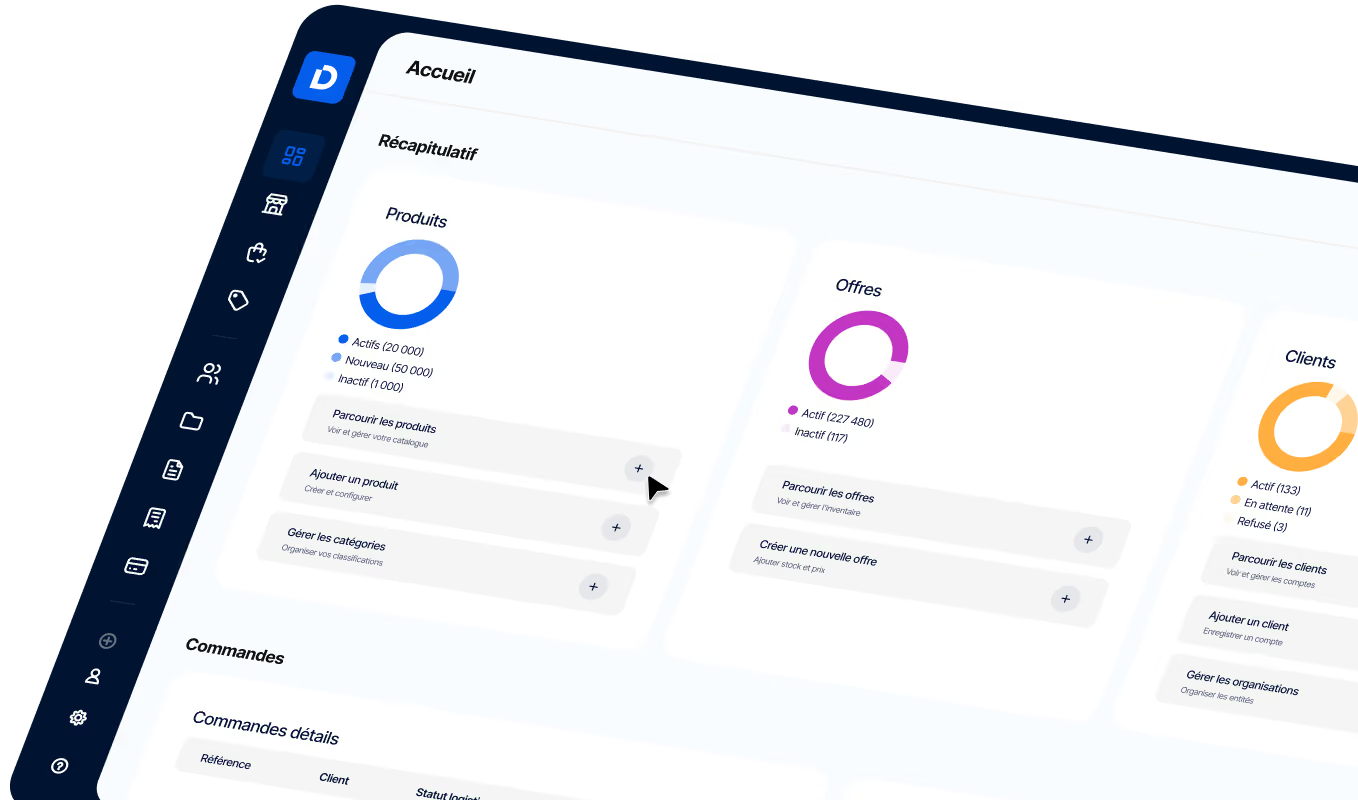
Using DJUST for CPQ
DJUST.io offers a comprehensive CPQ solution designed specifically for B2B eCommerce. Companies like Jeff de Bruges have used DJUST's CPQ capabilities to transform their ordering processes and improve operational efficiency.
The DJUST CPQ solution includes:
- Multi-level product configuration management
Allows for managing complex configurations and guiding customers through the customization of their products. - Dynamic pricing engine
Supports customer-specific pricing, volume discounts, and other personalized agreements. - Quote generation and approval workflows
Create detailed proposals including all necessary information, which speeds up the approval process. - Integration with major ERP and CRM systems
Ensures seamless data synchronization and information consistency across all sales channels. - User-friendly mobile interface
Makes it easy for field sales representatives to access and use the system.
The DJUST CPQ solution is built on a headless architecture, allowing you to maintain consistent pricing and configuration rules across all sales channels. Whether customers order via your website, a sales representative, or a marketplace integration, they benefit from the same product options and accurate pricing.
Furthermore, the platform's modular design allows you to start with basic CPQ features and add advanced options as your needs evolve. For example, Eiffage used DJUST to create BlueOn, a sophisticated purchasing platform that includes advanced CPQ features such as carbon footprint calculation within the configuration process.
Conclusion
CPQ software significantly simplifies B2B sales processes. By automating configuration choices, applying precise pricing rules, and generating professional quotes, these systems help sales teams work more efficiently while reducing errors.
The most effective CPQ implementations integrate seamlessly with existing systems and benefit from regular updates to pricing and product data. With proper training and ongoing maintenance, your sales team will be able to fully leverage CPQ tools to better serve your customers and close sales faster.
The DJUST B2B eCommerce platform provides the CPQ capabilities required by modern businesses, with a flexible architecture that scales with your company. With extensive experience working with international enterprises, DJUST is the ideal partner for implementing your CPQ solution.