PIM
PIM: Product Information Management in B2B E-commerce
Product Information Management (PIM) refers to the tools and processes companies use to centralize and manage their product information, ensuring it is accurate, consistent, and easily accessible across various channels. This overview explores the importance of PIM, its practical applications, and how DJUST.io improves product management for B2B companies.
Understanding Product Information Management (PIM)
At the heart of PIM is a comprehensive repository of all product-related information, ranging from technical specifications and descriptions to pricing, images, and stock levels. By consolidating this data in one place, companies ensure their teams have access to the most up-to-date information to make decisions or interact with customers.
A well-structured PIM system improves not only internal efficiency but also the customer experience. For example, a B2B supplier can quickly provide detailed product information. With a centralized PIM system, sales representatives have immediate access to the latest product details, allowing them to respond to customer inquiries faster.
In e-commerce, PIM systems are essential, especially for large brands with hundreds or thousands of products. Imagine, for instance, that one of your flagship products is an industrial circuit breaker available in 12 different variants based on rated voltage, breaking capacity, and mounting options.
One day, the manufacturer updates the technical specifications for the entire range of circuit breakers. With a PIM, instead of manually modifying every client or internal software system, you can update the information once, and the change will be automatically applied across all sales channels, technical documentation, and integrated applications.
Benefits of an Effective PIM
Effective product information management provides numerous benefits to B2B e-commerce brands.
First, it ensures the accuracy and consistency of product data, which is crucial in B2B environments where specifications must meet specific standards or regulations. When product information is centralized, the risk of errors due to outdated or incorrect data is minimized.
Next, PIM accelerates product launches. Thanks to the ease of updating and distributing product information across various platforms, companies can reduce the time-to-market for new products. This agility allows businesses to respond quickly to market demands and capitalize on emerging trends.
Finally, clear and organized product information improves marketing. From targeted promotional campaigns to personalized customer experiences, having high-quality product data allows companies to communicate more effectively with their audience.
Practical Applications of PIM in B2B E-commerce
To fully leverage PIM, companies can adopt several practical strategies.
One strategy is to categorize products based on attributes such as type, size, and color. This makes searching on a website easier. For example, DJUST.io allows users to create detailed product classifications, helping buyers navigate extensive product catalogs quickly.
For instance, Foodia, a B2B food commerce portal, used DJUST to create a unified shopping experience where customers can compare and purchase multiple products in one place, with a fast and simple checkout process.
Another best practice is to maintain high-quality images and detailed descriptions for every product. Customers often rely on visuals and comprehensive information to make purchasing decisions, especially in B2B sectors where products can be complex. DJUST.io's digital asset management feature helps manage images effectively and ensures an accurate representation of all product variants.
Furthermore, companies should regularly audit their PIM system to ensure data relevance and accuracy. This involves periodically checking product listings to detect inconsistencies, missing details, or outdated information. DJUST.io allows users to quickly identify and rectify missing information, ensuring an up-to-date catalog for customers.
How to improve product results
To improve the results generated by your PIM, cross-departmental data collaboration is essential. Sales, marketing, and customer service teams must work together and share information that could influence product presentation. DJUST’s centralized approach gives teams access to real-time data, facilitating better-informed decisions from product development through to marketing strategies.
Incorporating employee and customer feedback can also significantly improve the quality of product information. By allowing users to share their experiences, companies can continuously refine descriptions, images, and marketing tactics. DJUST facilitates this through built-in feedback collection mechanisms, turning that input into concrete improvements.
Using DJUST to optimize product information management
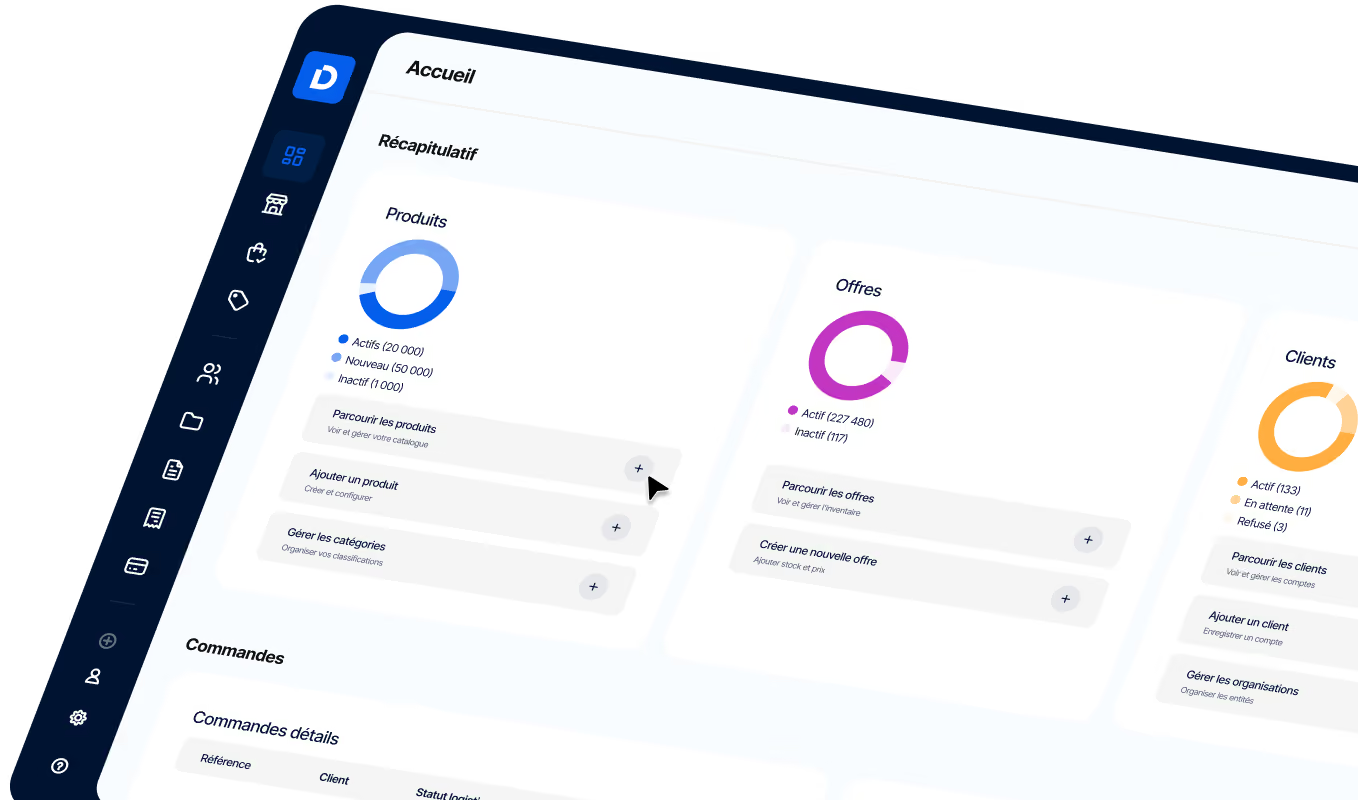
DJUST provides a comprehensive PIM system that meets the needs of B2B companies. The platform integrates various features to import, transform, and manage product data. For example, the DataHub module allows for easy product information import, keeping everything up to date without significant manual effort.
Furthermore, DJUST enhances the customer experience through personalized product visibility and intelligent grouping. Users can customize product catalogs to restrict or highlight specific items based on customer criteria, ensuring that relevant offers are clearly visible. This improves the shopping experience and increases the chances of conversion.
In conclusion, effective product information management is crucial for companies looking to thrive in B2B e-commerce. By adopting practical strategies and using advanced tools like DJUST, companies can ensure their offerings are not only accurate and accessible but also attractive, leading to increased customer satisfaction and better sales.