Payment Service Provider (PSP)
Payment Service Provider (PSP): What is it and how does it work?
What is a Payment Service Provider (PSP)?
A payment service provider (PSP) is a company that helps merchants accept, process, and manage payments from various methods, including credit and debit cards, bank transfers, digital wallets, and even cryptocurrencies.
PSPs act as an intermediary between the consumer making a payment and the business receiving it, ensuring that transactions are processed securely and efficiently.
In the context of B2B e-commerce, using a payment service provider is essential. PSPs play a central role in facilitating online payments.
How does a PSP work?
When a customer makes a purchase on an online store, several steps are required to process the electronic payment.
Here is a simplified overview of the process:
- Customer actions: The customer selects items and proceeds to checkout, where they enter their payment information.
- Payment request: The PSP receives this information and securely transmits it to the appropriate financial institution (such as a bank or credit card company) for validation.
- Authorization: The financial institution verifies that the customer has sufficient funds and that the transaction is valid. If everything is in order, it authorizes the transaction.
- Confirmation: The PSP receives this authorization and notifies the online store, allowing the transaction to be finalized.
- Settlement: Finally, the money is transferred from the customer's account to the merchant's account, completing the sale.
Types of Payment Service Providers
- Aggregator PSPs: These are service providers like PayPal or Stripe that allow multiple merchants to use the same gateway to process payments. The PSP manages all merchant accounts and transactions, simplifying the process—especially for small businesses.
- Dedicated PSPs: For large companies requiring more specific services, dedicated PSPs integrate directly into the merchant's internal systems, allowing for greater customization and better control over the payment process.
- Alternative payment methods: Many PSPs also offer modern payment options such as mobile payments (Apple Pay or Google Pay), digital wallets, and even cryptocurrencies, providing more flexibility for customers.
Benefits of using a PSP
- Convenience: PSPs simplify the transaction process for both businesses and customers.
- Security: They often provide advanced security features (such as encryption and fraud detection) to protect sensitive information.
- Variety of payment methods: Businesses can offer multiple payment methods, making the checkout process more user-friendly, which can increase sales conversions.
- Easy integration: Many PSPs integrate easily with e-commerce platforms, making them simple to implement.
Expert insights: 66% of financial institutions believe that offering digital payment options to B2B clients is essential for reducing payment friction.
Best practices for integrating a PSP
Choose the right PSP for your needs
Consider the features most important to your business, such as transaction fees, supported payment types, and ease of integration with your current system.
For example, DJUST connects easily to several PSPs such as Lemonway, Thunes, and Mangopay, allowing companies to choose the provider that best suits their needs.
Do you do business abroad? Make sure your PSP easily accepts foreign currencies and manages exchange rates effectively. According to the Global Expansion Survey, 81% of financial executives consider receiving payments to be one of the main challenges when expanding internationally.
Prioritize PSPs that offer a variety of payment methods
Customer payment preferences are evolving, so it is essential to choose a tool that offers the most up-to-date payment methods.
For example, the 2025 Payments Trends report predicts that by 2026, 60% of the population will use digital wallets. You may therefore want to find a PSP that is compatible with these digital wallets.
Ensure a secure connection
Make sure the chosen PSP complies with security standards (such as PCI-DSS) to protect customer data, and consider using secure connections (HTTPS) to secure information exchange during transactions.
Given the growing trend of mobile commerce, ensure that your PSP can effectively handle mobile payments. This could improve the user experience, as mobile transactions are becoming increasingly common.
Monitor performance
Regularly review your payment processing operations. Use the analytics features offered by your PSP to evaluate transaction performance, fraud alerts, and chargeback rates, adjusting your processes to improve efficiency and security.
Challenges associated with using a PSP
Although PSPs offer many advantages, companies may also encounter certain challenges:
- Fees: Transaction fees can add up quickly, especially for companies with high sales volumes.
- Integration issues: Not all PSPs integrate easily with every e-commerce platform, which can lead to operational challenges.
- Dependency: Relying on a third-party provider means entrusting them with critical financial transactions. It is important to select a reputable PSP and regularly review the quality of their services.
Using DJUST to improve your PSP integration
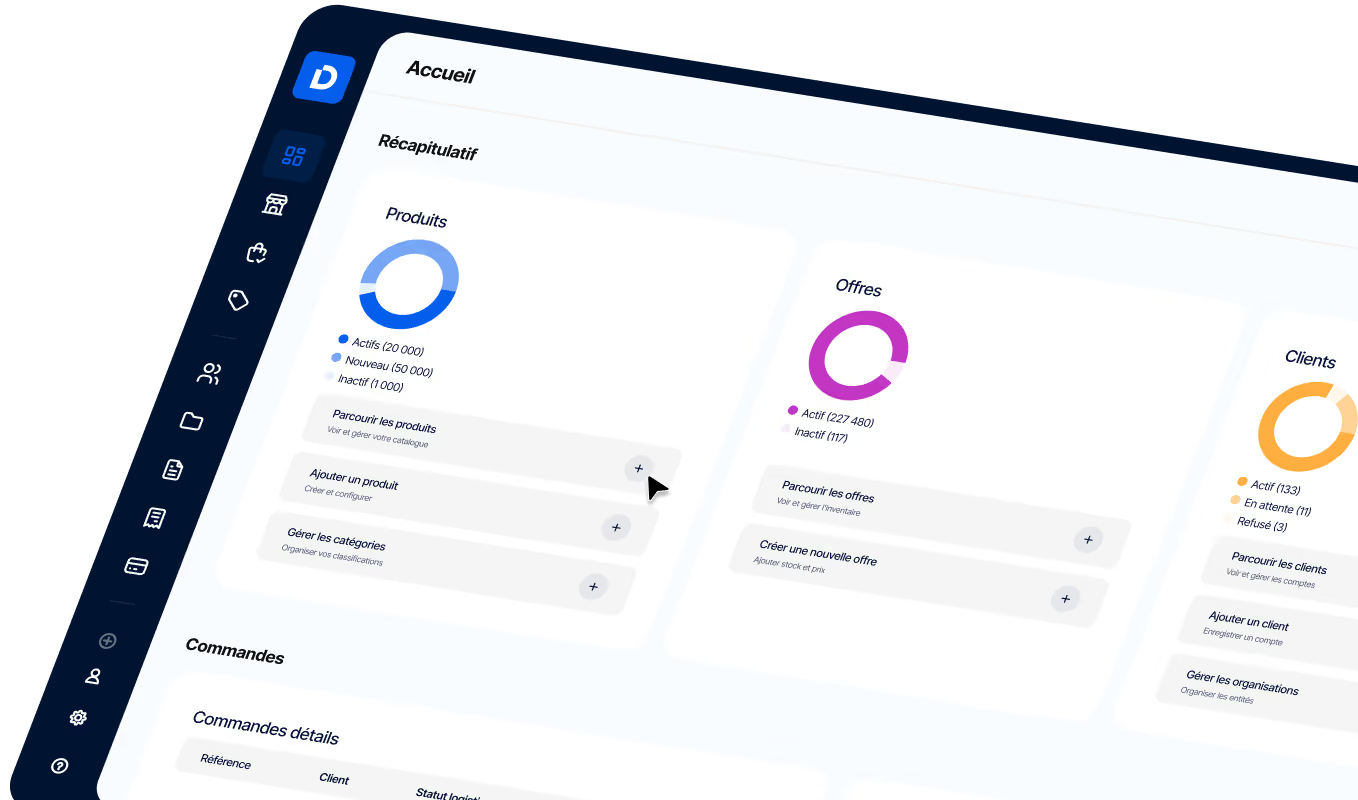
DJUST offers a robust platform that allows companies to manage B2B transactions efficiently. Thanks to its flexible integration with payment service providers, you can choose from several options to meet your needs.
DJUST also makes it easy to use multiple payment methods per order, offering your customers a wide variety of choices while maintaining a secure environment for all transactions. The platform's architecture allows for seamless connection with PSPs, thereby optimizing the purchasing process and increasing customer satisfaction.