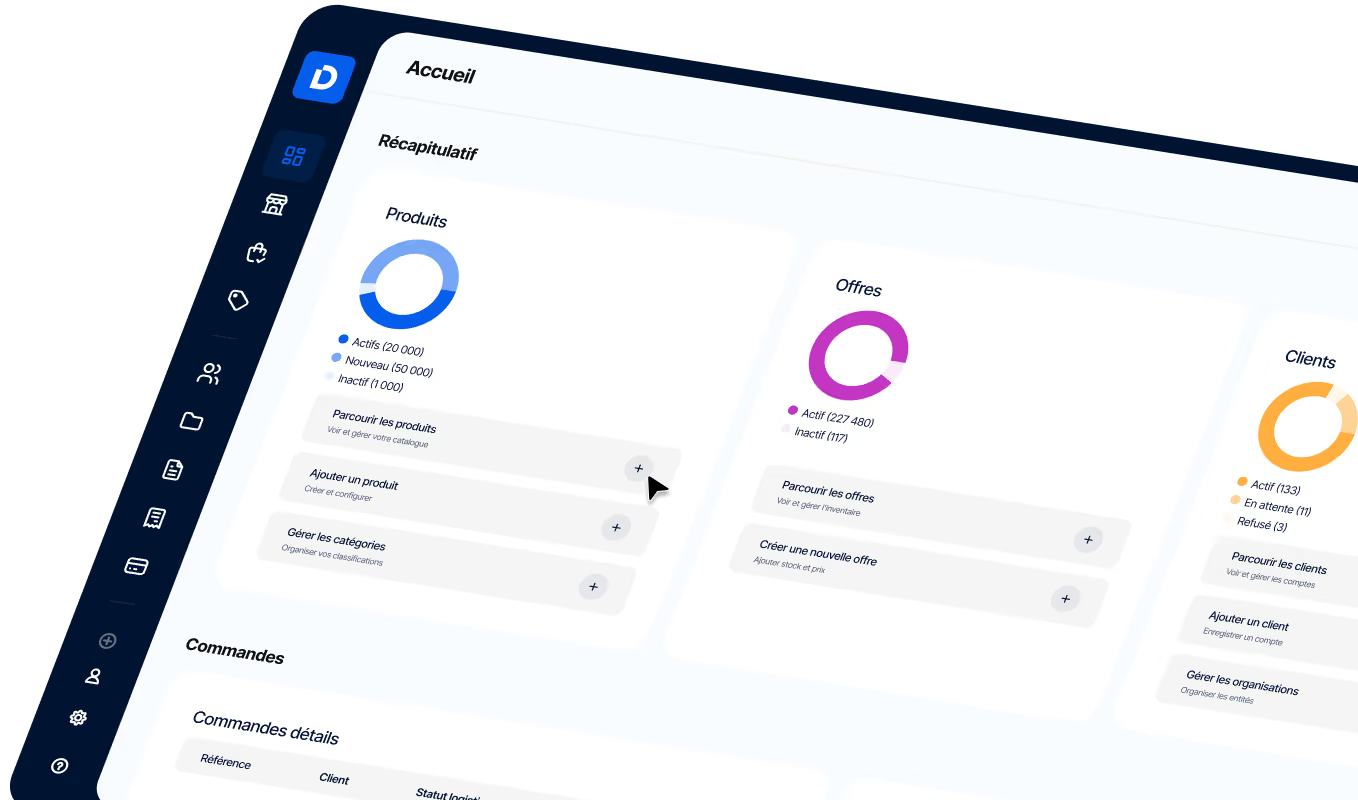
Invoice management system
Invoice Management System (IMS): Overview and Best Practices
What is an invoice management system?
An Invoice Management System (IMS) is a digital solution that businesses use to automate processes related to creating, sending, and managing invoices. By optimizing the entire billing process, the software improves operational efficiency and reduces errors. With an IMS, companies can easily generate invoices, track payments, and manage relationships with suppliers and customers from a single interface.
Key features of an invoice management system
An effective invoice management system includes several essential features:
- Automated invoicing : Automatic generation of invoices from purchase orders or sales. This automation saves time and reduces human errors that can delay cash flow.
- Tracking and reporting : Tracking receivables and payment deadlines. Many systems offer dashboards for a real-time view of outstanding invoices, due dates, and payment statuses, so you know when to send reminders.
- Document storage : Secure storage of invoices and associated documents. This organization makes it easy to search for and reference past invoices, improving compliance and audit readiness.
- Integrations : Simplified connection with other platforms (accounting software or ERP systems) to ensure data consistency and streamline processes.
- Payment processing : Facilitation of various payment methods, allowing customers to settle their invoices quickly, which promotes optimized cash flow management.
Benefits of using an invoice management system
Optimized processes
The main advantage of an IMS is the optimization of the billing process. It automates repetitive tasks like creating invoices and sending reminders, freeing up time for more strategic activities.
Improved accuracy
Human error, particularly during manual data entry, is common. An IMS reduces these errors by automating information entry directly from existing records, thereby minimizing disputes and improving customer satisfaction.
Improved cash flow
Effective invoice management significantly improves cash flow. Automatically sending invoices as soon as services are delivered and integrating online payment options accelerates collections and reduces payment lead times.
About 61% of small businesses struggle with cash flow, making invoice management tools essential for small e-commerce brands.
Better organization and compliance
Storing invoices digitally with an IMS makes them easy to access and organize. This is essential for audits and financial regulatory compliance, while preserving historical data without the clutter of paper storage.
Best practices for effective invoice management
Standardize your invoice format
Using a consistent format projects a professional image and simplifies invoice processing for clients. Some IMS platforms offer standardized templates. Include clear headings, detailed line items, payment terms, and your contact information. A small note of appreciation, such as "thank you for your business!", can also strengthen the client relationship.
Automate reminders
Set up automated reminders for invoices that are due or overdue. For example, you can automatically send a reminder email to a client the day after the due date. This reduces late payments and improves cash flow without manual intervention.
Adopt digital payment methods
Integrate various digital payment methods, such as credit cards, bank transfers, or digital wallets, directly into your IMS. Offering such flexibility encourages prompt payments and improves customer satisfaction.
A recent survey of over 1,000 shoppers revealed that 12% of them abandoned their carts in the last three months due to a lack of sufficient payment options.
Use reporting features
Leverage the analytical features of your IMS. Regularly review reports to identify recurring late payments or popular products and services, allowing you to make informed strategic decisions.
For example, a report on late payments might reveal that a small group of regular clients is responsible for the majority of delays. This information allows you to resolve the issue quickly.
Integrate with other business systems
Ensure your IMS integrates effectively with other platforms like CRMs or ERPs, thereby ensuring data consistency across departments, improving collaboration, and reducing duplicates.
A unified tech stack is so important in e-commerce that many companies prioritize this feature when searching for software.
For example, when deSter sought to modernize its order management process, it chose DJUST for its extensive integration capabilities with various ERP systems and the flexibility of its SaaS solution.
Conclusion
An invoice management system is essential for optimizing billing processes. It simplifies tasks, improves accuracy, and promotes optimal cash flow management. By adopting the best practices mentioned, companies can strengthen their financial efficiency and improve customer relationships.