Average Order Value (AOV)
Average Order Value (AOV)
For B2B sellers looking to increase revenue through their online platforms, Average Order Value is a fundamental metric for sustainable growth.
While many other metrics—such as conversion rate, cost of goods sold, and cart abandonment rate—are important, AOV directly impacts your business's profitability and scalability. Let’s take a closer look at what AOV is, as well as how to measure and improve it.
What is Average Order Value?
AOV measures the average amount spent per transaction over a given period. The calculation is simple:
AOV = Total Revenue / Total Number of Orders
For example, a B2B platform selling industrial equipment that generates $500,000 in revenue from 100 orders in a month would have an AOV of $5,000.
Why is AOV important in B2B?
The impact of AOV varies depending on the business model and industry.
- Industry examples:
- Construction suppliers may record very high AOV (sometimes in the hundreds of thousands) due to bulk material orders.
- Food service suppliers, on the other hand, often handle smaller but more frequent orders.
- **Benefits of tracking and improving** AOV :
- Revenue growth without acquiring new customers: A higher AOV means generating more revenue from existing customers, which reduces acquisition costs. For example, increasing the average order amount from $1,000 to $1,500 would generate 50% more revenue with the same number of customers.
- Supply chain optimization: Bulk orders allow for optimized shipping (full truckloads), better rate negotiations with suppliers, and a reduction in the number of individual shipments.
- Improved Customer Lifetime Value (CLV): Increasing AOV boosts CLV, which is the total revenue expected from a customer over the entire relationship—a crucial metric in B2B, where relationships can span years.
- Reduction in operational costs per sale: Processing a large order (e.g., $5,000) often requires a similar amount of effort to a smaller one (e.g., $500), making the higher-value order more profitable.
B2B application example
Modern B2B platforms make managing large orders easier. For instance, the Socoda wholesale platform allows over 200 distributors to place and manage bulk purchases efficiently, helping to save time and reduce errors on large orders.
Strategic approaches to increase AOV
Every business is unique, but several strategies can be considered to increase AOV:
- Product bundling for different company sizesBundling involves combining multiple items into a single offer.
- For small businesses (fewer than 50 employees):
- Create starter packs that include essential products.
- Offer monthly subscriptions for frequently used items.
- Include training or support services with products.
- For large enterprises (500+ employees):
- Design customized packages that cover multiple departments.
- Establish annual supply agreements with tiered pricing.
- Add value-added services (priority support, dedicated account management).
- For small businesses (fewer than 50 employees):
- Smart minimum order valuesSetting strategic minimum order thresholds can encourage larger purchases while protecting your margins. Rather than a one-size-fits-all minimum, consider adjusting based on:
- Distance from your warehouses (higher minimums for remote customers to offset shipping costs).
- Product categories (high-margin items can support lower minimums).
- Customer purchase history (rewarding repeat buyers with lower minimums).
- Seasonal demand (adjusting minimums during peak or off-peak periods).
- Modern B2B pricing strategiesFor example, Socoda, with its network of over 200 independent distributors, demonstrates how a modern B2B platform can handle complex pricing and ordering requirements. Advanced approaches include:
- Contract-specific pricing based on negotiated terms.
- Automatic volume-based discounts.
- Dynamic pricing that adjusts to market conditions and stock levels.
- Multi-product bundles to encourage cross-selling.
- Intelligent product recommendationsThese systems analyze past purchases and current cart contents to suggest additional items, such as:
- Frequently bought together items (like suggesting safety glasses with power tools).
- Bulk purchase options showing discount tiers.
- Complementary items (like suggesting mounting brackets with shelving).
- Streamlined replenishmentSimplify the process for large orders by offering:
- Saving common orders as reusable templates.
- One-click reordering from past purchases.
- Setting up scheduled recurring orders for regular supplies.
- Real-time inventory insightsGive customers the confidence to place large orders by displaying:
- Current stock levels across all your warehouses.
- Expected dates for upcoming shipments.
- Available quantities for bulk purchases.
- Measuring improvementTrack various metrics alongside AOV to get a complete picture:
- Order frequency: How often do customers buy?
- Product category penetration: Which types of products are frequently purchased together?
- Customer segment performance: How do different customer groups behave?
- Seasonal trends: When do order sizes increase or decrease?
- Example: Jeff de Bruges uses its B2B platform to analyze these trends across 520 stores, helping it make informed decisions regarding inventory and pricing.
Using DJUST to improve AOV
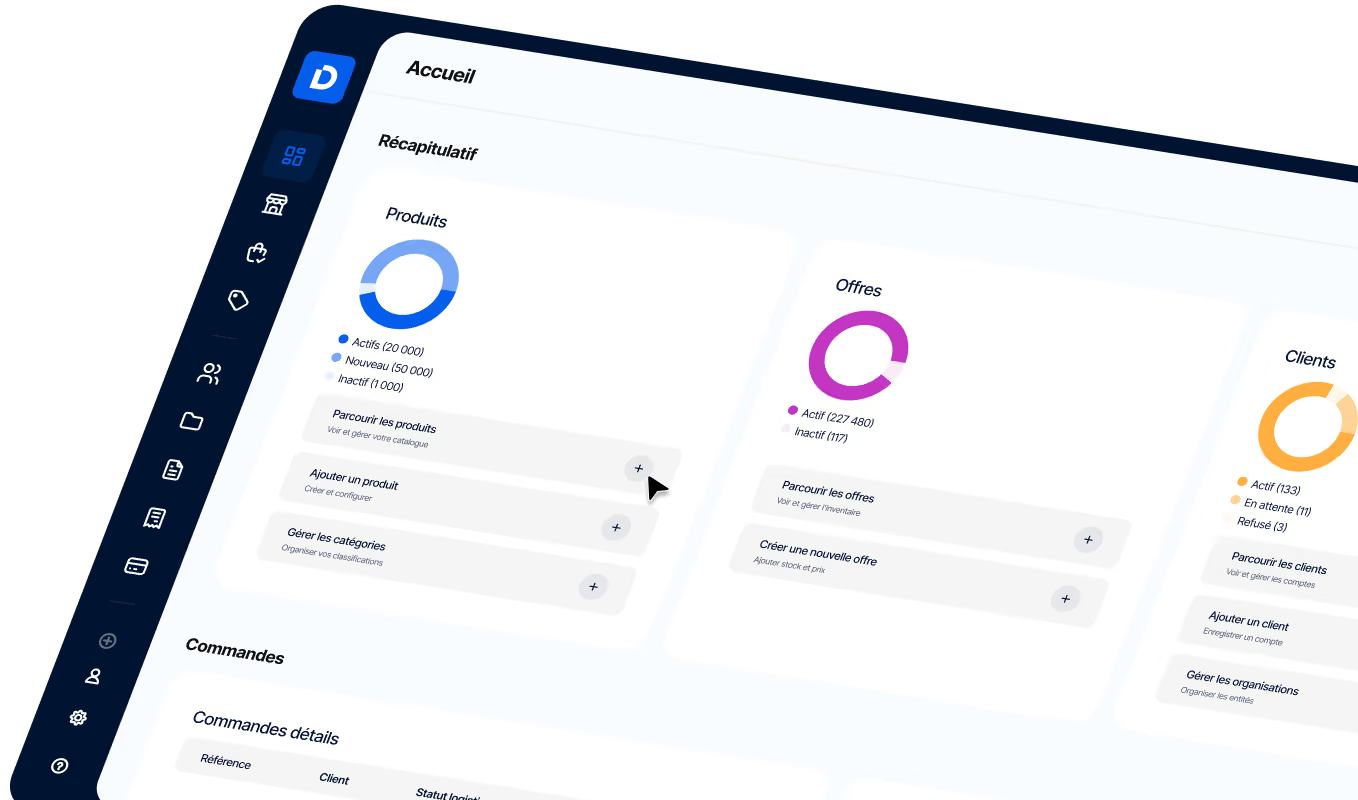
DJUST offers comprehensive features to effectively manage and increase your AOV. For example, its dynamic pricing and order management capabilities make it easy to implement tiered pricing and bundled offers.
Thanks to its user-friendly interface, B2B clients can launch targeted promotional campaigns to boost average order value, track their effectiveness, and adjust their strategies accordingly.
Furthermore, integrated CRM tools allow you to better understand your customers and tailor your offers to their specific needs.
Conclusion
Your strategy for increasing AOV must be aligned with your business goals and your customers' needs.
- A food service provider might focus on increasing order size through product bundling and setting minimum order values.
- An industrial equipment supplier, on the other hand, might emphasize service packages and volume discounts for high-ticket items.
Success relies not only on implementing these strategies but also on continuous testing and adjustments based on customer feedback and performance data. Modern B2B platforms, such as DJUST, provide the tools needed to experiment with various approaches and measure their impact on your business.