Average Transaction Value (ATV)
What is Average Transaction Value (ATV)?
Average Transaction Value is an essential eCommerce metric that measures the average amount spent per transaction over a given period. For B2B companies, this metric is particularly important since orders tend to be significantly higher than in B2C, often involving bulk purchases and price negotiations.
Calculating ATV
To calculate ATV, simply divide total revenue by the number of transactions completed within a given period:
ATV = total revenue / total number of transactions
For example, if your B2B company generates $500,000 in revenue from 100 transactions in one month, the ATV will be $5,000.
Why is ATV important in B2B eCommerce?
Optimizing ATV can drive significant revenue growth without a proportional increase in customer acquisition costs. Here are some key benefits:
Understanding customer behavior:
ATV provides insights into purchasing trends. For example, an industrial supply distributor might find that mid-sized manufacturers place larger orders than large enterprise clients, which could influence minimum order or delivery policies.
Defining marketing strategies:
Analyzing ATV helps guide sales strategies. A chemical supply company might notice that a certain type of product, when purchased with complementary equipment, generates a 40% higher ATV, suggesting opportunities for bundling or sales team training.
Budgeting and planning:
Knowing your ATV allows for better revenue forecasting and inventory management planning. For example, if an industrial equipment company knows its ATV is $25,000 and it has 100 regular clients ordering each quarter, it can more accurately estimate its revenue and adjust stock levels.
Strategies to increase Average Transaction Value
To grow ATV, several strategies can be implemented:
Implement tiered pricing models:
Offer graduated discounts based on volume or total order amount. For example, offer a 5% discount for orders over $100,000, 8% for those exceeding $250,000, and 12% for orders over $500,000.
Offer product bundles:
Understand your customers' operational workflows to create comprehensive packages that meet their specific needs. For example, a restaurant equipment supplier could create a complete package for setting up a frying station, including the equipment, safety supplies, and cleaning materials.
Encourage complementary products:
Suggest additional items that help avoid future orders in the event of a breakdown or the need for replacements. For example, offer an advance order of maintenance accessories alongside industrial equipment.
Implement loyalty programs:
Although more common in B2C, B2B-tailored loyalty programs can encourage larger purchases by offering benefits such as volume discounts, priority shipping, or dedicated customer service for regular clients.
Analyze and segment data:
It is crucial to regularly monitor AOV and segment data by customer type, industry, or geographic region. This helps identify segments where AOV is lower and target specific corrective actions.
Using DJUST to increase AOV
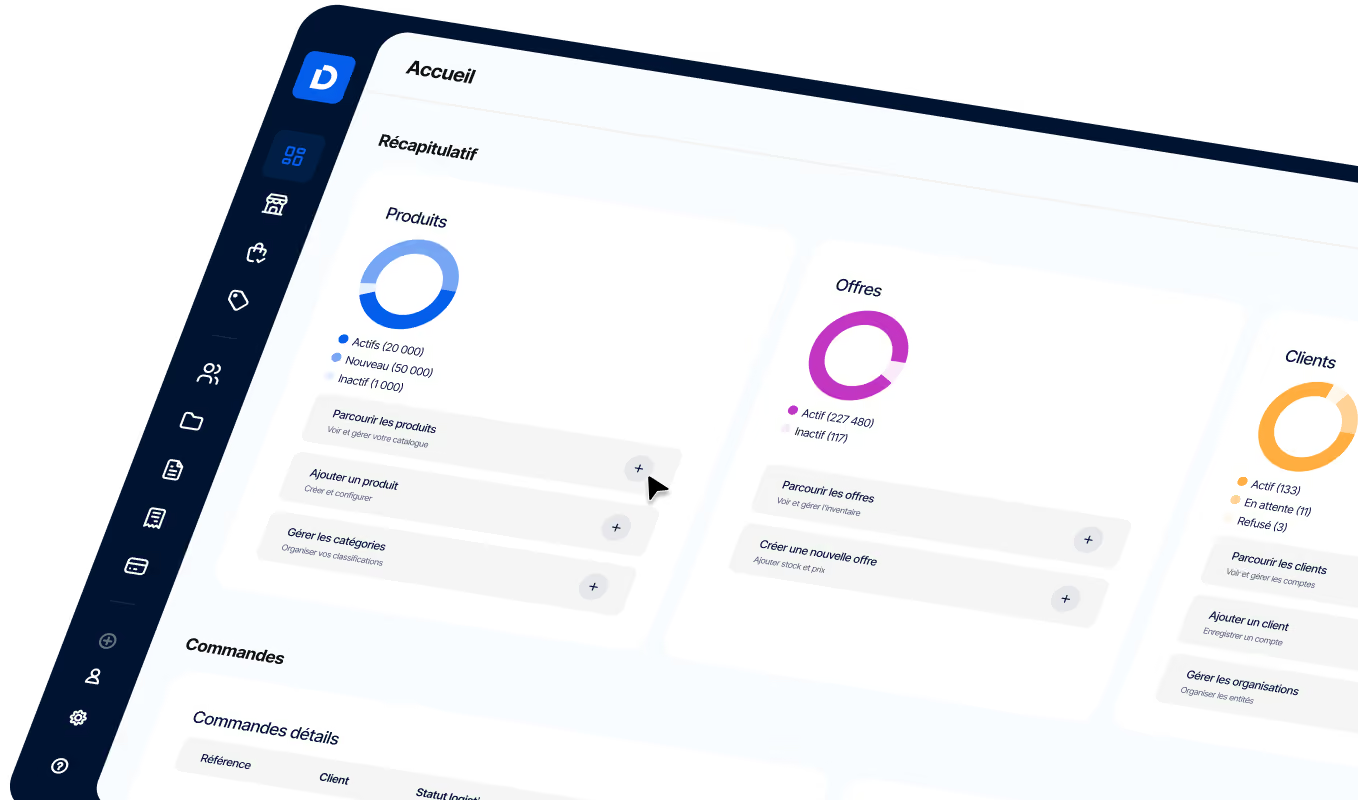
Specialized platforms like DJUST offer sophisticated tools to optimize B2B transaction management. For example:
Integration with your existing systems:
Thanks to its DataHub module, DJUST synchronizes data from your ERP, CRM, and inventory management systems in real time, ensuring accurate information on pricing and product availability.
Personalized customer management:
The platform allows you to create personalized catalogs and automatically display negotiated prices and volume-based discounts, thereby encouraging larger purchases.
Advanced ordering features:
Features such as collaborative ordering, one-click replenishment, and scheduled advance orders facilitate large-scale and recurring purchases.
For instance, when Jeff de Bruges integrated DJUST, the company was able to efficiently manage 20,000 product references across 520 stores, significantly improving order management and overall AOV.
Conclusion
Average Order Value is a crucial metric in B2B eCommerce for understanding and optimizing your customers' purchasing behavior. By implementing strategies such as tiered pricing, product bundling, complementary product suggestions, and loyalty programs, you can increase your AOV and, consequently, drive revenue growth. Modern solutions like DJUST.io provide the necessary tools to effectively integrate these strategies into your existing system.