Customer Lifetime Value
Customer Lifetime Value (Customer Lifetime Value)
Understanding and maximizing your investment
Money spent on acquiring new B2B customers only becomes profitable if those customers remain loyal over the long term. Customer Lifetime Value (CLV) indicates the precise revenue generated by each customer throughout the business relationship. By tracking and optimizing CLV, you can make better decisions regarding your marketing and retention budget investments.
What is Customer Lifetime Value?
Customer Lifetime Value represents the total amount a customer spends with your company from their first purchase to their last. For B2B companies, this calculation includes all orders, service contracts, maintenance fees, and other revenue streams associated with the customer account.
For example, an industrial company that buys €50,000 worth of parts every quarter, pays an annual maintenance fee of €10,000, and typically remains a customer for 7 years, will have a CLV of approximately €1.47 million ((€50,000 × 4 × 7) + (€10,000 × 7)). This single metric clearly summarizes the entire business relationship.
CLV differs significantly between B2B and B2C contexts. While a B2C company measures customer value in the hundreds of euros over a few months, B2B relationships often involve amounts in the hundreds of thousands or even millions of euros over several years. The extended duration and high value make CLV particularly relevant for B2B strategy.
The importance of CLV in B2B
CLV is crucial for several reasons:
Strategic resource allocation
CLV helps you efficiently allocate your limited resources across different customer segments. Identifying the accounts that generate the most long-term revenue allows for better decisions regarding the level of support, staffing, and investment in those relationships.
Precise pricing strategy
Your pricing strategy becomes more sophisticated through an understanding of CLV. By knowing the revenue potential of different types of customers, you can develop tiered pricing that encourages long-term engagement and high volumes.
Sales team optimization
CLV allows your sales team to target the most profitable opportunities. By analyzing the characteristics of high-value customers, sales teams can identify similar prospects and prioritize their efforts.
Service level planning
Understanding CLV helps you structure your service offerings. High-CLV companies often require higher levels of service. This information allows you to tailor service levels, allocate support resources, and create specific offerings.
Marketing budget allocation
CLV data transforms your marketing strategy by identifying the channels and campaigns that attract high-value, long-term customers.
Calculating Customer Lifetime Value
The standard CLV formula is a starting point, but B2B companies must consider additional elements specific to their complex business relationships.
Commonly used simple formula:
CLV = (Average Purchase Value) × (Average Purchase Frequency) × (Customer Lifespan)
Explanations:
- Average Purchase Value: Average order value for a B2B customer.
- Average purchase frequency: Predictable patterns based on contracts or regular cycles.
- Customer lifetime: B2B relationships are often longer than in B2C.
Example: If the average purchase value is €50,000, with a quarterly frequency, and a duration of 5 years, the CLV would be:
CLV = €50,000 × 4 × 5 = €1,000,000
Increasing customer lifetime value
Building lasting B2B relationships requires planning and consistency. Here are some proven strategies:
Product range expansion
Introduce complementary products or services to meet the additional needs of existing customers.
Digital self-service capabilities
Develop a B2B e-commerce platform to facilitate ordering and account management.
Expert tip: Analyze frequent requests and develop tools that prioritize addressing those needs.
Account-based pricing
Advanced pricing models that reward loyalty and increased spending.
Proactive account management
Dedicate resources to understanding and anticipating customer needs through regular reviews, training, and strategic meetings.
Using DJUST to improve CLV
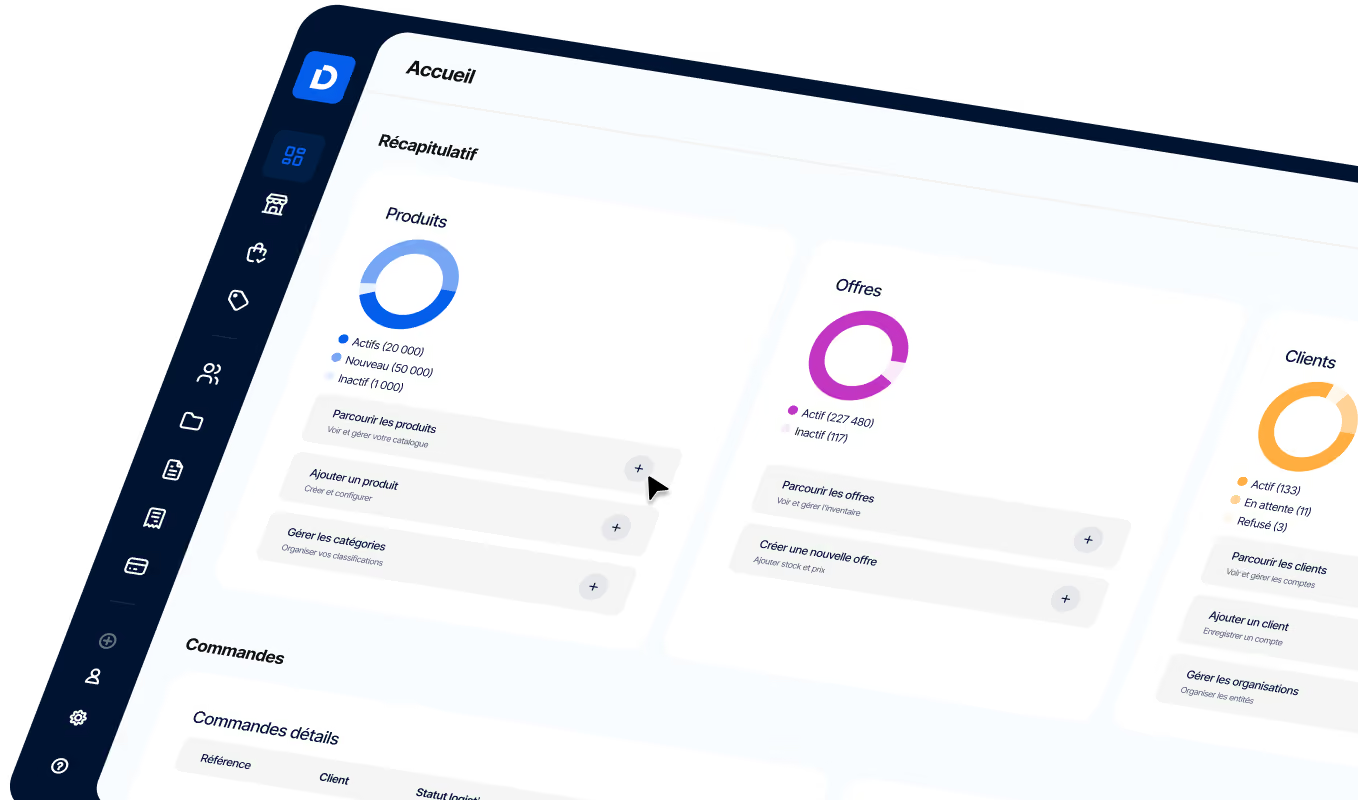
The unified B2B e-commerce platform DJUST integrates several features to improve CLV:
- Personalized customer portals: Negotiated prices, order history, and tailored recommendations.
- Workflow automation: Automated purchasing processes with approvals, spending limits, and specific catalogs.
- Multichannel support: Centralization and optimization of customer interactions.
- Analytics and insights: Identifying opportunities and proactive intervention.
Conclusion
CLV profoundly influences B2B relationships. By measuring it accurately and adopting tailored strategies, you build strong, profitable customer relationships supported by e-commerce platforms like DJUST.