
Magento migration: where to start your replatforming project
Plan your Magento migration with confidence. Discover the key steps, costs, timelines, and how to choose the right ecommerce platform.
Article summary
- Magento migration is becoming essential when your version approaches end-of-life, security risks increase, or maintenance costs and technical debt hinder your business evolution.
- A successful replatforming project begins with a complete audit of the existing system, defining business objectives, choosing a suitable target platform, budget planning, and forming a dedicated project team.
- The choice of platform must be guided by your business needs (B2B, marketplace, omnichannel), your target architecture, your integrations (ERP, PIM, CRM), and the Total Cost of Ownership (TCO) over several years, rather than by the technology used alone.
- SEO is a critical factor in migration: a comprehensive 301 redirection plan, structured data recovery, maintenance of Core Web Vitals, and post-launch monitoring are essential to preserve your traffic and sales performance.

Why migrate from Magento today?
The question is no longer whether to migrate but when. Since 2023, Adobe has applied a 3-year life cycle policy from the general availability of each Magento Open Source and Adobe Commerce version. Several widely used versions are already at end-of-life. Operating on an unpatched base exposes you to known security vulnerabilities, PCI-DSS non-compliance, and an increasing scarcity of qualified PHP developers. For businesses that have been on Magento for 5 to 8 years, a decision must be made now: version upgrade, or a complete change within the framework of genuine Replatforming.
End-of-life and security risks
The dates communicated by Adobe Experience League are clear: Magento 2.4.4 lost support in April 2025, 2.4.5 in August 2025, 2.4.6 in March 2026 with a security reprieve until August 11, 2026. PHP 8.1 reached end-of-life in 2025 and PHP 8.2 will lose support at the end of 2026, which closes the door to any long-term PCI compliance. Continuing without a migration plan means accepting a permanent risk: data theft, loss of payment certification, unfavorable audit.
Hidden costs and developer shortage
The second driver of replatforming is economic. For the projects we support, the maintenance cost of a legacy Magento has doubled in three years: rising hourly rates, abandoned third-party modules, and fragile ERP integrations. Added to this is functional debt, which is the gap between what the platform allows and what the business requires: marketplace, B2B order management, native invoicing. When this gap becomes insurmountable, migration is no longer optional.
6 steps to start your Magento migration
Launching a migration without proper planning is the number one cause of budget overruns observed on this type of project. Here is the sequence to follow before calling any agency or signing any quote. Each step produces a concrete deliverable that can be used by your steering committee.
- Audit of the existing system. Complete mapping: Magento version, installed modules, customizations, product-customer-order volume, ERP-PIM-CRM integrations, server logs. Deliverable: 10-to-20-page document.
- Definition of business objectives. Why migrate? International growth, B2B launch, performance, scalability. Without quantified objectives, the project will drift.
- Choice of target model. Version upgrade (Magento 2.4.8 LTS), transition to Adobe Commerce Cloud, or complete platform change to a headless or composable solution.
- Budget and planning framework. Based on the audit, construction of a macro-schedule and a budget in 36-month TCO (build + run + support).
- Selection of integration partner. Restricted call for tenders to 3 or 4 certified partners, with competition based on real use cases and verifiable B2B references.
- Formation of the internal team. Executive sponsor, IT project manager, business referent, SEO referent, data referent. Without a dedicated team, no service provider will be able to deliver on time.
Choosing the right target platform: 4 criteria
Not all Magento sites should migrate to the same target. The choice depends on the business model, catalog complexity, activated sales channels, and the technical maturity of the team. Four criteria structure the decision and make it possible to eliminate 70% of unsuitable options from the framing phase. For a broader market overview, consult our article on which B2B eCommerce platform to choose, which details the strengths and limitations of each solution.
For B2B projects with complex catalogs, negotiated prices, multi-buyer accounts, and strong ERP integration, monolithic platforms inherited from Magento show their limits. A composable solution like a B2B site software designed for these use cases makes it possible to serve a single catalog across multiple channels (merchant site, distributor portal, marketplace, commercial application).
4 SEO risks to anticipate
A poorly prepared migration can lead to organic traffic losses of 40 to 70% in the first few weeks, with recovery sometimes taking more than six months. For a site whose organic channel accounts for 30 to 50% of turnover, the impact is immediate. Four major points of vigilance structure the SEO management of the project.
- Incomplete 301 redirection plan. Any strategic URL not redirected loses its SEO capital. The plan must cover 100% of indexed pages: catalogs, product pages, articles, category pages.
- Loss of structured data. Schema Product, Offer, AggregateRating, BreadcrumbList: all must be reproduced with the same coverage on the new platform.
- Performance regression. A new platform does not guarantee better Core Web Vitals. LCP and INP must be measured in pre-production before any go-live.
- Loss of canonical and hreflang tags. Critical for multilingual or multi-country sites. Poor recovery generates duplicate content and indexing losses.
Redirection plan and SEO capital conservation
The redirection plan is the most strategic deliverable of the project. It is established from a complete crawl of the old site (Screaming Frog or equivalent), crossed with active pages in Search Console and Ahrefs over the last 12 months. Any URL that has generated traffic, positions, or external links must be redirected to the functionally closest page. Validation in pre-production before switchover, then daily monitoring for 90 days.
Structured data recovery and performance
The new platform must reproduce or improve the coverage of JSON-LD schemas: Product, Offer, FAQPage, BreadcrumbList. This is the base that feeds the rich snippets in SERP and AI Overviews. On the performance side, demand quantified commitments from the integrator: LCP under 2.5s, INP under 200ms, TTFB under 800ms. Recent B2B eCommerce trends confirm that Core Web Vitals influence B2B conversions as much as B2C.
Typical timeline: 6 months to migrate safely
The average duration of a Magento migration project is 3 to 6 months depending on the complexity of the platform. For a B2B project with ERP integration, multi-buyer accounts, and marketplace, the timeframe increases to 6 to 9 months. Here is a typical timeline for a medium-complexity project targeting a composable B2B platform composable.
The pace of each phase can be compressed or stretched depending on business constraints (seasonality, sales, launches). A switchover during a commercial campaign should be avoided. The ideal window is at the beginning of the fiscal year, outside of traffic peaks, with a 24/7 support team for the first 15 days. For a B2B eCommerce project, plan for a dual-run (old and new site running in parallel) during the first 30 days to manage current orders.
DJUST: a platform designed to succeed in your B2B replatforming
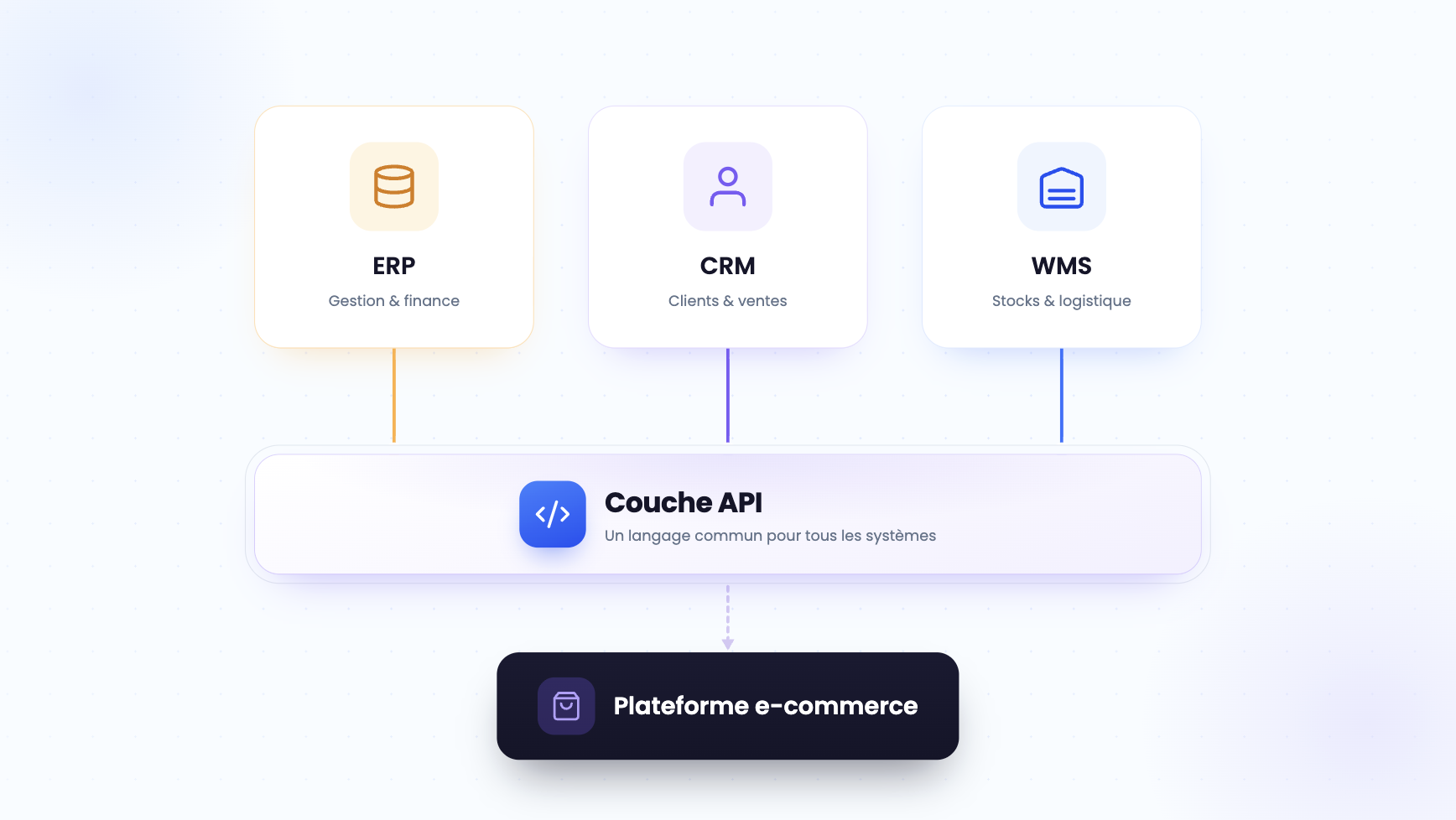
Migrating from Magento is often an opportunity to rethink your e-commerce architecture long-term rather than reproducing the limitations of the existing system. For B2B companies, this means choosing a platform capable of managing complex catalogs, negotiated prices, validation workflows, multi-buyer accounts, and native integrations with the ERP, CRM, or PIM. Thanks to its SaaS, headless, modular, and open-source architecture, DJUST supports replatforming projects by offering an evolving solution, designed to accelerate deployment while limiting the total cost of ownership. Businesses can thus modernize their platform without compromising their performance, scalability, or long-term innovation capacity.
FAQ
How long does a Magento migration take?
The average duration is 3 to 6 months for a standard project, depending on the complexity of the base and the level of customization. B2B projects with ERP integration, marketplace, or multi-channel frequently reach 6 to 9 months. The audit phase represents 15 to 20% of the total time, development 50%, and acceptance testing 20%.

How much does a Magento migration cost?
The budget depends on product volume, IS integrations, and the level of customization. For a standard project, expect between €50,000 and €150,000 for an upgrade to Magento 2.4.8 LTS, and between €100,000 and €350,000 for a replatforming to a composable B2B platform in Year 1, excluding annual run costs. The 36-month TCO must be systematically modeled.
Should I migrate Magento 2 or change platforms?
If your Magento base is recent (2.4.7 or 2.4.8) and your business needs remain stable, an upgrade to the latest supported LTS until 2028 may be sufficient. If you are launching a new model (B2B, marketplace, international) or if the functional debt is high, a platform change frees up more value over 5 to 10 years.
Which platform should I choose to replace Magento?
The choice depends on the business model. For a B2B project with differentiated catalogs, a marketplace, or multi-buyer accounts, a composable platform like DJUST, commercetools, or Adobe Commerce Cloud provides the necessary flexibility and ERP integration.


.png)