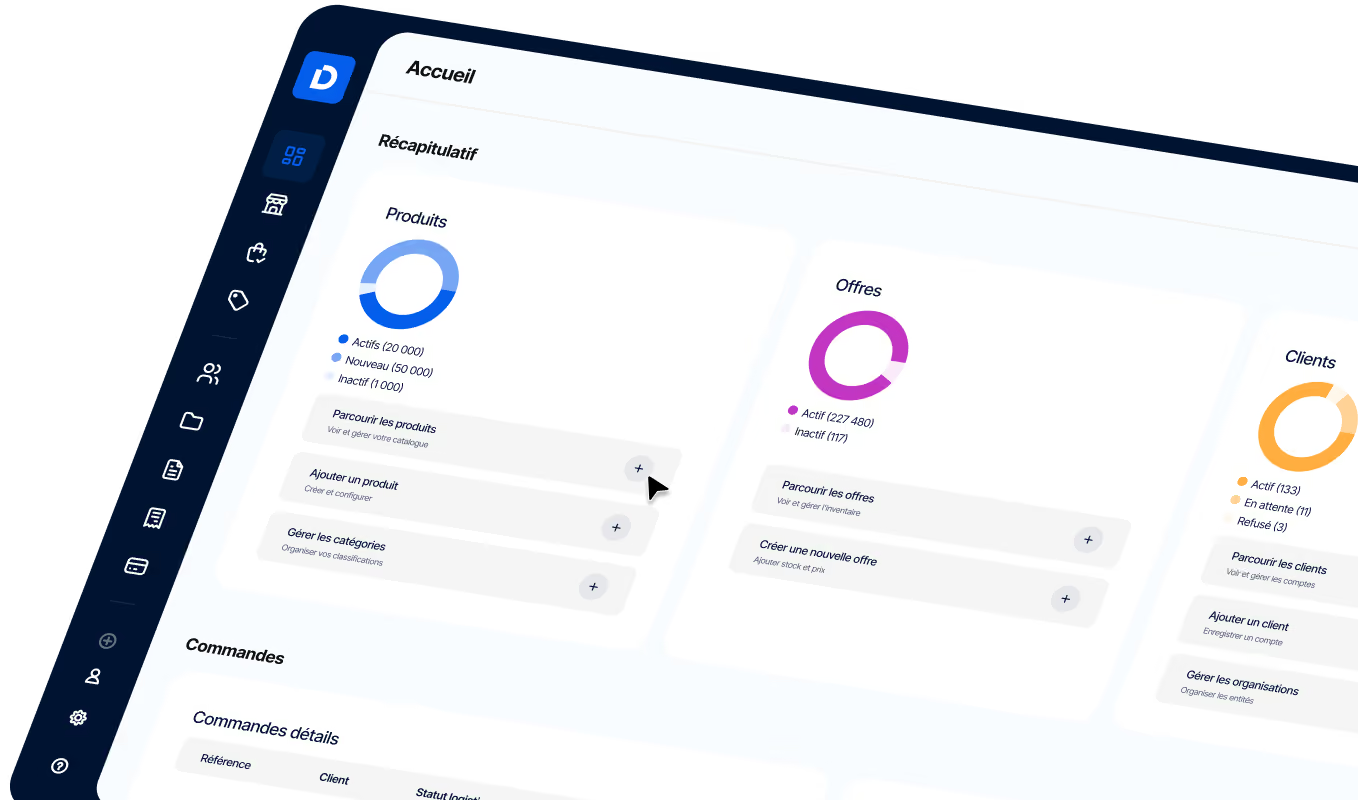
B2B PIM: What Is It For, and Why Adopt It?
Discover what B2B product information management (PIM) is, how it streamlines e-commerce processes, and what to look for in a PIM platform.

As your B2B e-commerce business grows and you start offering more products across multiple channels, including B2B e-commerce platforms, it quickly becomes difficult to manage all your product information. Inaccurate descriptions, missing details, and inconsistent information? That’s a recipe for frustrated customers and lost sales.
A PIM system is a powerful tool for simplifying product information and powering successful B2B e-commerce catalogs. In this article, we look at what PIM is, when you need it, and the key features to look for in PIM software.
Short on time? Here’s the key takeaway:
- Product information management (PIM) centralizes product data to ensure consistency across every channel.
- PIM becomes critical as product catalogs grow and span more e-commerce platforms.
- Look for PIM software with strong integration capabilities, especially with your customer relationship management (CRM) software and B2B e-commerce platforms.
- APIs enable integration between PIM systems and e-commerce platforms. Product data from the PIM can be dynamically fed into the e-commerce platform, ensuring up-to-date and consistent product information.
- Modern e-commerce platforms often offer robust product management capabilities, which can complement or, in some cases, replace traditional PIM systems.
What is product information management?
Product information management (PIM) is how your business centralizes and manages the detailed information needed to market and sell your products.
A PIM software acts as your single source of truth, bringing together, organizing, and enriching product information such as descriptions, specifications, images, and videos.
By streamlining this data, PIM ensures accuracy and consistency across all your sales channels, from product detail pages to B2B e-commerce catalogs.
4 business challenges PIM solves
A product information management system acts as a central hub for all your product data, allowing you to manage, improve, and distribute it efficiently. Here are a few specific scenarios where PIM excels:
Launching new products
Bringing new offerings to market means gathering, organizing, and distributing a wide range of product data. This includes technical specifications, marketing descriptions, images, videos, and more. Without PIM software, this process can be time-consuming, error-prone, and chaotic.
PIM software simplifies this process, making it easier to collect information from multiple sources, enrich it with marketing content, and publish it to your B2B store and other channels.
With workflow validation features, PIM software also ensures data completeness and accuracy, reducing time to market. For example, PIM software can automatically check whether all required fields are filled in and whether images meet the required resolution, flagging any issues to fix before publishing.
Expanding into new channels
As you expand into new enterprise e-commerce platforms, marketplaces, or even print catalogs, keeping product information consistent is a challenge. Different channels often have different requirements and data formats. Without a PIM platform, adapting your product data for each channel can be a tedious, manual, and error-prone process. On the other hand, you may not need a separate PIM if you use an e-commerce platform that can efficiently manage and distribute your product data across multiple channels.
A PIM solution is a central hub that lets you easily publish accurate, channel-specific data. This is especially important in industries such as B2B grocery, where product attributes and regulations are complex. For example, a PIM platform can automatically generate compliant product labels for different regions, helping you meet all legal requirements while expanding your market reach.
Managing complex pricing
B2B pricing often involves volume-based pricing, customer-specific price lists, and complex discount structures. Managing these complexities manually can lead to calculation errors, lost revenue, and unhappy customers.
A PIM system can handle these pricing complexities, ensuring that the right prices are shown to the right customers across every channel.
Integrating a PIM platform with your quote management software makes the sales process even smoother. It allows you to generate accurate quotes and proposals that reflect the latest product and pricing information. For example, a PIM solution can automatically apply the correct discounts based on customer group, order volume, or promotional campaign.
Simplifying order management
PIM software integrates seamlessly with B2B order management software, streamlining the creation, tracking, and fulfillment of purchase orders.
In addition, by providing a single, reliable source of product data, PIM software reduces the errors and inconsistencies that can lead to delayed or incorrect orders. This matters for maintaining customer satisfaction and loyalty.
For example, a PIM solution can automatically update stock levels after an order is placed, ensuring real-time availability information for your customers.
What should you look for in a PIM software solution?
When evaluating B2B PIM software options, look for a solution that offers the following:
Robust data management
Your PIM system should act as your central repository for all product information and ensure it stays accurate and up to date. It will collect data from multiple sources, suppliers, manufacturers, internal teams, and more, then organize and refine it so everyone in your organization can easily access the information they need.
Look for features such as a purchase order management system with bulk data import/export, which can save valuable time when updating large volumes of product information.
Data validation is also essential for ensuring accuracy and consistency, automatically flagging errors or inconsistencies for correction.
In addition, look for a platform that can handle a wide range of industry-specific attributes, whether that means technical specifications for industrial equipment or nutritional information for food products.
For example, a PIM platform for the fashion industry should be able to manage attributes such as size, color, material, and style. The level of precision required is typically higher in B2B contexts than in B2C. A B2C company may only need to store color as "red," while a B2B company may need to define color using precise CMYK or RGB codes.
Likewise, a PIM solution for the electronics industry may need to manage highly technical attributes such as voltage, power, and connectivity, with the precision required for professional or industrial applications.
Seamless integrations
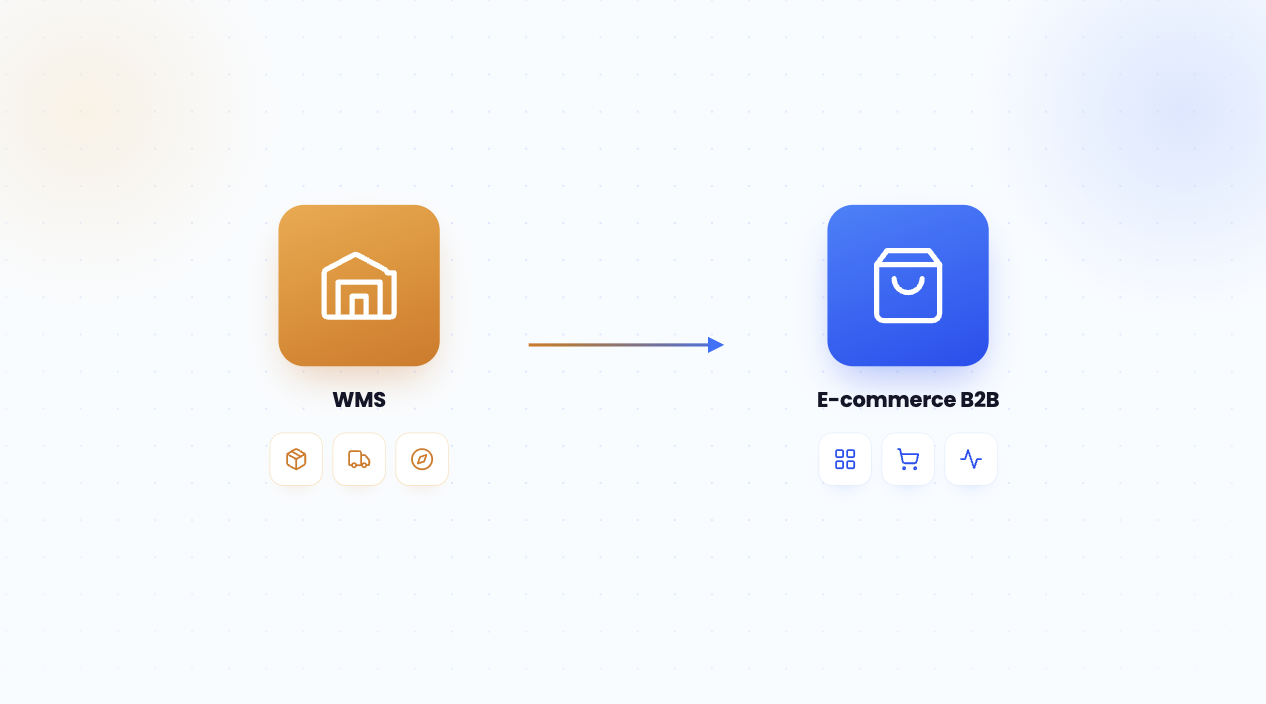
Your PIM platform should connect smoothly with your other systems, such as your e-commerce platform, customer relationship management (CRM) software, and enterprise resource planning (ERP) solution.
Effective integration enables smooth data flow and reduces manual effort, ensuring that all your systems work with the latest product information.
For example, connecting your PIM platform to your CRM system gives your sales team instant access to the latest product information during customer conversations. Linking it to your ERP solution automates tasks such as stock updates and order fulfillment. Integration with your e-commerce platform also ensures that your product data is accurately reflected in your B2B shopping cart, making the buying process smooth and hassle-free for your customers.
This interconnected approach to managing your data doesn’t just make things run more smoothly behind the scenes, it also leads to happier customers.
Expert tip: One of DJUST’s strengths is our flexibility when it comes to PIM systems. We can easily integrate with any PIM you already use, or even replace it entirely with our own solution.
If you want to keep your existing PIM, no problem. We can connect it seamlessly to all your other tools and systems, no matter who built them. But if you’re looking for a simpler solution, our enterprise headless commerce platform can actually replace a separate PIM. It’s designed with a user-friendly interface and connects seamlessly to everything else you need, thanks to our unified commerce approach.
Flexible catalog management
A PIM system with robust catalog management capabilities supports you as your product catalog grows and evolves. These capabilities include creating and managing multiple catalogs tailored to different brands, regions, or customer segments.
Your PIM platform should also be able to manage complex product relationships, such as bundles, accessories, or spare parts.
Some advanced systems offer tools such as an AI-powered product description generator to help create compelling content at scale. This can be especially valuable for businesses with large product catalogs.
In addition, good software should be flexible enough to adapt to your unique categorization and attribution needs. In practice, you should be able to define custom categories, attributes, and relationships that reflect your business requirements. For example, a furniture retailer might categorize products by room, style, or material, while a chemical manufacturer might categorize them by chemical composition or application.
Scalability and performance
Your PIM software should be able to meet both your current and future needs as your business grows. That means it must be scalable, able to accommodate a growing number of products, users, and data without compromising performance.
We recommend looking for a solution that offers cloud-based e-commerce hosting options, as cloud e-commerce platforms can provide greater scalability and reliability than on-premise solutions.
Performance also matters, especially for businesses with high traffic volumes. A slow PIM system can lead to frustrated users and lost sales. So make sure the PIM software you choose is optimized for speed and can handle your expected traffic levels. Consider factors like scalability and e-commerce performance when evaluating different options.
To assess the speed and responsiveness of a PIM platform, take advantage of demos, review published performance benchmarks, and look for features such as caching and efficient database indexing.
Workflow and collaboration features
Product information management is a collaborative effort involving marketing, sales, product management, and more. A good PIM solution should make that collaboration easier with built-in workflow and collaboration tools. These can streamline processes, assign tasks, track progress, and ensure everyone is working with the latest information.
Along with these tools, look for workflow validation features that ensure data quality and completeness. These can automate checks and approvals, making sure all product data meets the required standards before it’s published to your sales channels. This can help reduce errors, improve efficiency, and enhance the overall customer experience.
In conclusion
Product information management (PIM) streamlines the management of all product information, ensuring accuracy and consistency across multiple channels. When choosing a PIM solution, look for strong data management features, seamless integrations with your other systems, the ability to handle your growing product catalog with ease, and tools that make teamwork and collaboration easier.
PIM may not be necessary for every business. In some cases, we recommend skipping PIM altogether and going straight to B2B e-commerce if that better fits your business goals.
For businesses that do need PIM, DJUST’s unique approach lets us work with any PIM platform you choose, creating a true unified commerce experience. We believe in the power of composable commerce for B2B, which means you can choose the best tools for each job, including your preferred PIM, and connect them to our headless commerce platform. That gives you the flexibility to create outstanding product experiences for your customers while simplifying operations and improving profitability.
-modified.avif)
.png)
.avif)

.jpg)