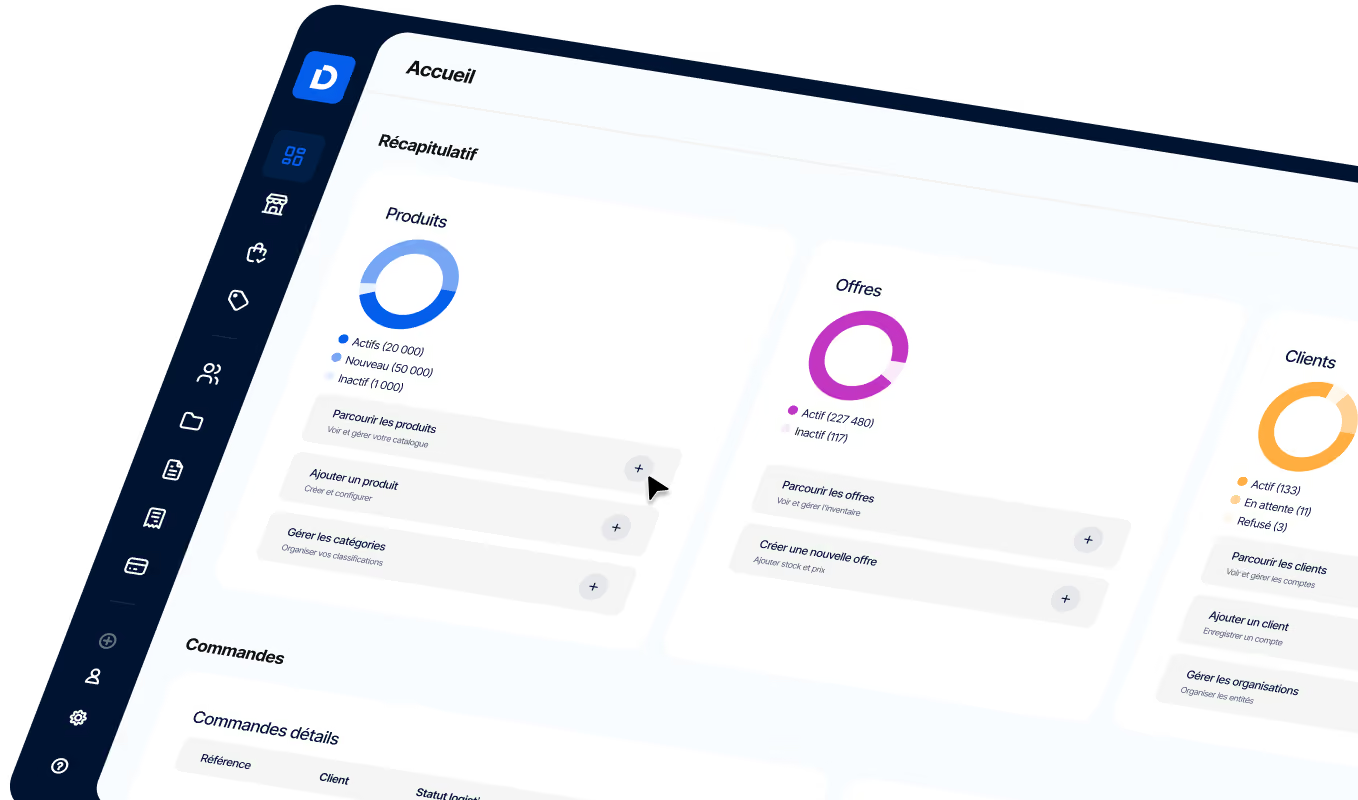
Masterclass: E-commerce Integration — Practical Use Cases and Benefits
Discover how a robust native API connector can unify your e-commerce systems, streamline operations, and improve the customer experience by centralizing data in one place.
Article summary
- Integrating your eCommerce platform with systems like ERP and CRM ensures seamless data flow, real-time updates, and fewer manual errors.
- API connectors are essential for smooth data exchange, workflow automation, and improved data accuracy and efficiency.
- Successful integration requires careful planning, selecting the right vendors, ongoing monitoring, and thorough user training.

According to Business Research Insights, the global e-commerce market is projected to surpass $24 billion by 2031. That figure refers to the B2C e-commerce industry, but it also points to the growth the B2B e-commerce sector is experiencing — and will continue to experience. So what’s driving this growth?
E-commerce integration gives businesses more flexibility by letting them manage all their online channels from a single platform. It’s a cost-effective way to reach a wider audience and maintain consistent revenue streams, no matter the time or location.
That’s why e-commerce integration is no longer optional. It’s a necessity — especially if you want to power your business with solutions like B2B data management.
What Is E-commerce Integration?
E-commerce integration connects different software applications, platforms, and systems so they work together as one cohesive unit for your business. Think of it as the bridge between your front-end web stores and back-end systems such as:
- Accounting
- Inventory
- Sales
- Enterprise Resource Planning (ERP)
- Customer Relationship Management (CRM)
- Marketing
Why Is It Important?
Your business growth and success are closely tied to having smart B2B e-commerce integration software in place. With the right software, you can save significant time and resources by avoiding the hassle of entering product data into multiple systems over and over again.
Integration also makes e-commerce product data management easier and ensures data flows smoothly between systems, usually through an e-commerce API integration.
For example, integrating an e-commerce platform with an ERP system allows for real-time inventory updates, ensuring stock levels stay accurate across every channel.
That helps you increase sales and convert more customers. It also reduces manual data entry errors, saving you from unnecessary losses.
Types of E-commerce Integrations
To optimize your online business, it’s important to understand the different types of e-commerce integrations.
Here are some of the key B2B e-commerce integrations that can improve your business operations:
E-commerce ERP Integration
Enterprise Resource Planning (ERP) systems are software tools that help businesses manage day-to-day operations more efficiently. By integrating functions such as risk management, project management, supply chain processes, procurement, HR, and accounting, ERP systems automate complex tasks and reduce manual work.
Businesses value ERP systems because they streamline operations and let teams focus on specialized tasks. Here’s how e-commerce ERP integration typically helps:
- Speeds up orders by calculating costs and shipping charges
- Keeps customers informed about order status and progress
- Automatically updates prices to protect profit margins
- Tracks and updates inventory levels in real time
E-commerce Payment Integration
Payment gateway integrations make it easy for businesses to accept a range of payment methods, including credit cards, debit cards, and digital wallets.
For global stores, offering multiple payment options ensures a smooth checkout experience for customers everywhere, no matter where they’re located or which bank they use. Key functionality includes:
- Handling payment processing
- Managing transactions effectively
- Ensuring PCI compliance for secure payment handling
E-commerce Shipping Integration
Integrating your e-commerce system with a shipping solution is a win-win for sellers and customers. Here’s why:
- Simplifies packing and label printing
- Offers customers a range of shipping options
- Provides access to the latest shipping rates
- Manages shipping from multiple warehouses effortlessly
- Keeps everyone updated with the latest order status
E-commerce CRM Integration
A Customer Relationship Management (CRM) system helps businesses stay in touch with clients and resolve issues quickly. Here’s how integrating a CRM can benefit an e-commerce business:
- Keeps customers updated on their orders, making them feel valued and cared for.
- Manages customer information and shopping habits to personalize offers and improve the online experience.
- Helps predict inventory needs based on customer demand to keep stock levels right.
- Minimizes mistakes from manual data entry, which can affect customer satisfaction and profits.
E-commerce Sales Integration
E-commerce sales integrations connect your e-commerce platform with multiple sales channels. Here’s how it can benefit your business:
- Reduces manual work by automating invoicing, order processing, and customer follow-ups.
- Ensures stock levels stay synced with sales activity, preventing overselling or stockouts.
- Simplifies operations by managing multiple sales channels from a single system.
- Provides comprehensive sales insights to refine strategies and drive growth.
- Ensures fast, accurate order processing for quicker delivery and better customer satisfaction.
E-commerce Inventory Integration
Inventory management integrations give B2B e-commerce businesses a smart way to keep track of stock. Everything is automated, helping prevent stockouts or overstocking. These integrations can help with the following:
- Managing inventory across multiple locations
- Automatically replenishing stock
- Tracking inventory in real time
- Receiving alerts for low stock
- Connecting with suppliers
E-commerce Accounting Integration
Accounting integrations connect your e-commerce platform with accounting software, ensuring financial data stays accurate and up to date. Here’s why businesses find this integration so valuable:
- Integrates smoothly with your accounting systems
- Keeps track of expenses and tax information effortlessly
- Generates detailed financial reports to keep you informed
- Automatically syncs sales transactions with accounting software
E-commerce POS Integration
Point of Sale (POS) e-commerce integration platforms help businesses unify their online and in-store sales channels. By integrating an e-commerce platform with your physical store’s POS system, you can easily:
- Manage inventory across all your sales platforms
- Create unified customer profiles for a seamless experience
- Provide comprehensive reporting and analytics for all channels
Top Use Cases for E-commerce Integration
By integrating different tools and systems, you can significantly improve the way your business operates. These integrations are more than add-ons; they’re strategic moves that can drive sales, improve customer experiences, and streamline operations.
Some use cases for e-commerce integration software are:
1. Increase Sales
Integrating marketing tools with your e-commerce platform lets you engage customers throughout their journey. By tracking behavior and purchase preferences, you can create personalized campaigns that trigger automatically, from customer segmentation to email follow-ups and special discount offers.
For example, a B2B supplier of office equipment could use a marketing automation tool to send personalized emails to repeat clients, offering discounts on their preferred products and increasing sales.
2. Streamline Operations
E-commerce integrations let you manage B2B-compliant data, customer information, and orders seamlessly. These solutions provide real-time visibility into stock levels, help organize and process data, and ensure every customer order is tracked and fulfilled effortlessly.
For example, a B2B distributor of industrial parts can integrate its e-commerce platform with an ERP system to automatically update stock levels and order statuses, reducing the risk of errors and improving overall efficiency.
3. Enhance Customer Support
Help desk integrations make it easier to manage customer inquiries and track issues, especially for SaaS companies. Customers can create support tickets, which can then be managed by priority, department, or product. Live chat integrations further improve customer support by enabling immediate responses to customer concerns.
A B2B retail distributor might use these integrations to streamline customer support, resolve issues quickly, improve customer satisfaction, and build long-term business relationships.
4. Automate Inventory Management
Managing inventory across multiple sales channels can be complex, but PIM (Product Information Management) integrations automate the process. Real-time synchronization of stock levels, order processing, and tracking can be achieved across all sales channels.
5. Improve Store Navigation
Default product navigation and checkout options may not meet your business’s specific needs. Integrating advanced product recommendation tools and CRMs allows customers to browse, filter, and search for products more efficiently. Payment gateways, one-page checkouts, and abandoned cart recovery features can also improve the checkout process.
Why You Need API Connectors for Better Integration
API connectors are the backbone of a well-integrated B2B e-commerce ecosystem. They’re the vital link that enables seamless communication between different systems and applications. These connectors ensure that every business component, from your CRM to your inventory management system, works together perfectly. Here’s how:
- API connectors enable real-time data exchange, keeping all your processes aligned and up to date, eliminating the need for manual data entry, and reducing the risk of errors.
For example, when a customer places an order on your e-commerce platform, the API connector instantly sends that information to your inventory management system, updating stock levels and triggering the next steps in the order fulfillment process.
- At the same time, it can send customer details to your CRM, allowing your sales team to track the customer journey and offer personalized service. This seamless connection simplifies operations and reduces the chances of mistakes or mismatches that can happen with manual data entry or outdated information.
Key Benefits of Using DJUST's API Connector
Here’s how DJUST’s API Connector can improve data accuracy without increasing your workload:
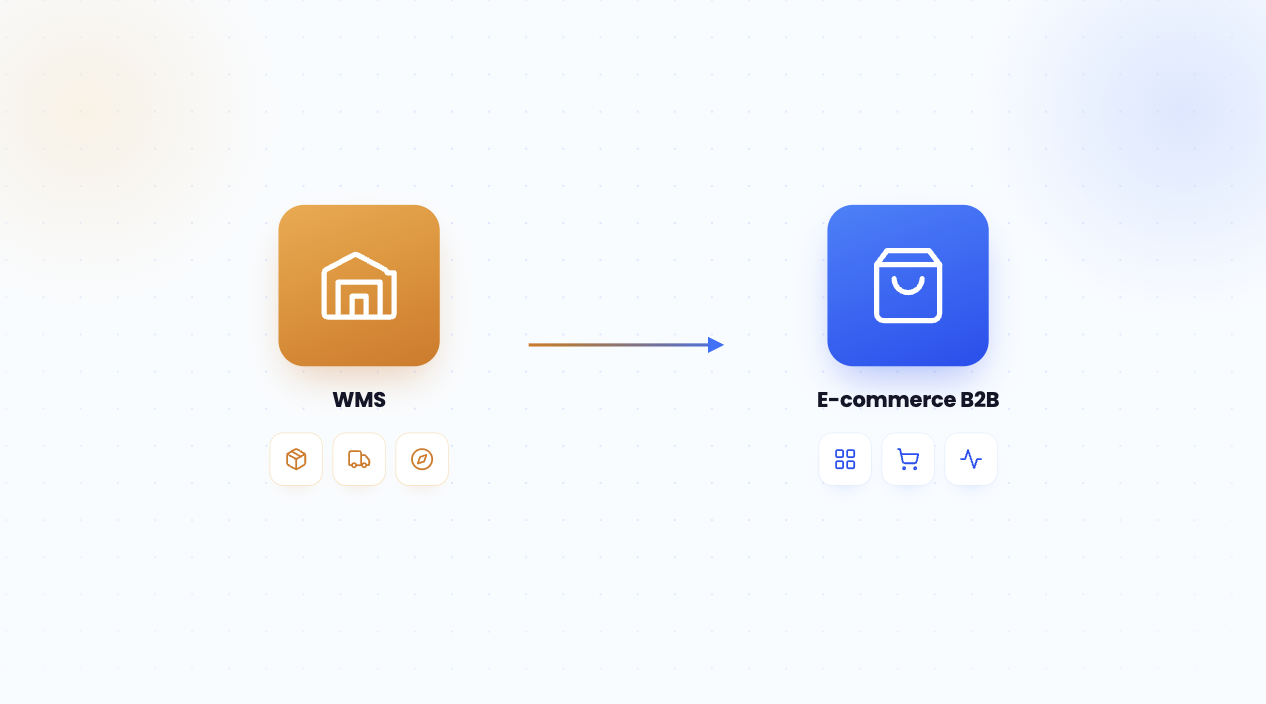
- Smooth Integration: The API easily connects with systems like ERP, PIM, and WMS, reducing manual data entry mistakes and ensuring data flows smoothly across platforms. For example, in a B2B manufacturing setup, this integration could help keep inventory levels accurate, reducing the risk of stockouts or overstocking.
- Real-time Data Sync: It enables instant data updates, which helps prevent errors caused by delayed information. So, if a B2B electronics distributor needs to update product availability in real time, customers can always see the correct stock levels when placing orders.
- Tailored Tracking: You can set specific tracking parameters that capture more precise data, leading to better e-commerce analytics. For instance, a B2B pharmaceutical company might use custom parameters to track the distribution of temperature-sensitive products, ensuring they’re handled correctly throughout the supply chain.
- Automated Workflows: The API helps maintain consistent data integrity during transactions by automating processes like order management. For example, a B2B food supplier automates order entry and fulfillment, ensuring every order is processed accurately and efficiently.
How DJUST’s API Connector Works
DJUST’s API Connector securely links your B2B e-commerce platform with a range of essential systems, such as ERP and PIM. It’s designed to create seamless connections between these systems, ensuring data flows smoothly and accurately across your entire operation.
By automating integration processes, DJUST’s API Connector eliminates the need for manual data entry and reduces the risk of errors. It consolidates data from all channels, providing a unified view of your business activities.
Best Practices for Smooth E-commerce Integrations
Successfully integrating B2B e-commerce systems requires careful planning and execution. By following these best practices, businesses can ensure a smooth and effective integration process.
- Thorough Planning and Strategy: Start with a clear integration strategy. Then conduct comprehensive planning, set clear objectives, and create a detailed roadmap to guide implementation.
- Vendor Selection: Make sure you choose vendors with a solid track record in B2B e-commerce integration. Experienced vendors provide reliable support and expertise, which is crucial for a successful integration.
- Continuous Monitoring and Optimization: Regularly monitor and optimize integrated systems to ensure they remain efficient and up to date. Ongoing assessments also help identify and resolve issues quickly.
- User Training and Support: Provide thorough training and support for your team. Well-trained staff can use integrated systems effectively, maximizing the benefits of integration.
The Bottom Line
E-commerce integration is no longer optional — it’s essential for running your business smoothly. By connecting your systems with a tool like DJUST’s API Connector, you can streamline operations, improve data accuracy, and deliver a better experience for your customers. With the right approach, you can manage your online channels effortlessly, reduce manual errors, and ensure everything works together seamlessly.
-modified.avif)
.png)
.avif)

.jpg)