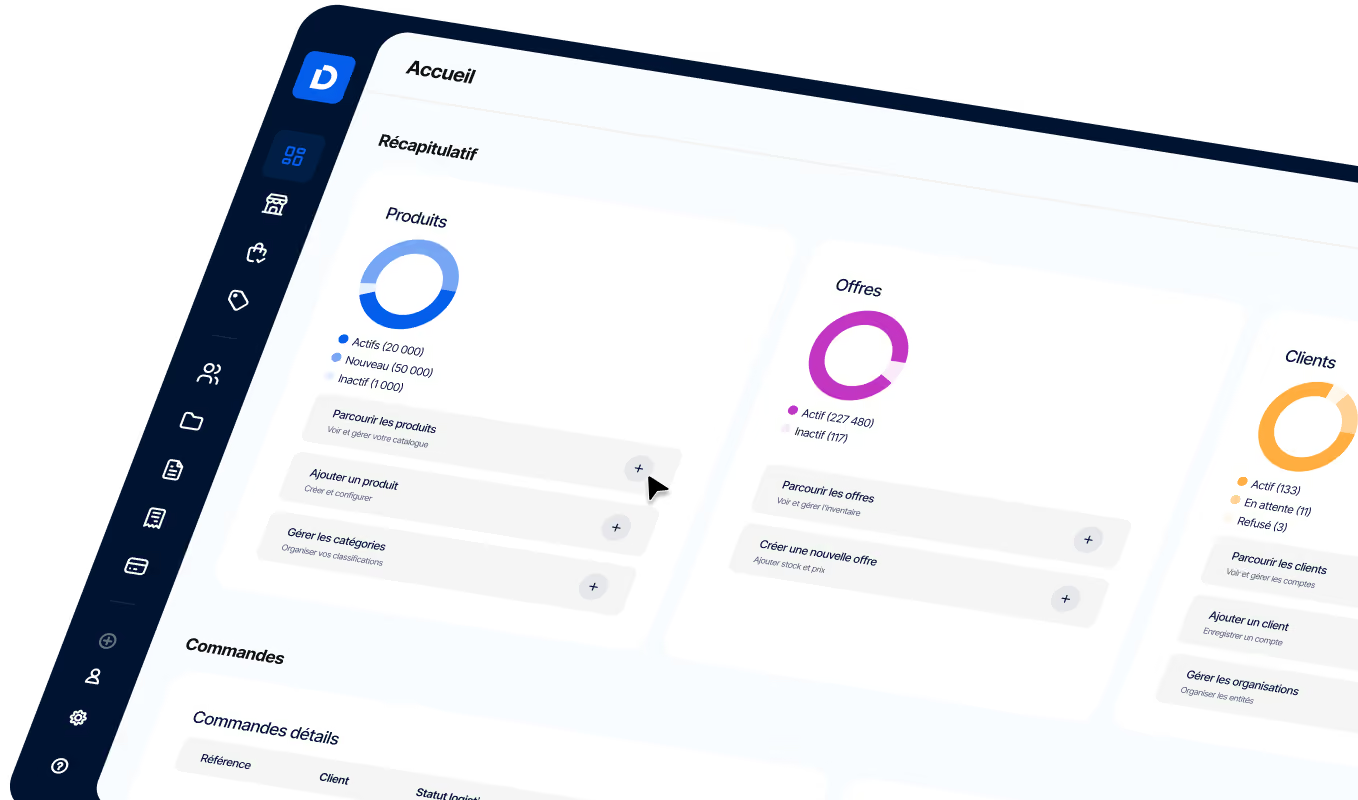
Your e-commerce tender in 4 steps
DJUST’s step-by-step guide shows you how to write a strong RFP so you can find the ideal e-commerce platform provider on the first try.
Article summary
- A B2B e-commerce RFP helps you find the right software vendor when you’re moving into B2B e-commerce for the first time or leaving your current platform.
- Start by defining your goals and setting a timeline for completing your request for proposal, which can take several months.
- Your RFP should include the scope of work, technical and functional requirements, integration requirements, budget information, and more. Our template will help you cover all of these details.
- Once your RFP is ready, you can send it directly to vendors or share it on industry forums and at conferences.
That said, let’s get into the details, starting with why you need an e-commerce RFP!

B2B e-commerce is a powerful way to reach new customers, grow your business internationally, and diversify your revenue. But moving into e-commerce is a major step, and you need the right partner to make it work. With the wrong e-commerce provider, you can miss sales opportunities and run into costly issues.
That’s why we put together this guide to help you choose the ideal e-commerce provider for your online B2B sales process. Below, we explain how to write an e-commerce request for proposal (RFP) and provide a sample tender template to help you get started.
Before we dive in, let’s cover the most important things you need to know.
Why do you need an e-commerce RFP for your B2B business?
There are two key moments when it makes sense to issue a B2B e-commerce RFP: when you’re looking for a new e-commerce platform and when you want to move from your current platform to a new one, which is known as replatforming.
New B2B e-commerce solution
Writing an RFP for a new e-commerce platform helps you:
- Assess your business’s current e-commerce needs and growth plans
- Make sure your business goals align with those of potential e-commerce providers
- Reduce risks such as choosing an e-commerce platform that doesn’t fit your needs
- Bring internal stakeholders, such as your IT, marketing, and sales teams, into the process so everyone is aligned
- Evaluate a provider’s capacity and capabilities and see whether they can be a strategic partner for your business
- Define your budget and encourage providers to offer competitive terms for your e-commerce implementation
Replatforming
If you’re moving from your current e-commerce platform to a new one, writing an RFP allows you to:
- Identify the gaps in your current platform and outline the improvements you want in a new solution
- Specify how important data migration and integration capabilities are when comparing providers
- Compare the total cost of ownership of your current platform against the potential growth from new solutions
- Set expectations for provider support, training, and ongoing development
Step 1: Define your goals
The first step in creating an RFP is defining the goals and timeline for your e-commerce rollout.
Goals
The goals you want to achieve with an e-commerce platform set the tone for your entire RFP process. Here are some goals you may want to define:
- Strategic goals, such as expanding into new markets, increasing sales to existing customers, offering a wider product range, improving your B2B sales experience, or reducing B2B churn.
- Operational goals, such as streamlining your B2B sales cycle, speeding up order processing, or reducing fulfillment costs.
- Technical goals, which may include setting up specific integrations or meeting data security standards.
- Sustainability goals, such as reducing your company’s carbon footprint by minimizing paperwork or adopting more environmentally friendly practices in your order processing workflow.
Step 2: Set a timeline
The RFP process can take several months from start to finish. After that, it may take a few more months for you and your provider to set up your new e-commerce solution.
Because this is a long process, it’s important to be realistic about your expectations.
Here’s what you can expect during the RFP process:
- RFP development (1 to 3 weeks): This phase is about defining your goals and drafting your RFP.
- RFP distribution (3 to 6 weeks): Once your request for proposals is ready, you’ll need to decide which providers to send it to and give them time to prepare their proposals.
- Proposal evaluation (1 to 3 weeks): Once your RFP deadline has passed, you can review proposals and create a shortlist of providers to negotiate with.
Expert tip: In your request for proposals, include your preferred implementation timeline. You can also ask providers about their typical turnaround times.
Implementation time can vary widely depending on the complexity of your project; timelines of up to a year are fairly common. But at DJUST, we’re proud to deliver projects in four months on average.
Step 3: Write the RFP
Now it’s time to write an RFP for an e-commerce platform. To give you a head start, we’ve created an e-commerce RFP template that explains everything you should include.
Introduction and background
Start your RFP with an introduction section that gives providers an overview of your business and what you’re looking for.
Here’s what to include:
- Company overview: Provide a brief description of your company, including the markets you serve and your core values.
- Project objective: Briefly explain why you’re looking for a new e-commerce platform. Specify whether this is a replacement for an existing solution or part of a broader strategic shift in your business. Also be sure to highlight the goals you defined in Step 1.
- Project timeline: Give a short overview of the project schedule. (You’ll go into more detail later in the RFP.)
Scope of work
Next, briefly describe what you expect from a B2B e-commerce solution. You’ll go deeper into these points later., but for now, make sure you cover:
- Must-have B2B e-commerce features
- Integrations required for your existing business software
- Support and training expectations
- Future development and scalability expectations
Technical requirements
Here, you expand on your scope of work by outlining the technical specifications for the e-commerce platform you want. Be sure to mention:
- Whether you prefer a cloud-based or on-premise solution
- Whether you need a headless architecture or another type of back end
- Whether you need a mobile-friendly back end
- Whether you need to migrate data from an existing e-commerce platform
- Integrations you need with existing systems, such as CRM (customer relationship management) or ERP (enterprise resource planning) software
- Integrations you need with existing B2B sales channels
- The performance standards you expect, such as page load times or transaction speeds
- The security measures you need for employees and customers
Expert tip: We recommend asking for a cloud-based solution or software as a service (SaaS) with a headless architecture in your RFP.
SaaS e-commerce platforms can scale easily and are often updated with new features. Plus, since the provider handles software maintenance, you can focus on growing your business.
As for headless architecture, it lets you host multiple storefronts for different customers or markets, which is essential for success in B2B. All your storefronts connect to the same core platform, making it easier to manage inventory, orders, and more.
Functional requirements
Next, provide a detailed list of the features your B2B e-commerce platform must have. (You’ll already have described them in the scope of work section.)
Here are the features and capabilities to consider:
- Product catalog management
- Support for multiple business units
- Online ordering
- Order processing
- Self-service customer portals
- Custom pricing
- Bulk ordering
- Approval workflows
- Reporting and analytics tools
- Payment gateway integrations
- Shipping integrations
- Account management
- Inventory management
- Discounts
- Customer segmentation
Expert tip: Prioritize your customers’ needs when defining requirements. Features like real-time order tracking, support for multiple payment methods, and one-click reorder will help improve customer satisfaction.
User experience (UX) requirements
In this section, describe the user experience you want to deliver for your sales team, distribution staff, and customers. You can discuss topics such as:
- Navigation requirements
- Account setup and management
- Product search and filtering options
- Mobile responsiveness
- Accessibility considerations
If you’re migrating from an existing e-commerce platform, it can be helpful to give specific examples of what you like and dislike about your current platform’s user experience. You can also review your competitors’ e-commerce storefronts to see what you admire or think works better for users.
Integration requirements
Specify your requirements for integration with existing software systems, such as CRM, ERP, inventory management, accounting, and other tools. Provide a list of the tools your company currently uses and highlight any data that needs to be shared with your e-commerce platform.
Where possible, specify how data should be shared and what the API requirements are, for example, whether you need real-time synchronization between your CRM and your e-commerce platform or batch updates at set intervals. Including this information can help your new platform go live faster.
Data and security requirements
Next, identify your requirements for data encryption and platform security.
Think about who should have access to what (which you can control through role-based access), adding extra layers of security (such as multi-factor authentication), and making it easier for users to sign in (through single sign-on).
You should also require providers to have strong information security certification. Ask them to include SSL certificates for data protection as well.
If your business must comply with specific privacy regulations, such as the General Data Protection Regulation (GDPR) or the California Consumer Privacy Act (CCPA), make sure to mention that too.
Performance and scalability
State the performance you expect from the platform in terms of transaction processing speed and its ability to handle high traffic volumes.
Provider qualifications and experience
Next, share the qualifications, experience, and track record you expect from potential providers.
You can ask providers about their experience delivering B2B e-commerce solutions and request examples or customer references in their proposals. You can also ask about the other companies they serve in your industry.
Project timeline and deliverables
In this section, you’ll detail the implementation timeline you want, with key dates for every milestone.
You should also list the expected project deliverables, including not only the e-commerce platform, but also any ongoing support, training, and maintenance requirements.
Budget and pricing structure
Here, clearly state your project budget and any constraints you’re working within that could affect provider proposals for your e-commerce website.
If you prefer a specific pricing model, such as subscription pricing or transaction fees, specify that too.
It’s also a good idea to ask providers to indicate whether they have any additional costs for ongoing support or future integration requests.
Evaluation criteria and selection process
Next, explain the criteria you’ll use to evaluate the e-commerce website proposals you receive.
You might look at:
- How well a provider meets your technical and functional needs
- The provider’s cost-effectiveness
- The provider’s track record and quality
- How well the provider’s proposed solution aligns with your goals
- Their implementation timeline
Don’t forget to set a deadline for proposal submissions and tell shortlisted providers when they can expect to hear back from you. Also note whether you have any specific requirements for additional presentations, such as an in-person demo.
Terms and conditions
In this penultimate section, you’ll outline any legal and contractual requirements the selected provider must agree to. This may include indemnification clauses, intellectual property rights agreements, termination clauses, and confidentiality agreements.
Contact information
Finally, provide contact details for RFP questions and proposal submissions. Include the name, title, email address, and phone number of the main contact for your RFP process.
Expert tip: The more detailed your request for proposals is, the better your provider selection process will be.
If you’re not familiar with all the e-commerce options available and aren’t sure which features you need, start by explaining what isn’t working with your current system. That will give providers enough context for their teams to ask the right questions and better understand your needs and which of their capabilities could help you.
Step 4: Distribute your RFP
Once your RFP is complete, share it with providers so they can start working on their proposals.
There are three main ways to distribute your RFP:
- Contact providers directly. If you already have certain providers in mind, send them your request for proposals directly. This is a good way to get proposals from providers you want to work with.
- Use RFP platforms and industry forums. Share your RFP on professional forums such as the Shopify Forum and Reddit’s r/ecommerce subreddit to gather proposals from a wider range of providers. You can also share it in forums specific to your company’s industry.
- Advertise in trade publications and at industry events. To attract even more providers, publish your RFP in trade magazines or mention it at industry events. Be sure to add a short summary of your RFP when advertising it this way.
The bottom line
Writing an RFP for a B2B e-commerce platform is a key step if you want to establish or improve your company’s online presence.
To get proposals that fit your needs, clearly define your goals, outline the project scope, set your implementation timeline, and list the technical details you need for your e-commerce solution.
Once your RFP is ready, you can send it directly to providers or share it through different industry channels to start attracting proposals.
-modified.avif)
.png)
.avif)

.jpg)