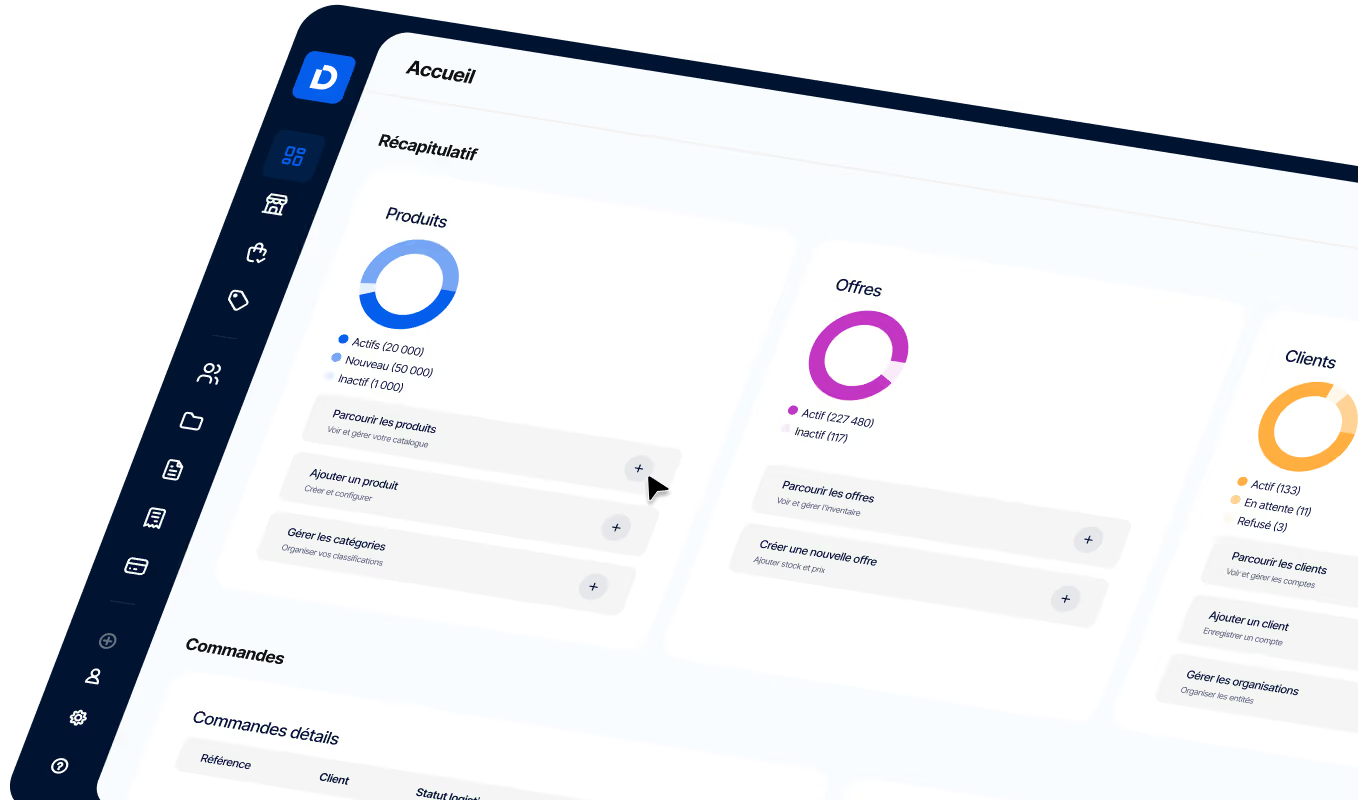
How Do You Choose the Right B2B eCommerce Platform?
Struggling to figure out what kind of B2B e-commerce solution you need? We’ve got you covered.

First, what is B2B e-commerce?
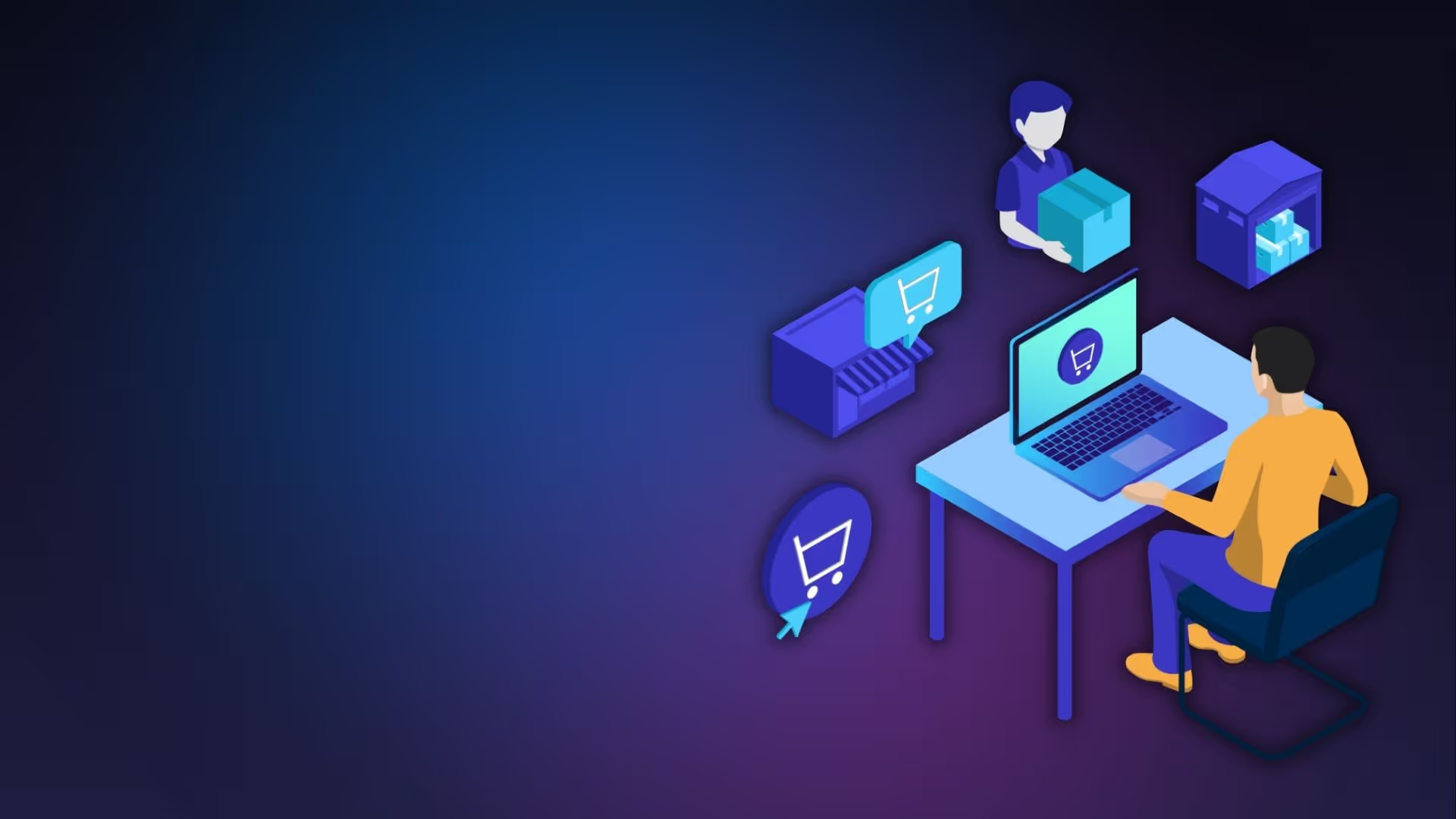
B2B e-commerce, or business-to-business commerce, refers to online order transactions between companies, and it’s a fast-growing sector. While B2B e-commerce platform options were traditionally quite limited, there is now a growing number of viable channels companies can use to expand their reach effectively and get their products and services in front of the right people. Orders, approvals, and shipments are handled digitally, which improves purchasing efficiency for distributors, manufacturers, wholesalers, and other types of B2B sellers. Forrester expects B2B e-commerce sales to reach $1.8 trillion in the United States by 2023. It’s clear that B2B companies need to get organized and put the internal structures in place now to stay competitive in the digital future.
Let’s look at the different types of B2B e-commerce.
Different types of B2B e-commerce:
- B2B2C
Business-to-business-to-consumer (B2B2C) removes the middleman between the B2B organization and the B2C organization, putting companies directly in touch with the consumer. The way wholesalers and manufacturers interact with traditional B2B and B2C models is the best example of this. With B2B2C e-commerce, these transactions happen online, often through virtual storefronts, an e-commerce website, or even apps. In many B2B2C e-commerce models, the consumer knows they’re receiving products from a company different from the one where they bought them. For example, a consumer may buy clothing on a multi-brand marketplace, but the product is branded and shipped by the manufacturer.
- Wholesale
Wholesale can be described as selling goods to other businesses. Companies often buy goods in bulk at a lower price and resell them at retail price. Goods are usually purchased directly from the manufacturer or from distributors. This is wholesale, a very common type of B2B commerce. Wholesale models can be found across many sectors, including retail, food service, construction, healthcare, and many others. Traditionally, wholesale B2B transactions happened by phone, email, or fax. With B2B e-commerce wholesale, everything is digital, making it easier for the wholesaler to showcase products and create a seamless buying experience.
- Manufacturers
The automotive industry is a good example of the role manufacturers play in a B2B context. For example, the manufacturer creates individual auto parts, such as wheels, the fuel pump, and the engine. It then sells those parts to an automotive company that builds the entire car from the components and sells it to the consumer. In the B2B model, finished products are sold to other manufacturers or wholesalers. With B2B e-commerce, manufacturers can adopt a digitally connected ecosystem of customers, internal teams, data, and systems managed through a single platform.
- Distributors
A distributor is a person or organization that works closely with manufacturers to drive sales and increase visibility for their products. In an e-commerce model, sales happen online, often through an e-commerce platform. Many manufacturers work with distributors, and going digital creates a greater growth opportunity. Distributors work to reduce the time between sale and delivery. Above all, distributors aim to create a customer experience that meets high buyer expectations.
Which type is right for you?
It all depends on what you’re looking for:
Factor 1: Build or adapt the platform
Factor 2: Number of features and integrations
Factor 3: Number of rules and custom functions
Factor 4: storefront design
The truth is, companies don’t need to start big to succeed. Often, starting smaller and focusing on the most important elements of your e-commerce platform will lead to success because the concept is tested with products that are actually sold, and people in your organization can manage the platform’s new systems.
Key considerations:
- A flexible, customizable platform built on modern technology, such as headless architecture
- Multiple B2B features and channel aggregation that connect to all internal or external systems
- Fast ordering, verification
- A specialized B2B vendor that becomes your partner
There are several types of B2B commerce solutions on the market, with different costs.
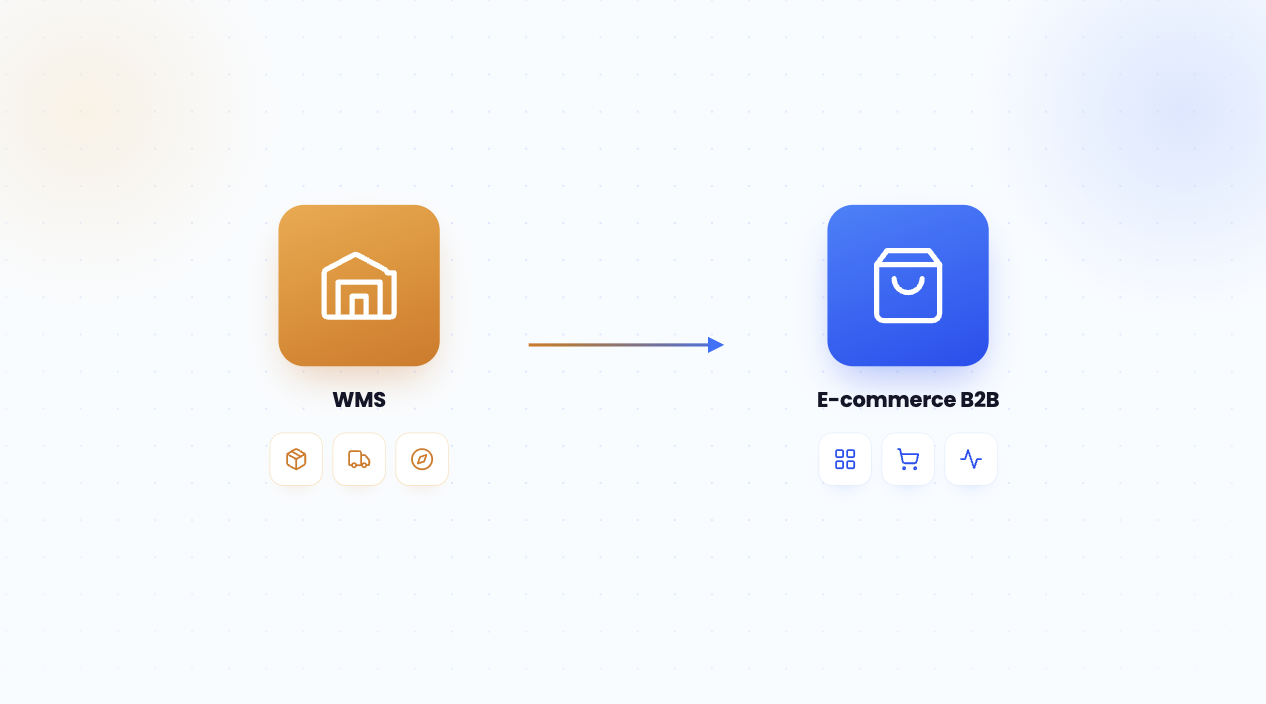
Depending on where you are in your digital journey, the type of back-end systems you already have in place can play a crucial role in choosing your future e-commerce solution. Choosing a platform that can connect to any existing back-end system can help you save significant costs and, more importantly, give you data visibility, higher productivity, and ultimately a richer customer experience.
While on-premise platforms can be very effective, they take longer to launch because of development work, and they can become very expensive when new versions are released. SaaS platforms are more flexible and don’t require in-house hosting or heavy development. This naturally affects costs and, in most cases, will be less expensive in the long run for companies.
-modified.avif)
.png)
.avif)
.jpg)