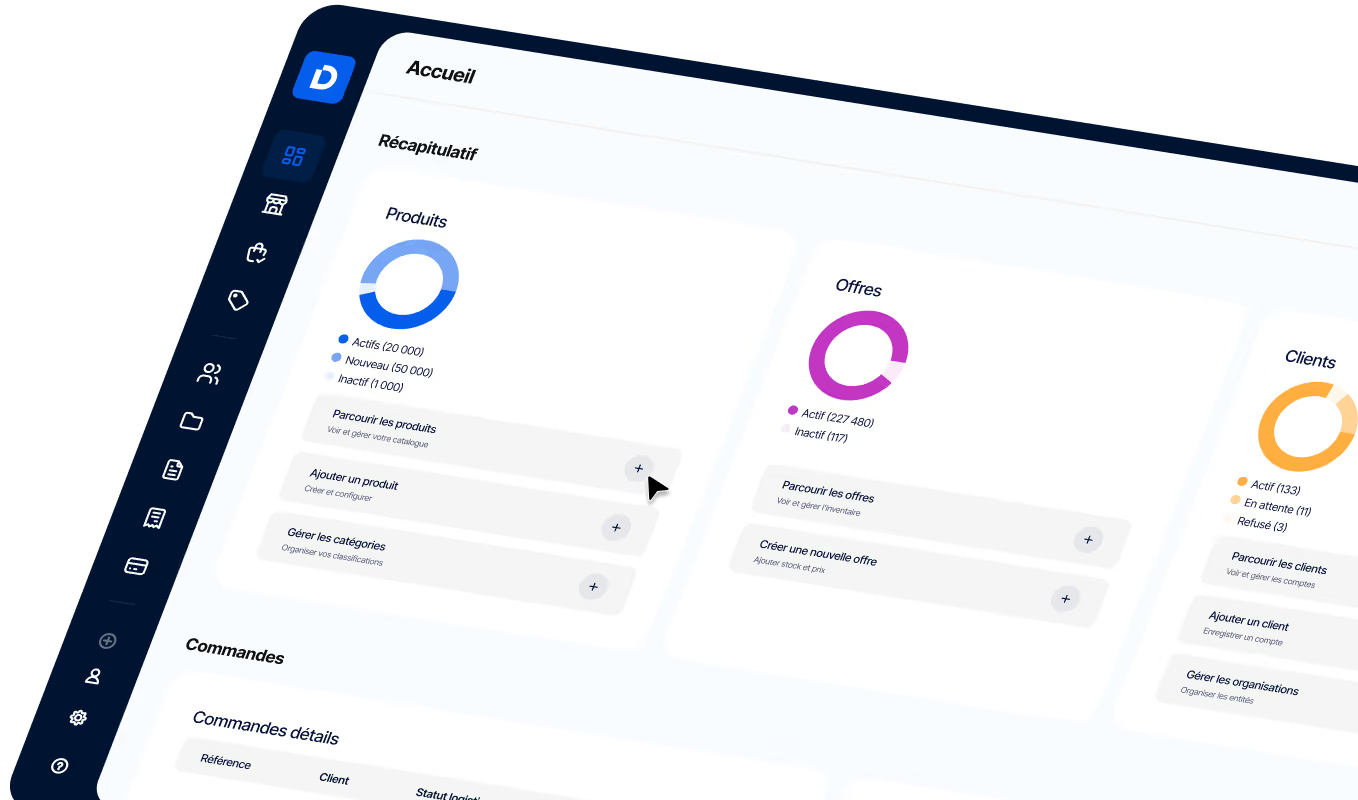
AI and Order Management: Efficiency and Automation
Artificial intelligence (AI) is transforming order management by improving efficiency, reducing errors, and automating critical processes. Companies that use AI for order processing, inventory management, omnichannel coordination, and fraud detection gain a competitive edge through greater accuracy, lower costs, and better customer satisfaction. This article explores AI’s transformative impact on order management, with examples and academic references.

AI for Efficiency and Automation in Order Management
Artificial intelligence (AI) is transforming order management by improving efficiency, reducing errors, and automating critical processes. Companies that use AI for order processing, inventory management, omnichannel coordination, and fraud detection gain a competitive edge through greater accuracy, lower costs, and better customer satisfaction. This article explores AI’s transformative impact on order management, with examples and academic references.
AI for Order Processing: Reducing Errors and Speeding Up Fulfillment
Order processing is a key part of supply chain management, and AI-driven automation significantly improves its efficiency. Traditional order management relies heavily on manual data entry, which makes it prone to human error. AI reduces these risks by automating data capture, validation, and order fulfillment.
Key benefits:
- Fewer errors: AI-powered systems such as optical character recognition (OCR) and natural language processing (NLP) accurately extract data from purchase orders, invoices, and customer requests, minimizing human error.
- Faster processing: AI automates repetitive tasks like data entry and order verification, reducing processing time and improving customer satisfaction.
- Smarter decision-making: Machine learning (ML) models analyze historical data to forecast order trends and optimize fulfillment strategies.
Example:
Amazon uses AI to automate order processing and predict delivery times, reducing human intervention and ensuring fast fulfillment (Kumar et al., 2020).
AI and Real-Time Inventory Optimization: Ensuring Order Fulfillment
Inventory optimization is essential to avoid stockouts and overstocking, both of which affect business profitability. AI-driven systems improve inventory tracking by analyzing real-time data and demand trends.
Key benefits:
- Demand forecasting: AI algorithms analyze historical sales data, market trends, and external factors such as seasonality to predict inventory needs.
- Real-time tracking: AI-powered IoT sensors monitor stock levels and alert businesses when inventory is running low or when there is excess stock.
- Automated replenishment: AI systems integrate with supply chain networks to trigger automatic replenishment when stock falls below predefined thresholds.
Example:
Walmart uses AI-based predictive analytics to optimize inventory levels and avoid shortages, reducing lost sales (Choi et al., 2021).
The Role of AI in Omnichannel Order Management
Omnichannel order management involves coordinating orders across multiple sales channels, including e-commerce platforms, physical stores, and hybrid models. AI plays a crucial role in streamlining these operations and improving the customer experience.
Key benefits:
- Centralized order visibility: AI integrates data from multiple channels, providing a unified view of inventory and order status.
- Dynamic order routing: AI selects the most efficient fulfillment locations, such as warehouses or stores, based on proximity and stock availability.
- Personalized customer experience: AI-powered recommendation engines suggest products and fulfillment options based on user behavior.
Example:
Nike uses AI-based order management to synchronize online and offline inventory, allowing customers to order online and pick up their purchases in store (Smith & Johnson, 2022).
AI for Fraud Detection in Order Management
Fraudulent activity in order management, such as payment fraud and account takeover, poses significant risks for businesses. AI-based fraud detection systems identify suspicious transactions and help prevent financial losses.
Key benefits:
- Anomaly detection: AI analyzes transaction patterns to detect irregularities and flag potential fraud.
- Automated risk assessment: AI assigns risk scores to transactions based on historical fraud data, enabling businesses to take proactive action.
- Enhanced security: AI-based authentication methods, including biometric verification and smart CAPTCHA, improve order security.
Example:
PayPal uses AI to monitor transactions in real time, reducing fraudulent activity and chargebacks.
AI-driven automation is transforming order management by improving accuracy, efficiency, and security. From reducing errors in order processing to optimizing inventory, coordinating omnichannel operations, and detecting fraud, AI delivers significant benefits for businesses. As AI technologies continue to evolve, organizations that integrate AI into their order management systems will gain a strategic advantage in a competitive market.




.jpeg)