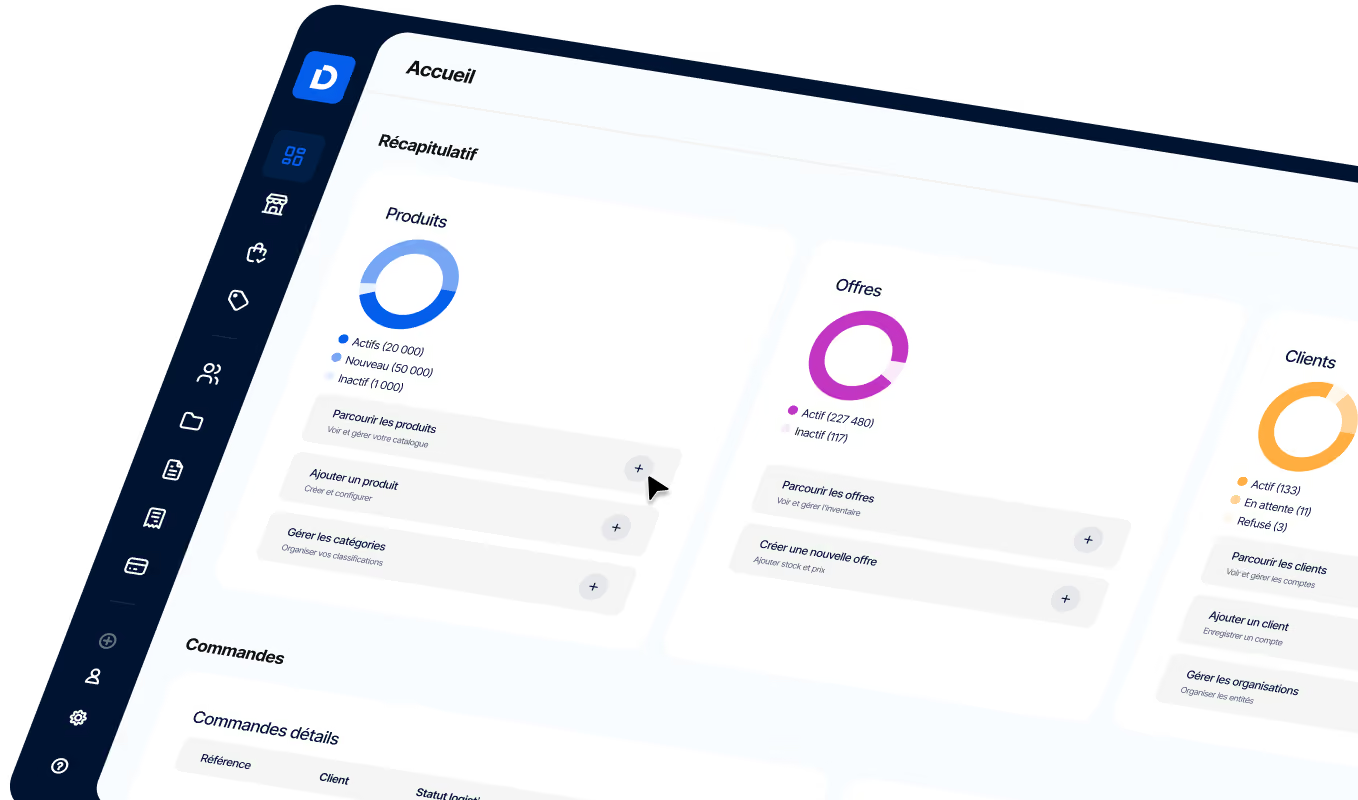
Cloud commerce
Cloud Commerce: A Comprehensive Overview
Cloud commerce refers to the buying and selling of goods and services via digital platforms hosted on cloud servers. Most B2B organizations now rely on cloud-hosted solutions to sell their products and manage their operations.
The shift from physical infrastructure to cloud solutions has profoundly transformed how businesses operate, opening up new opportunities for growth and efficiency. Let's examine how cloud commerce works in modern B2B eCommerce platforms like DJUST, and what it means for your organization.
What is cloud commerce?
Cloud commerce encompasses all business transactions conducted via online platforms. Your company can sell products, manage inventory, and process orders through internet-based systems, rather than physical sites or local servers. This includes B2B eCommerce sites, dedicated buyer portals, and digital marketplaces that connect suppliers with professional customers.
Key components of cloud commerce
A complete cloud commerce system includes several interconnected elements:
- eCommerce storefront : This serves as the digital showcase for your product catalog and provides the interface for customers to browse and purchase online.
- Order management systems : These tools work behind the scenes to track all orders, from the initial request to delivery, ensuring smooth transaction processing.
- Inventory management solutions : These provide real-time visibility into stock levels across all sales channels, helping to prevent stockouts or overstocking.
- Customer Relationship Management (CRM) systems : These store comprehensive buyer information and track all interactions, enabling personalized service and targeted marketing.
- Payment processing components : These handle financial transactions securely, protecting sensitive data while ensuring a seamless checkout process.
- Product Information Management (PIM) systems : They maintain consistent product data across all channels, including descriptions, specifications, pricing, and images.
- Application Programming Interfaces (APIs) : They connect all these components, enabling real-time data exchange and ensuring seamless system-wide integration.
Benefits of cloud commerce
Using cloud commerce solutions offers numerous advantages:
- Scalability
B2B cloud commerce platforms, such as DJUST, scale alongside your business growth without requiring major infrastructure investments. As order volumes increase, the platform automatically allocates more computing resources to maintain performance. You can add new products, customers, and sales channels without worrying about server capacity or processing power. This flexibility is particularly valuable for companies expanding into new markets or adding wholesale channels to their existing operations. For example, when Adore Me launched its wholesale distribution, the DJUST cloud platform allowed them to quickly deploy new B2B features while maintaining system performance.
- Cost efficiency
Moving to cloud commerce eliminates many traditional IT expenses. Your company no longer needs to purchase or maintain physical servers, hire specialized IT staff, or perform regular hardware upgrades. You only pay for the computing resources and features you use.
Cloud platforms also reduce manual data entry through automation, minimizing costly errors in the ordering and delivery process. Self-service capabilities allow customers to place orders without requiring sales staff intervention. Companies like DeSter have seen significant savings after switching from manual processes to the DJUST cloud platform. Streamlined order management and reduced administrative overhead translate directly into improved profit margins.
- Flexibility
Cloud commerce platforms work wherever your teams and customers are located. Sales representatives can check inventory and create quotes from their mobile devices during client visits, while buyers can place orders from any location or device connected to the internet.
The platform adapts to your specific needs through a modular architecture. You can enable features as you need them, for example by adding a wholesale portal to your existing direct sales channel. APIs connect the platform to your other business systems to ensure data consistency.
Jeff de Bruges demonstrates this flexibility in action: their stores can now place orders through multiple channels—web, mobile, and in-store—while maintaining consistent product data and order tracking across all touchpoints.
- Improved customer experience
Cloud commerce transforms how your customers interact with your business. An online platform available 24/7 allows buyers to check stock levels, place orders, and track deliveries without waiting for business hours or sales representative intervention. Companies using DJUST report higher customer satisfaction thanks to features specifically designed for B2B needs, such as recurring order lists and personalized recommendations based on purchase history.
- Simplified order management
Managing B2B orders via a cloud platform reduces complexity at every stage. Your team can track all orders in a central system, from the initial request to final delivery, with real-time updates on order status, stock levels, and shipping information. The platform automates many manual tasks, such as routing purchase orders to the right approvers, generating invoices and shipping documents, and accessing order histories for quick issue resolution.
Socoda saw these benefits after migrating its network of over 200 distributors to the DJUST cloud platform. Order processing time decreased while accuracy improved thanks to automated workflows and centralized data management.
- Dynamic catalog management
Cloud-based product catalogs adapt to your business needs. Your teams update product information, pricing, and availability once, and these changes appear instantly across all sales channels. The platform can display different products and pricing based on customer segments, helping B2B buyers find what they need faster through intelligent search and tailored filters.
- Better collaboration
Cloud commerce platforms foster collaboration between departments and business partners. Sales teams share customer data and order histories, while purchasing managers collaborate on approval processes and inventory forecasting. DJUST facilitates this collaboration through shared workspaces, automated workflows, and collaborative product lists.
- Enhanced security
Moving to cloud commerce improves data security compared to traditional on-premise systems. Cloud providers maintain state-of-the-art data centers with advanced security measures, regular updates, and automatic patching. The DJUST platform incorporates security features tailored for B2B eCommerce, such as role-based access controls, secure authentication, and encrypted connections to protect sensitive data.
Cloud commerce challenges
Companies moving to cloud commerce face several common challenges, but DJUST helps overcome each one:
- Data migration issues : Transferring customer, product, and order data to a new platform requires careful planning. DJUST's DataHub simplifies this process by connecting to your existing systems and transforming data into the appropriate format.
- Integration requirements : B2B companies often use multiple systems that need to work together. DJUST solves this with pre-configured connectors to ERPs and other platforms, as well as APIs for custom integrations.
- Change management : Moving from traditional processes to digital workflows requires training and user adoption. DJUST provides implementation support and user-friendly interfaces to facilitate the transition.
- Technical expertise requirements : Many companies lack the in-house skills to manage cloud technologies. DJUST handles the technical infrastructure, security, and maintenance, allowing your team to focus on business operations.
- Budgetary constraints : The initial cost of new technology can be a barrier. DJUST's subscription model spreads costs over time while delivering immediate efficiency gains.
Using DJUST.io to optimize cloud commerce
B2B organizations see tangible results after transitioning to cloud commerce. Your company can reduce costs, expand its market reach, and better serve its customers through digital transformation. A platform designed specifically for B2B, like DJUST, provides a solid foundation for this evolution. DJUST works closely with your team from implementation, turning your vision for B2B commerce into reality. The next step is to evaluate how cloud commerce aligns with your business strategy. Schedule a discussion with DJUST to learn more about modernizing your B2B operations via a unified commerce platform.