B2B Pricing Strategy: A Guide to Sustainable Growth
Build a scalable B2B pricing strategy with the right models, rules, and KPIs. See how DJUST supports contract pricing, price tiers, and pricing consistency.
Article summary
- B2B pricing is complex (contracts, discounts, multiple decision-makers): even a small gap can have a major impact on margins.
- Choose the right model (cost-plus, value-based, market-based, product-specific) based on the product lifecycle and volatility.
- Execution is critical: clear governance and approval workflows help prevent margin erosion.
- A platform like DJUST centralizes data and automates rules to ensure omnichannel consistency.
Pricing is a powerful lever in B2B commerce. An effective B2B pricing strategy drives revenue and protects margins while adapting to market shifts. In B2B, there are fewer buyers but larger orders, which makes every pricing decision especially impactful. Unlike retail, the B2B sales process often involves negotiated contracts, custom quotes, and complex discounts. Pricing therefore has to balance competitiveness with profitability. In today’s volatile markets, companies that take a flexible, data-driven approach can adapt faster and achieve sustainable growth.
Why pricing strategy is a critical lever in B2B today
In B2B sectors, even a small price change can significantly affect profits. A margin that looks healthy can quickly erode under inflation or increased competition. B2B companies that ignore this reality feel the impact in their bottom line. By contrast, leaders who build smart pricing into their strategy protect margins and free up resources for innovation and growth.
What fundamentally sets B2B pricing apart from B2C pricing
B2B pricing is far more complex than consumer pricing. In B2C, prices are usually fixed for all customers. A consumer makes a decision on their own, based on price and convenience. In B2B, prices vary widely by customer, contract, and volume. Buying decisions also involve multiple stakeholders — executives, procurement teams, technical experts — each with different priorities.
B2B orders are often large or tied to long-term contracts, so even a small pricing change can have a substantial impact on revenue. B2B sales frequently include negotiations and tailored terms — special payment terms, bundled services, formal agreements. All of this stands in contrast to the fixed pricing model of consumer e-commerce.
Finally, the buying process in B2B e-commerce is usually slower and more rational. Large purchases go through formal approval workflows, and buyers expect a clear rationale for every price. That means every pricing change has to be defensible. Mistakes can lead to lost sales or a drop in customer trust.
Market pressure, rising costs, and margin protection
Recent years have brought volatile inflation and supply chain disruptions. Costs are changing faster than before — raw materials, transportation, and labor often become more expensive with little warning. Pricing strategy is now a first line of defense for margins. Companies that react quickly and adjust prices outperform those that wait too long.
According to Bain, companies confident in their ability to pass on price increases expect profit margins that are 5 to 11 percentage points higher than slower-moving competitors. But obstacles remain: 67% of executives cite competitive pressure and customer resistance as barriers to raising prices. That’s why a strategic approach matters: gathering data, strengthening the value proposition, and carefully timing adjustments helps protect margins without alienating customers.
The main B2B pricing models
There are several core pricing models in B2B. Each has strengths and fits different situations.
Cost-plus pricing: simple, but limited
This is the simplest method: calculate the total cost of the product and add a fixed margin. SAP notes that it’s the most common B2B approach because it relies on existing cost data. It ensures costs are covered and profit is defined. The downside is that it ignores what the customer is willing to pay. In a fast-changing market, cost data can become outdated, and this method can leave money on the table or require frequent renegotiation.
Value-based pricing: aligning price with perceived customer value
Here, price is tied to the value perceived by the customer, not just to cost. The key question is: what is this solution worth to the customer? If a product significantly reduces expenses or increases revenue, a higher price may be justified.
Value-based pricing works best for differentiated products or innovative solutions. It helps maximize revenue by capturing willingness to pay, but it requires deep customer insight and market research. Setting the right price can be complex and may require testing and analysis.
Market-based pricing: adapting to competitive conditions
This model sets prices based on market rates and competitor pricing. The company monitors competitors’ prices and adjusts accordingly. When supply tightens or competitors raise prices, it can follow suit. This approach is straightforward and helps avoid major pricing gaps. However, it assumes competitors are right and can overlook the unique value your products deliver. It can also trigger price wars that erode margins.
Custom pricing: contracts, volume discounts, negotiated terms
In B2B, many transactions are tailored. This model covers negotiated contracts, volume-based pricing, and special terms for strategic accounts. You might offer a lower unit price for large orders or bundle services for a key customer. This level of customization builds loyalty and helps win large deals, but it adds complexity. Each contract may require approval workflows and tight management to ensure profitability.
How to choose the right pricing model for your business
Choosing a pricing model depends on several factors related to your product, your customers, and market conditions.
Product characteristics and lifecycle
Is the product new or mature? Innovative or commoditized? New tech products may start with value-based or premium pricing to fund development, then gradually come down as competition intensifies. Mature products rely more on cost-plus or market-based pricing. A differentiated product has greater pricing power, while a product at the end of its lifecycle needs competitive pricing.
Customer segmentation and buying behavior
Different customer segments perceive value differently. Price-sensitive segments may need aggressive pricing or flexible payment terms, while strategic enterprise accounts place more value on service and customization. Analyze buying behavior: do customers always negotiate, or do they buy off a price list? Adapt your model to how they buy. For any strategy aimed at increasing B2B sales, aligning pricing with customer expectations is essential.
Market conditions and volatility
Are input costs stable? Is competition intensifying? In a volatile market with fluctuating costs, you may need dynamic pricing strategies with clear indexation clauses. If competitors are constantly adjusting prices, a market-based approach or dynamic algorithmic pricing can help. In stable markets, long-term contracts work well.
Commercial complexity: multi-channel, sales teams, negotiated pricing
Does your sales organization use multiple channels — online, field sales, distributors? The greater the complexity, the more you need automated, streamlined pricing rules. If you sell through several channels, prices need to stay consistent. If your sales team negotiates individually, you need guardrails and discount policies. The pricing model should also support your B2B cross-selling goals.
Enabling scalable pricing with a modern B2B platform
Implementing advanced B2B pricing strategies requires robust systems. Manual spreadsheets don’t scale when complexity grows. A modern B2B e-commerce platform provides the foundation needed to execute a pricing strategy effectively.
Centralizing product, customer, and order data for accurate pricing
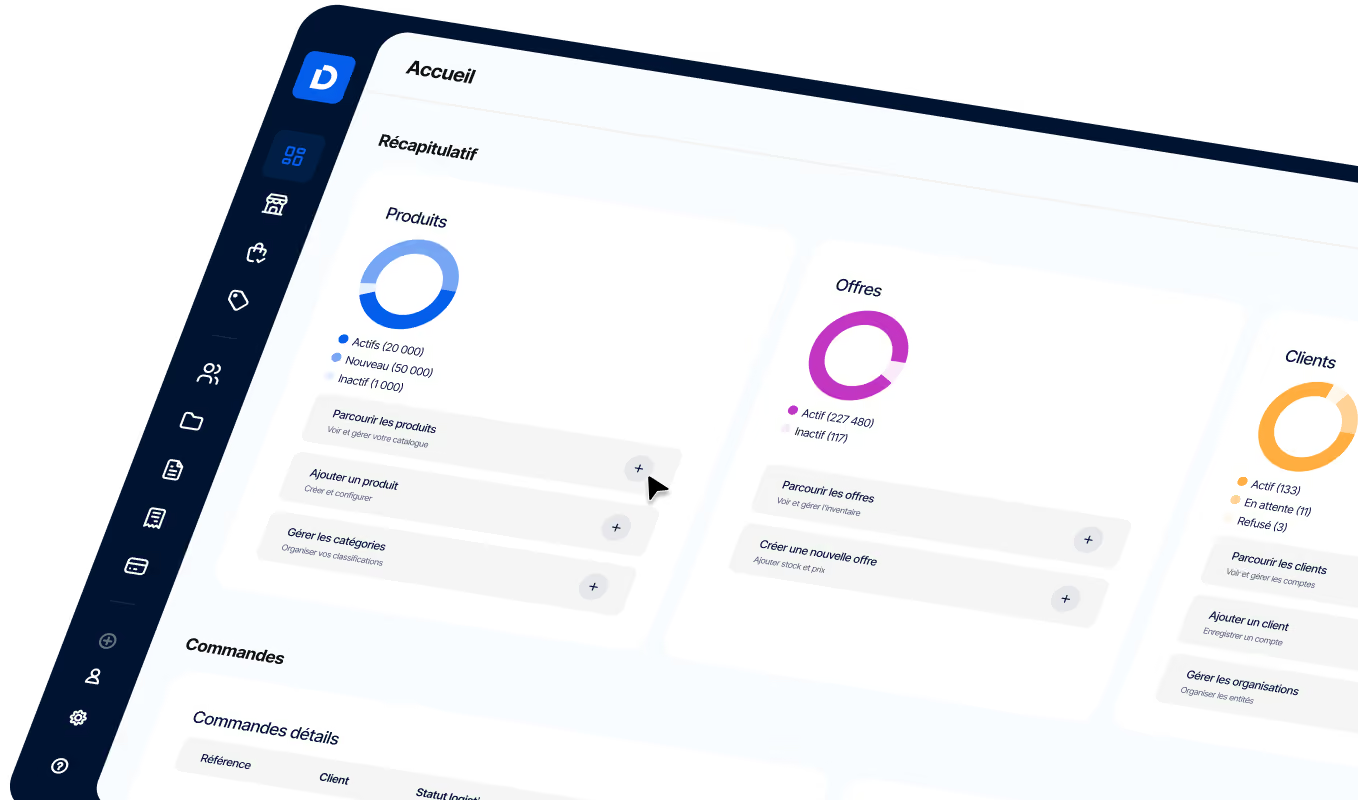
These platforms centralize data by bringing product information, customer accounts, and order history together in one place. Pricing rules can automatically pull the right inputs — cost, market demand signals, customer tier. Centralized data ensures accurate, up-to-date pricing across the organization.
Automating pricing rules and exceptions to reduce manual work
You encode your pricing logic — cost markups, discount thresholds, promotional offers — into the system. Once configured, the software applies these rules to every quote or order, reducing manual effort and errors. This automation frees your team to focus on strategic pricing decisions. DJUST, for example, is designed to automatically handle complex schemes such as volume pricing or contract pricing.
Ensuring pricing consistency across channels and customer touchpoints
A unified platform keeps pricing consistent across channels. Whether the customer buys online through a B2B portal or through a sales rep, they see the right price. Without a platform, channel conflicts often appear — one division may unintentionally undercut another. Pricing software syncs updates instantly everywhere. It also creates audit trails, which are useful for compliance and performance analysis.
Integration with B2B payment solutions further streamlines the sales process.
Adjusting prices in real time based on cost or demand changes
Modern platforms make real-time price adjustments possible. They ingest dynamic data — inventory levels, demand forecasts — and adjust prices accordingly. If raw material costs rise, the platform can trigger preconfigured price increases. These capabilities turn pricing into a real-time lever rather than a static annual decision.
Measuring the impact of your B2B pricing strategy
Once in place, a B2B pricing strategy needs to be tracked with clear metrics.
Financial KPIs: track gross margin, overall profitability, and average order value. Margin may be the most important metric — it shows whether prices cover costs and generate profit. If margin shrinks, pricing or cost structure needs to be adjusted. Net profitability is the ultimate measure of strategy success. Average order value shows how much revenue each order generates; an increase often means your price increases or upselling strategy is working.
Commercial KPIs: these measure sales performance. Conversion rate shows how many quotes or visits turn into orders — if prices are too high, conversion can suffer. Repeat purchase rate indicates customer loyalty. Win rate (the percentage of tenders or proposals won) also reflects pricing competitiveness. If it drops, pricing may be too aggressive or misaligned with customer value perception.
Customer KPIs: these measure how customers respond. Customer satisfaction (through surveys, for example) shows whether customers see pricing as fair. Churn rate is critical: if it rises, check whether pricing or terms are driving customers away. As a rule, price changes should aim to increase satisfaction and reduce churn by delivering clear value in the customer’s eyes.
These KPIs should be monitored continuously. A sudden drop in average order value can trigger a review of discount policies. A persistent decline in margins may lead to a pricing model overhaul. The right platform can help you track these metrics in real time so pricing leaders can respond quickly.
How to implement a high-performing B2B pricing strategy
Run an internal audit: costs, data quality, customer segments
Start by reviewing your costs, data quality, and customer segments.
- Check that cost data is complete and customer data is accessible.
- Identify key segments by revenue and margin.
This baseline analysis shows where pricing needs attention.
Define price tiers, rules, and customer-specific terms
Create clear pricing structures.
- Group products and customers into categories with matching price tiers.
- Set volume discount thresholds and document special contract terms.
Clarity prevents ad hoc discounts that hurt profitability.
Set up workflows, governance, and pricing accountability
Assign pricing ownership to the right team.
- Establish approval processes for exceptions.
- Use your pricing platform to enforce workflows automatically.
- Train sales and finance teams on pricing rules and the value proposition behind them.
Test, monitor, and iterate to improve pricing over time
Treat your pricing strategy as a dynamic process.
- Pilot changes on a subset of products or customers before rolling them out broadly.
- Measure the impact on KPIs and gather feedback.
- Track performance continuously and refine settings based on data.
To choose a B2B e-commerce platform that supports this kind of iteration, look for strong analytics capabilities.
The future of B2B pricing
Dynamic pricing driven by real-time cost and demand data
As BCG points out, price volatility is likely to remain high, pushing companies to adjust prices more often. Advanced platforms will integrate cost, inventory, and market signal data to raise or lower prices automatically. That makes B2B inventory management a full part of the pricing conversation, because stock levels determine what can be sold, when, and at what cost.
Growing adoption of AI and predictive analytics in pricing
Machine learning can analyze large datasets — customer behavior, competitor moves, market trends — to determine optimal prices. Sophisticated pricing will soon require AI and generative AI for deeper analysis. That means sales reps could receive AI-assisted price suggestions during negotiations, or pricing teams could use predictive models to anticipate how different price points affect demand.
A shift toward more transparent, value-driven commercial models
We also expect a shift toward more transparent, value-driven pricing models. Customers increasingly demand fairness. BCG describes a “fairness” trend, where prices are set in proportion to the value customers perceive. In B2B, that could mean more open pricing policies and clearer communication about what customers get for the price they pay. Some suppliers are already moving away from opaque discounts in favor of programs that reward loyalty or performance.
B2B pricing is becoming a real-time, data-driven discipline. B2B companies that invest in the right models, the right platforms, and the right skills will not only protect margins, but also gain market share by offering customers agile, fair pricing. Solutions like DJUST help centralize pricing data, apply consistent rules across all sales channels, and adjust prices as costs or demand change.
https://hbr.org/2021/07/how-b2b-firms-can-price-with-confidence-as-inflation-rises
https://www.sap.com/resources/b2b-pricing-strategies
https://www.bigcommerce.com/articles/b2b-ecommerce/b2b-pricing-strategy/
https://sbigrowth.com/insights/b2b-pricing
-modified.avif)


.jpeg)