B2B Product Catalog: How to Build and Digitize It
Want to digitize your B2B product catalog? Discover the best practices for streamlining purchasing and improving conversion.
Article summary
- A B2B product catalog centralizes SKUs, descriptions, pricing, and commercial terms for business buyers.
- Its digital version (e-catalog) updates in real time and displays different content for each customer.
- Essential elements include visuals, SKU references, technical descriptions, B2B pricing, variants, stock, and related documents.
- Connected to a PIM and a B2B e-commerce platform, it reduces errors and streamlines order capture.

A B2B product catalog is a document, most often digital, that brings together all of a company’s offerings for professional buyers: descriptions, prices, commercial terms, variants, and availability. Unlike a consumer catalog, it includes business-specific logic such as customer-specific pricing tiers, volume discounts, and purchase orders. Built well, it becomes the hub of the relationship between suppliers, wholesalers, and distributors.
What is a B2B product catalog?
A B2B product catalog is the organized collection of products a company offers to its professional customers: wholesalers, distributors, resellers, or enterprise buyers. Its primary role is to present the offer clearly so buyers can make decisions and place orders more easily. Where a consumer catalog leans on emotion, a B2B catalog follows a logic of precision: exact product references, negotiated commercial terms, availability, and lead times.
In practical terms, it serves as a shared source of truth for sales teams, buyers, and order management tools. An industrial equipment distributor, for example, may list thousands of products with different pricing tiers depending on each customer’s contract. This level of price personalization is a core B2B requirement, and one that doesn’t exist in B2C.
The classic mistake is to copy a consumer catalog without adapting those commercial terms: buyers get lost, pricing errors multiply, and orders have to be corrected manually. The table below summarizes the differences between the two models.
| Criteria | B2C Catalog | B2B Product Catalog |
|---|---|---|
| Audience | Consumers | Professional buyers |
| Pricing | Single public price | Customized by customer or contract |
| Volumes | Per unit | Volume discounts |
| Ordering | Simple cart | Purchase order and approval |
| Content | Emotional appeal | Detailed technical data |
What should a B2B product catalog include? (7 essentials)
An effective catalog is more than a product list. Each product page should give professional buyers everything they need to place an order without involving the sales team. The most common mistake is still thin product content: if a buyer can’t find a dimension or standard, they either give up or ask a flood of questions, which slows down the entire B2B sales process. Here are the seven essentials.
- High-resolution visuals: multiple angles, cut-out images, and consistent imagery for each variant.
- Product reference and SKU: a unique identifier for each product, essential for ERP matching.
- Description and technical specifications: materials, dimensions, standards, compatibility.
- Prices and commercial terms: customer-specific pricing tiers, volume discounts, minimum order quantities.
- Variants and options: sizes, colors, and packaging formats grouped on a single product page.
- Availability and stock: real-time levels and replenishment lead times.
- Related documents: technical sheets, certifications, and downloadable instructions.
This data also powers B2B order management: the more reliable it is, the fewer input errors your buyers will make.
How do you create and digitize your B2B product catalog?
Building a high-performing B2B product catalog follows five steps. Success depends less on design than on the quality and freshness of the product data distributed across each sales channel.
Centralize data in a PIM
The first building block is centralization. A PIM software (Product Information Management) system brings descriptions, attributes, visuals, and pricing into a single database, then distributes them to each channel. Product information management prevents duplicates and pricing inconsistencies. Example: a hardware distributor that used to update prices across three different systems centralizes them in a PIM; one change now propagates in minutes, with no re-entry.
Personalize the catalog by customer
B2B commerce runs on negotiated terms. A B2B e-commerce catalog should show each buyer their own prices, approved products, and discounts. Example: a food wholesaler shows an independent restaurant a different assortment and pricing from those offered to a national chain. Combined with B2B order automation, this personalization increases average order value and builds loyalty, because each customer gets a buying experience tailored to their contract.
Paper catalog or online catalog: which should you choose?
A paper catalog still has value for field sales teams and trade shows. But it freezes information in time: a printed price becomes outdated as soon as the first update is made. An online catalog, or e-catalog, removes that limitation: available 24/7, updated in real time, and connected to inventory, it becomes a true sales channel. Today, this is a major B2B e-commerce trend.
The choice is not always black and white. Many manufacturers keep a premium print catalog for brand value while managing orders through a digital catalog. Example: a professional furniture maker prints an annual inspiration catalog, but its resellers order exclusively through the online portal, where prices and availability are reliable. The choice of a B2B e-commerce platform or a B2B website software solution then becomes a strategic decision.
The trap would be to rely entirely on print: your buyers now compare online, and a competitor with a digital catalog can capture the order while yours is being reprinted. The scorecard below makes the decision easier.
| Criteria | Paper Catalog | Online Catalog |
|---|---|---|
| Updates | Static | Real time |
| Recurring cost | High printing cost | Controlled |
| Personalization | Limited | Per customer |
| Order capture | Manual | Automated |
| B2B effectiveness | 2 / 5 | 5 / 5 |
DJUST, the platform to digitize your B2B product catalog
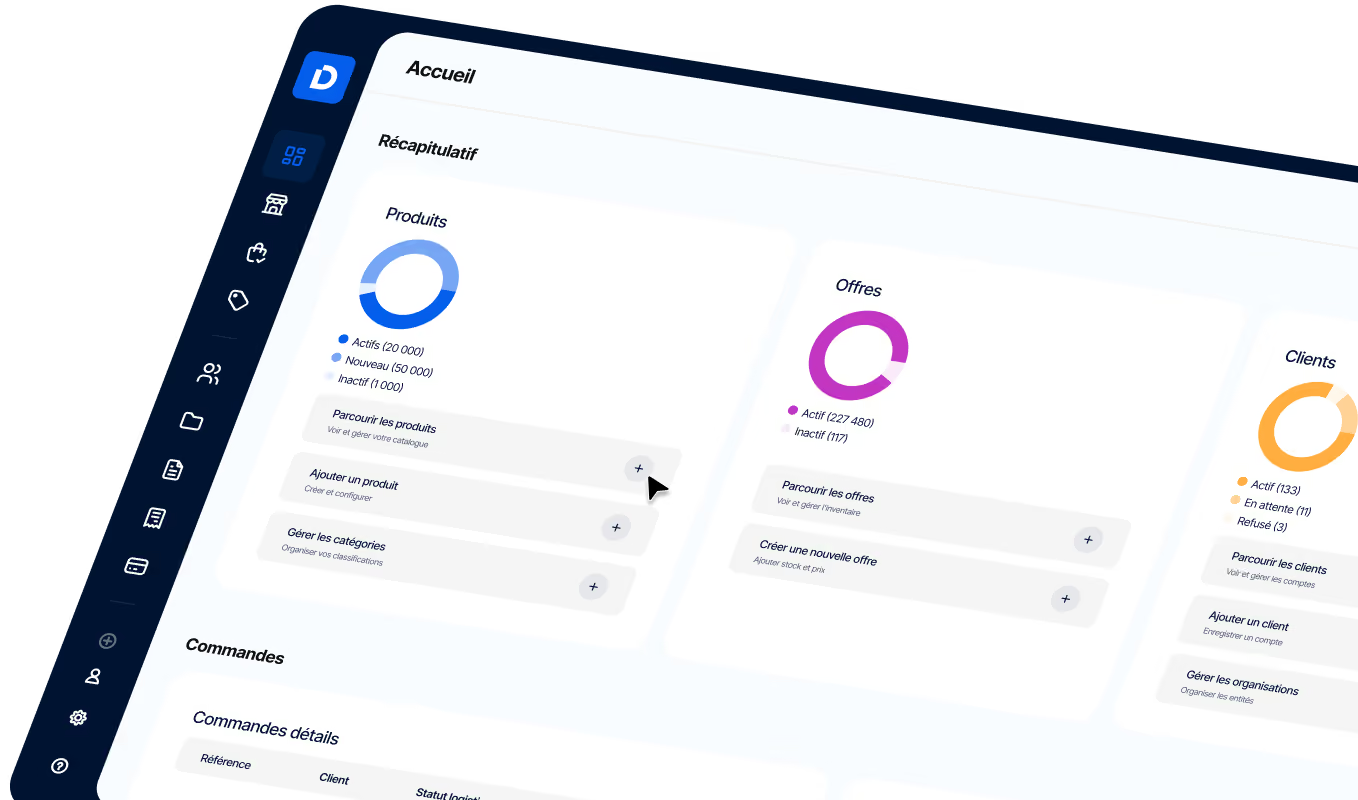
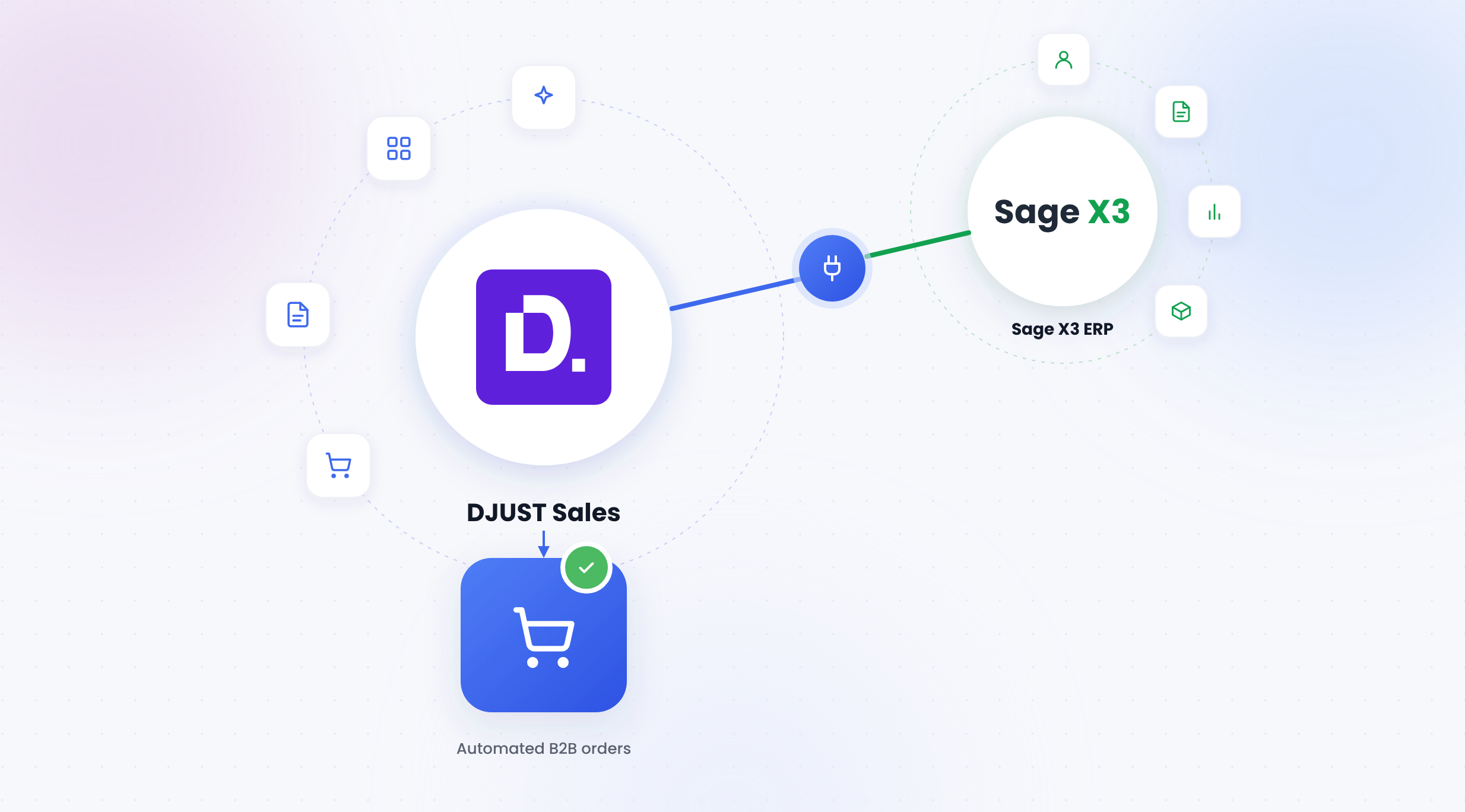
DJUST brings everything covered in this article together in a single B2B commerce platform: catalog and commercial terms management, customer-specific pricing, end-to-end order tracking, and B2B-ready payments. 100% modular and headless, the solution connects to your existing tools (ERP, PIM, CRM) and centralizes all your sales channels, from e-commerce to marketplaces, including distributors and points of sale. The result: a B2B product catalog that’s always up to date, smoother buying processes, and faster commercial growth.
FAQ
What’s the difference between a B2B and B2C product catalog?
The B2B catalog is designed for business buyers and includes customer-specific pricing, volume discounts, and tailored ordering terms. The B2C catalog targets individual consumers with a single public price. B2B puts more emphasis on technical data and commercial terms, while B2C focuses on emotional appeal and impulse purchases.

How Do You Digitize a B2B Product Catalog?
Centralize your product data in a PIM, structure your categories, then publish your catalog on a B2B e-commerce platform connected to your inventory and ERP. The result: an online catalog updated in real time and tailored to each customer, reducing manual orders and speeding up the sales process.
What Should a Strong B2B Product Page Include?
A complete B2B product page includes clear visuals, an SKU reference, a detailed technical description, pricing and commercial terms, available variants, stock levels, and related documents such as certifications and technical data sheets. Together, all of this information helps buyers make a decision and place an order without having to contact the sales team.
Is a paper catalog still useful in B2B?
Yes, but mainly as a brand-building and inspiration tool, especially at trade shows or as part of field sales efforts. For order capture, the online catalog remains more reliable thanks to accurate pricing, up-to-date stock levels, and always-on availability. Most companies today combine a polished printed version with a fully operational digital catalog.


.png)

.jpg)