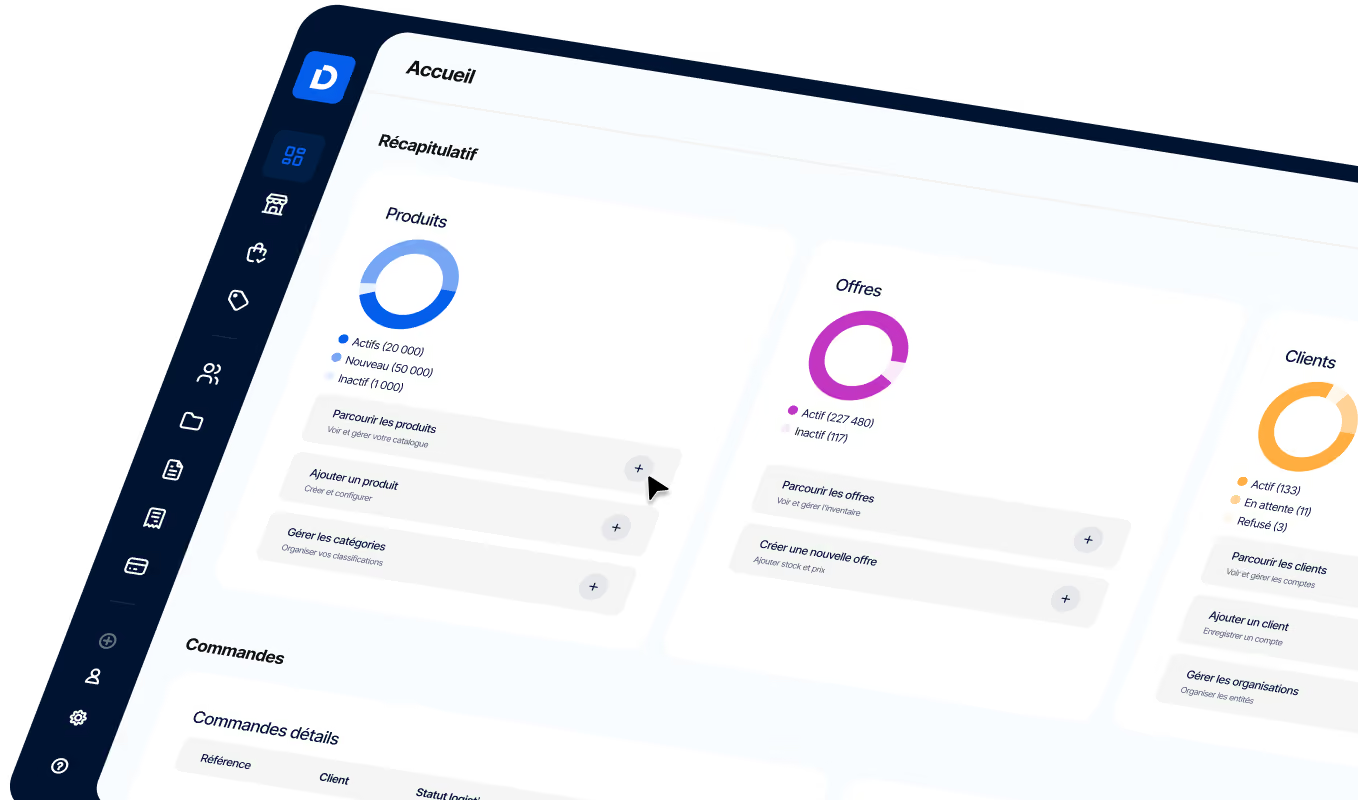
B2B E-commerce Catalog: Everything You Need to Know
Unlock the power of B2B e-commerce catalogs. Explore the key features, benefits, and best practices of a catalog that drives sales and customer satisfaction.
Article summary
- Digital B2B catalogs offer better searchability, real-time updates, and integration with other business systems.
- A well-designed e-commerce catalog can significantly improve the customer experience and streamline the buying process.
- The essentials of a B2B e-commerce catalog include detailed product information, high-quality images, customization features, and seamless ordering capabilities.
- Building an effective digital catalog involves choosing the right platform, optimizing for mobile devices, and regularly updating content.
- Using a digital catalog can lead to increased sales, stronger customer loyalty, and more efficient business operations.

In the world of B2B commerce, the product catalog has undergone a major transformation. The days of flipping through paper catalogs or scrolling through static PDF files are over. Today’s B2B buyers expect a dynamic, interactive experience that matches the convenience of consumer-facing platforms.
Enter the B2B e-commerce catalog. Built into a unified commerce platform, these digital catalogs are changing the way companies showcase and sell their products.
In this article, we explain why your business should adopt a digital product catalog and how to build one that drives sales.
Why B2B needs an online e-commerce catalog
B2B e-commerce catalogs are essential for modern businesses. Here’s what they can do for you:
Improved search and navigation
Your customers can quickly find exactly what they’re looking for by searching by product name, category, specifications, or even custom attributes. This can significantly reduce the time spent on product discovery and selection.
Real-time updates and accuracy
A digital catalog lets you update product information, pricing, and availability in real time, so your customers always have the latest information. That reduces errors and makes the buying experience smoother. This is especially valuable in industries where prices change frequently or products are updated often.
Integration with business systems
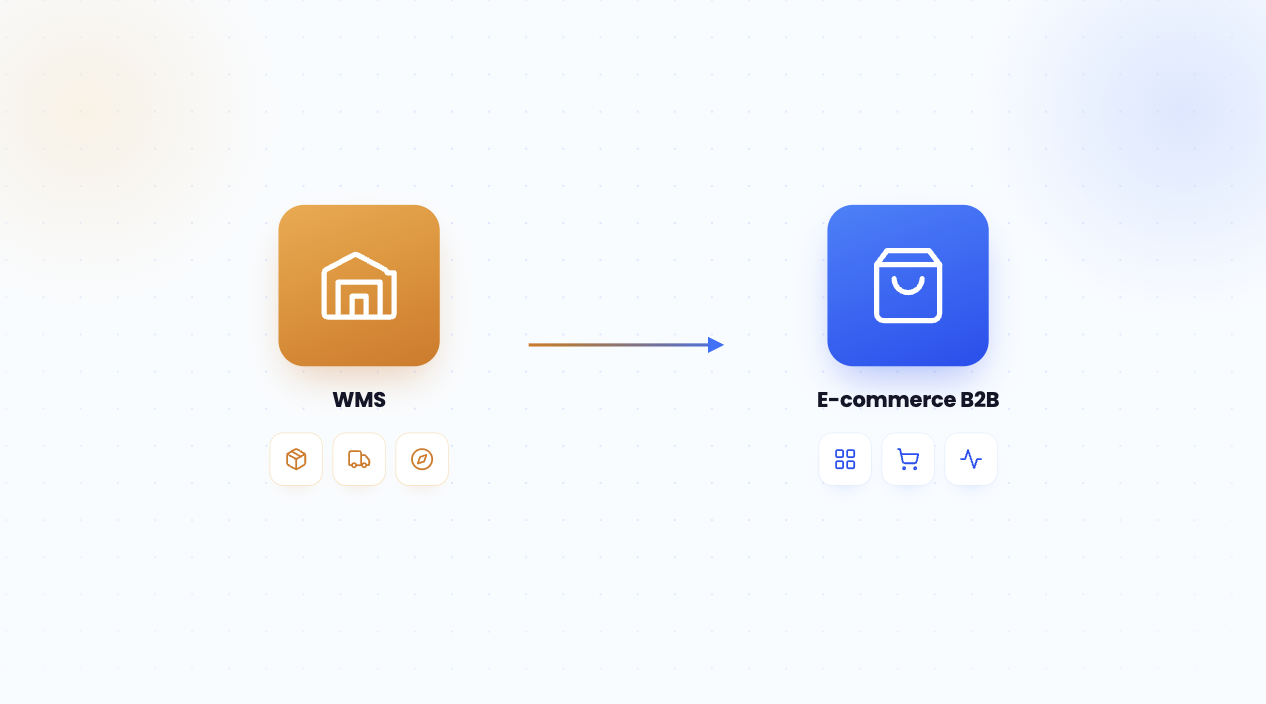
Digital catalogs can integrate seamlessly with your other business systems, such as your B2B PIM (product information management) system, inventory management software, and customer relationship management (CRM) platform. This integration enables automatic updates and keeps your commercial operations consistent.
Personalization capabilities
B2B e-commerce catalogs with personalization let you tailor displays based on customer profiles, showing relevant products, custom pricing, and personalized recommendations. That level of personalization helps improve the customer experience and drive sales.
Multimedia product presentation
Unlike static paper catalogs, digital catalogs let you embed high-resolution images, 360-degree product views, videos, and even augmented reality features. These multimedia elements provide a more complete product presentation, helping customers make informed decisions.
Analytics and insights
Digital catalogs provide valuable data on customer behavior, popular products, and browsing patterns. These insights can inform your inventory decisions, marketing strategies, and product development efforts, helping you continuously improve your offering and the customer experience.
What to include in your B2B catalog
Creating an effective B2B e-commerce catalog goes beyond listing products and prices. Let’s look at what really makes a digital B2B catalog stand out.
Complete product information
Your catalog should serve as a one-stop shop for all product-related information. This includes:
- Detailed product descriptions
- Technical specifications
- Materials used
- Dimensions and weight
- Available variants or configurations
- Compatible products or accessories
Remember, B2B buyers often need more technical detail than B2C consumers. Providing that information upfront can reduce the number of requests your sales team has to handle and speed up the decision-making process.
Expert tip: Consider using expandable sections or tabs on your product detail page to organize large amounts of information without overwhelming users.
High-quality visuals
Without physical samples, your product images and videos become important sales tools. Your digital catalog should include:
- Multiple high-resolution images taken from different angles for each product
- Zoom functionality for detailed inspection
- 360-degree product views, where relevant
- Product demo videos
- Technical drawings or diagrams for complex products
Expert tip: For industries where aesthetics matter, such as B2B fashion or furniture, investing in professional photography can make a substantial difference in how your products are perceived.
Pricing and ordering information
B2B pricing can be complex, often involving tiered structures, bulk discounts, or customer-specific rates. Your catalog needs to handle that complexity smoothly. Make sure it includes:
- Clear pricing information (or an easy way to request a quote if prices vary significantly)
- Volume-based pricing options, if you offer them
- Minimum order quantities
- Lead time or availability information
- An easy-to-use B2B shopping cart
Expert tip: Use pricing software that can dynamically adjust prices based on customer profiles, order volumes, or other relevant factors.
Product categorization and search functionality
With potentially thousands of SKUs, proper organization is essential. Your catalog should include:
- Intuitive product categories and subcategories
- Advanced search functionality with filters (for example, by specifications, price range, availability) or autocomplete, plus word variants (for example, cocacola or coca-cola)
- The ability to save searches or create favorites lists
For industries with complex product ranges, such as B2B construction, consider using guided selling tools that help customers find the right products based on their specific needs or project requirements.
Personalization features
Personalization is a powerful B2B e-commerce feature. Your catalog should be able to display:
- Customer-specific pricing
- Previously ordered items
- Recommended products based on purchase history
- Product collections or catalogs tailored to different customer segments
Product comparisons
B2B buyers often need to evaluate several options before making a decision. Include a product comparison feature that lets customers:
- Compare specifications side by side
- Highlight differences between similar products
- Save comparisons to review later or share with team members
Related products and upsell opportunities
You can increase average order value (AOV) by suggesting:
- Complementary products
- Accessories or add-ons
- Bundle purchase options
- New models or upgrades
Integration with inventory and order management
Your catalog should reflect real-time stock levels and integrate with your order management system. That ensures accurate inventory information, automated handling of out-of-stock orders, and seamless order processing.
Expert tip: If you’re dealing with automotive industry challenges, such as complex supply chains and just-in-time inventory, make sure your catalog can handle that complexity by integrating with a robust inventory management system.
User-generated content
Adding user-generated content (UGC) to your B2B e-commerce catalog is a great way to build trust and give your customers additional context.
Here are some common types of UGC you can include in your catalog:
- Customer reviews and ratings
- User-submitted photos or videos
- Case studies or success stories
Technical documentation
For complex products or those requiring installation or maintenance, add the following to your catalog:
- User manuals
- Installation guides
- Safety data sheets
- Warranty information
Workflow and approval processes
Many B2B purchases require approval from multiple people. Use workflow approval features that allow:
- Quote creation and recording
- Sharing cart contents with team members
- Setting up approval workflows for orders above certain thresholds
How to build a high-quality B2B digital catalog
Now you know what should go into your catalog. But how do you actually build one? Let’s walk through it:
- Choose the right platform. Select an e-commerce platform (like DJUST!) that supports B2B-specific features and integrations. That will make it easier to customize your catalog.
- Organize your product data. Use a robust B2B PIM system or a full B2B e-commerce platform to manage and structure your product information efficiently. This keeps everything consistent across channels and makes product updates easier.
- Design for user experience. Build an intuitive interface that makes it easy for customers to browse your B2B store and discover products. Also consider your industry’s specific needs. For example, if you’re in B2B fashion, you might organize products by season, collection, or designer.
- Optimize for mobile devices. Make sure your catalog is responsive and works well on every device, since many B2B buyers now use their phones or tablets to research and buy. This is especially important in industries like construction, where buyers may need to access your catalog on site.
- Use personalization. Analyze customer data to create personalized B2B e-commerce catalogs that meet individual customer needs. This may include showing custom pricing, personalized product recommendations, or industry-specific product collections.
- Integrate it with other systems. Connect your catalog to your ERP, CRM, and other business systems for seamless operations. This integration is important for keeping inventory levels, pricing, and customer information accurate.
- Strengthen online purchasing. Include features such as simplified ordering, saved lists, and access to the B2B customer portal to improve the online buying experience. That can significantly reduce the workload on your sales team and improve customer satisfaction.
- Update content regularly. Keep your catalog fresh with new products, updated information, and relevant content to encourage repeat visits. This is especially important in fast-moving industries such as fashion and technology.
- Use a composable accelerator. Prebuilt components and workflows can speed up the development and deployment of your digital catalog. This approach, part of composable commerce for B2B, helps you get to market faster and makes future updates easier.
- Provide training and support. Make sure your customers know how to use all the features of your digital catalog. Offer tutorials, webinars, or even personalized training sessions to maximize adoption and usage.
The bottom line
A well-designed B2B e-commerce catalog is no longer a luxury; it’s a necessity.
From addressing fashion industry challenges to streamlining B2B construction processes, a robust digital catalog can be a game-changer for your business. You can build a dynamic, interactive catalog that drives sales, improves customer satisfaction, and gives you a competitive edge.
-modified.avif)
.png)
.avif)

.jpg)