What Is Headless Commerce?
Is headless commerce a mystery full of jargon for you? Don’t worry — we’ve got you covered. Let’s break it down step by step.

So, what is headless B2B e-commerce?
In simple terms, headless e-commerce is an open, API-driven commerce solution that stores, manages, and delivers content without a front-end presentation layer.
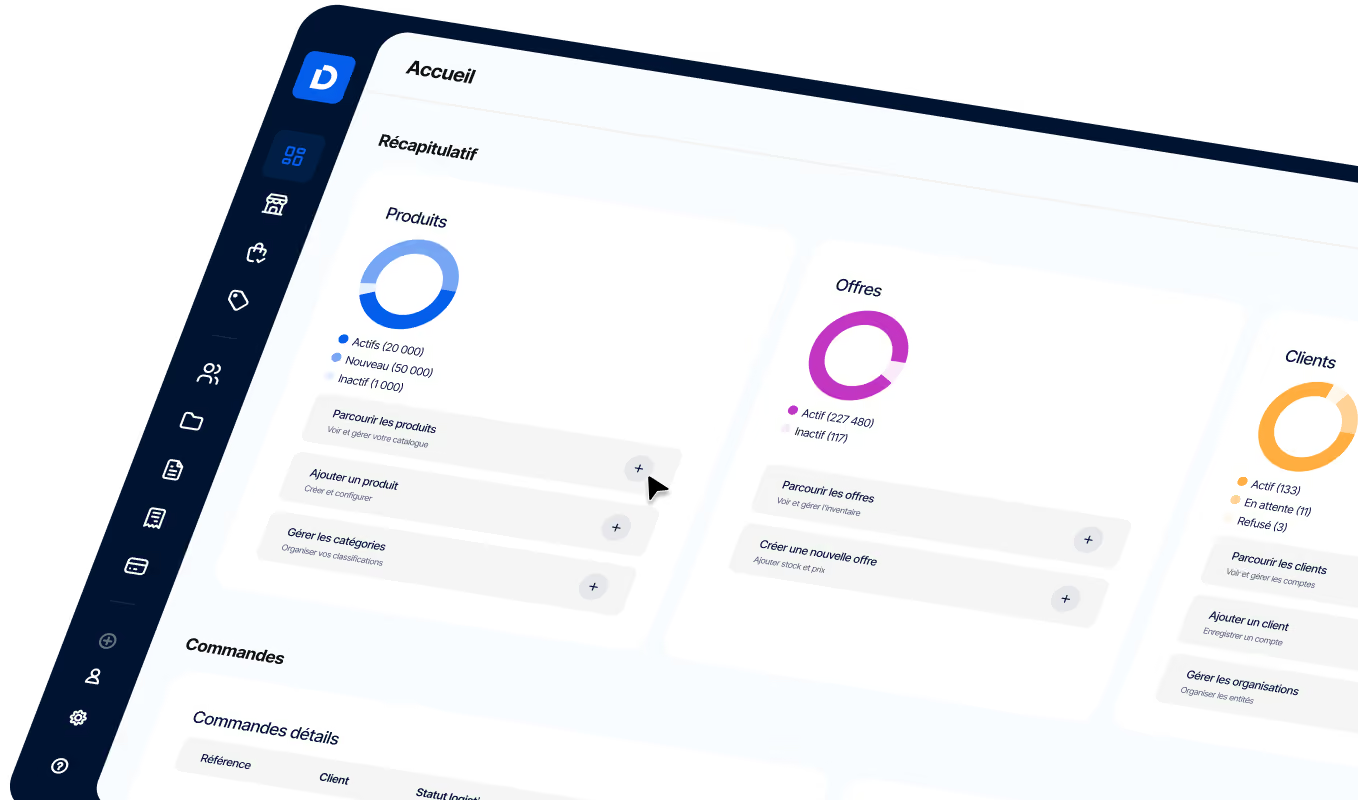
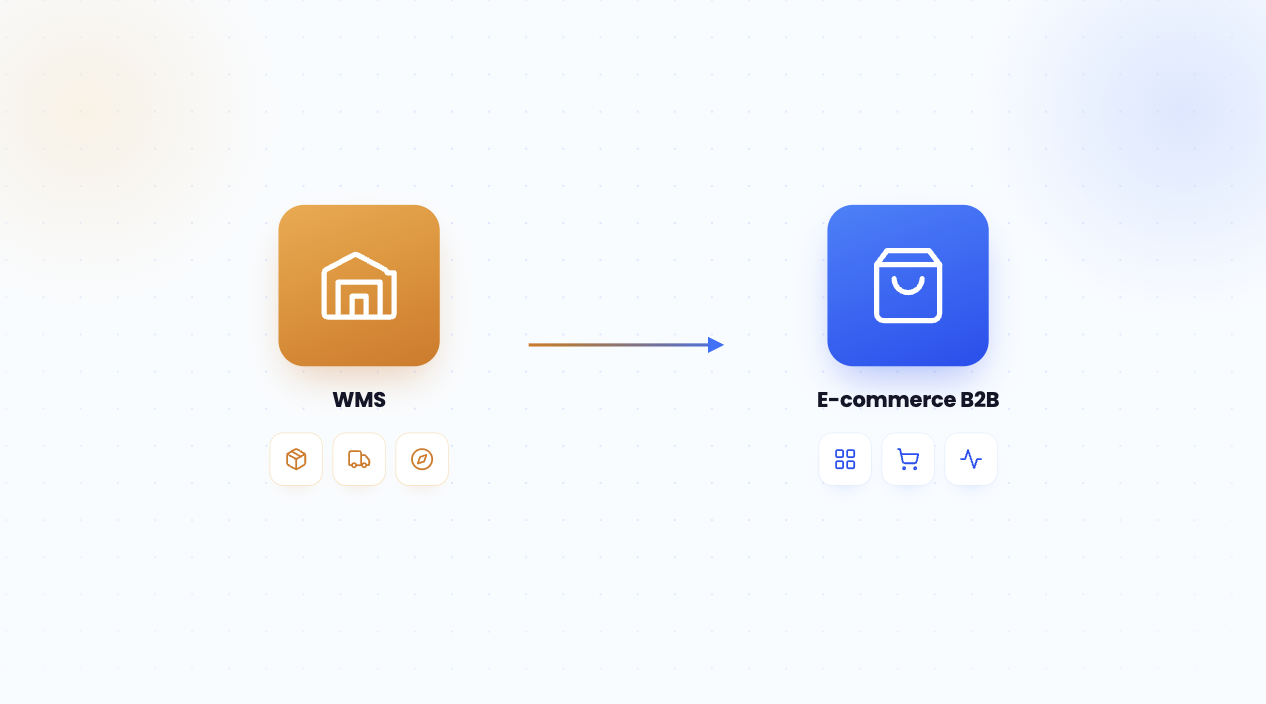
But what does that actually look like? In a headless e-commerce platform, the front end, or “head,” which is usually a template or theme, has been detached and removed, leaving only the back end. As a result, all the functional elements of the platform, such as blogs and banner products, become available to manage programmatically, including the creation and management of different content components. Think of a car made up of an engine (the back end) and the car’s shape (the front end). With a headless solution, you get the full engine of your e-commerce solution and everything you need to customize it using APIs.
Because the front-end user experience is decoupled from the back end, you don’t have to worry about integration as much, which makes it easier to connect the two.
The most notable result of separating the front end from the back end is that your ability to slice, modify, and experiment with the platform increases dramatically, because every change requires far less development work.
This stands in sharp contrast to the traditional, rigid, monolithic e-commerce platform, where the head is firmly bolted on. In those cases, the platform is limited to delivering content as websites and, in some cases, native mobile apps.
Headless e-commerce: 7 key benefits
With a headless approach, you get more freedom and flexibility to adapt, change, and be as creative as you want when it comes to the customer-facing side of your business.
B2B e-commerce business owners will be blown away by the new capabilities a headless solution puts at their fingertips. Higher-level tools such as APIs (application programming interfaces) let you build, test, and deploy new, innovative approaches quickly and easily. You can also manage customer-specific pricing, order and cart management, catalog management, and order flows without disrupting the core system. These capabilities, and many more, make headless e-commerce a powerful option for B2B businesses.
1. Headless creates omnichannel opportunities
With a headless e-commerce platform, you can quickly and easily deliver content across multiple channels, because there’s no need to build a new back end for each one. That’s what we mean by going omnichannel.
With an omnichannel strategy in place, customers no longer need to open a website to browse or buy a product. Instead, they can use their Alexa device, or the built-in screen on their fridge or smart car, while still getting the same quality and personalization across every device and platform.
2. Instant updates
Tasks that once took days of valuable time and resources, such as updating your online store’s interface to meet changing customer needs, now take just a few hours.
Amazon, the king of e-commerce, uses a headless commerce solution that lets it roll out updates every 11.7 seconds, a factor that has contributed to its success.
3. It’s future-proof
New technologies such as the Internet of Things and progressive web apps are just around the corner. That’s why it’s important to make the necessary adjustments now to ensure your platform is ready for tomorrow’s breakthrough technologies.
4. Agile marketing and seamless integrations
Once the constraints tied to back-end workload are removed, marketing teams equipped with a headless e-commerce system can make major changes to your site in days instead of months.
What’s more, by definition, a headless e-commerce solution must have an API, which makes it easier to integrate and communicate with other platforms. That means you can extend your brand to any new device, expanding your opportunities and reaching more customers at the same time.
If that doesn’t sound like agile marketing, we don’t know what does.
5. Consistent customer experience
With a headless approach, as your B2B customers evolve over time, you can quickly and easily adapt your site to their new needs and expectations. All while making sure your brand style and tone stay consistent across every channel, even as new ones are added.
Because you’re not tied to a single platform and your front-end and back-end processes are separate, you have endless opportunities to keep up with digital marketing trends without waiting months or triggering unwanted changes in the back end.
That means you have endless possibilities when it comes to customizing your content and user interface, while still making sure your style and tone stay consistent across every channel.
6. Better conversion optimization
Because it’s so easy to make changes to your online stores with headless e-commerce, you have unlimited freedom to try and test different models and approaches until you find the one that works best for you.
This lets you run continuous testing and optimization cycles, helping you understand your customers better than competitors who aren’t equipped with headless e-commerce.
7. Speed is everything
Without headless e-commerce, building and scaling an omnichannel sales experience is a long and expensive process. However, because headless e-commerce is centrally hosted and delivered anywhere via API, your time to market is dramatically reduced. That means you can adopt new channels and expand into new regions at lightning speed.
Are there any downsides to headless e-commerce?
Because headless e-commerce relies on a back-end structure without a single front end, you now have multiple vendors and technologies at your disposal. The added complexity will require a skilled development team for both build and maintenance.
That means the incredible speed, customization, and optimization potential of your platform will inevitably cost more money and resources.
Headless e-commerce can mean losing native e-commerce features
Depending on your existing e-commerce platform, you may lose some native front-end e-commerce features when you separate them from the back end. For example, there’s no preview, which means you won’t be able to see the changes you make until they’re implemented.
The decision to go headless will undoubtedly have major consequences for your business. Overall, they’ll be positive, but serious considerations around your resources and your ability to scale to headless need to be taken into account before you move forward.
There is, however, a simple way to offset these drawbacks. Front-end as a service uses cloud microservices to provide developers with all the modules they need. That means that instead of having to build every different component of your e-commerce platform individually, from your shopping cart to your chatbot, you can select the best components already made available by the front-end-as-a-service platform.
Wrapping up
The more you know about headless B2B e-commerce, the more obvious it becomes that you need to start implementing it. Especially if you want your business to keep pace with digital trends and evolving B2B customer expectations.
Whether you like it or not, the direction of B2B e-commerce is omnichannel, and trying to adapt your business to every platform without taking a headless approach will only cost you more in the long run.
In short, it’s not a question of “if.” It’s a question of “when?”
-modified.avif)
.png)
.avif)
.jpg)