B2B Data Management: The Essentials in 2024
What are the must-have B2B data management practices in 2024? Discover how to leverage your data to drive growth, ensure compliance, and improve the customer experience.
.jpeg)
Smart data management is essential for B2B companies, yet many still struggle to manage, understand, and use their data effectively.
The key to success lies in understanding and applying the right data management strategies, including setting up a strong B2B e-commerce platform.
In this guide, we cover the essential data management practices for 2024 so you can stay ahead of the curve.
Short on time? Here’s what to remember:
- Unified data systems are essential for making smarter decisions and keeping operations running smoothly.
- Regular data checks and cleanups help keep your data accurate and reliable.
- Putting robust security measures in place protects your valuable B2B data.
- Using AI and machine learning speeds up data analysis and helps you predict what comes next.
Why B2B data management matters
Whatever your industry, B2B data management is something you can’t afford to overlook. Here’s why it matters so much in 2024 and beyond:
Smarter decision-making
Gut instinct isn’t enough to make business decisions. With strong B2B data management, you get accurate, real-time insights that guide strategic decisions.
For example, a furniture supplier selling to restaurants and hotels can use sales data, market research, and economic indicators to predict upcoming trends in hospitality furniture. That allows them to adjust their product range and inventory levels accordingly, staying ahead of competitors.
Better customer experience
Your B2B customers expect a personalized approach. By managing customer data effectively, you can tailor your offers to their specific needs.
A construction supplies company, for example, can use purchase history to recommend products and create custom catalogs for each customer, improving the overall B2B customer experience. This personalized approach can be delivered seamlessly through a well-designed B2B sales portal, giving customers a user-friendly interface built around their unique needs.
Operational efficiency
Streamlined data management reduces duplication and automates processes, saving your business time and money.
For example, a food distribution company using effective data management could optimize inventory levels, reduce waste, and ship orders faster.
Revenue growth
Accurate data also helps you spot new opportunities and get more value from the ones you already have. You can easily identify cross-sell and upsell opportunities, which leads to more sales.
A concrete example would be a B2B fashion retailer using purchase data to suggest complementary items to its wholesale customers, increasing average order value (AOV).
Risk mitigation
Poor data management is a disaster waiting to happen. It exposes your business to security breaches, compliance issues, and reputational damage. As companies rely more and more on data, the risks tied to poor management have grown exponentially. That calls for a shift in mindset around data security and governance. By putting good data management practices in place, you protect your business from these risks.
For example, a grocery wholesaler’s data management practices might include protecting sensitive supplier information and maintaining food safety records.
Competitive advantage
High-quality data helps you stay ahead of competitors with faster response times, more accurate pricing, and better-targeted marketing.
For example, a furniture manufacturer using data effectively could respond more quickly to market changes than others, adjusting designs and inventory to match emerging trends.
6 must-have elements of B2B data management
Let’s look at the six aspects of B2B data management you need to master to stay competitive and compliant:
- Unify your data on a centralized platform
Gone are the days of data scattered across different departments and operating in silos, where everyone had their own tools and cross-functional communication was limited. A unified commerce platform is now essential for smooth operations and a complete, end-to-end view of your business.
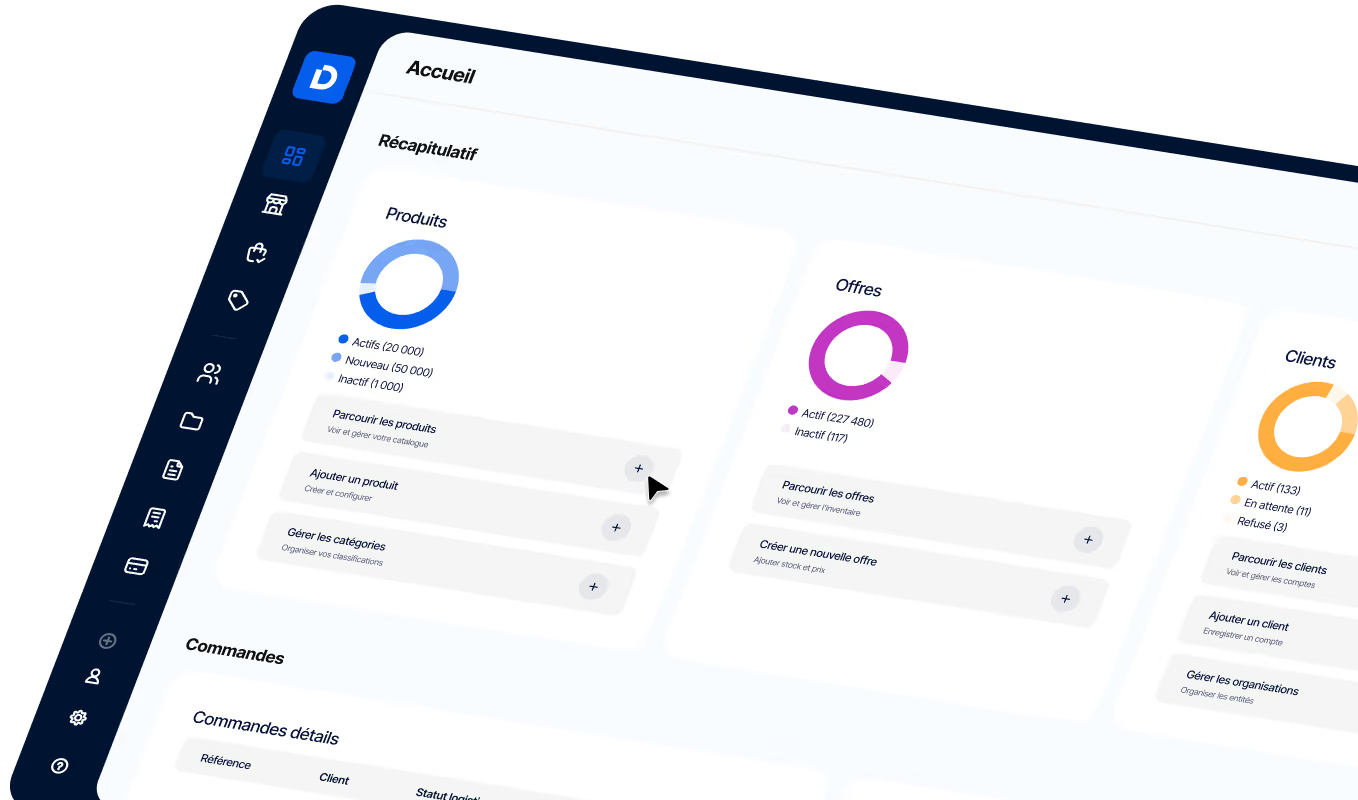
At DJUST, we offer a complete solution that brings together data from multiple sources in one easy-to-access platform. That gives you a 360-degree view of your business, from inventory and sales to customer interactions and marketing efforts.
With DJUST, you can:
- Consolidate data from your enterprise resource planning (ERP) software, customer relationship management (CRM) platform, product information management (PIM) solution, and any other system.
- Get real-time visibility into key metrics and performance.
- Enable cross-functional collaboration and data sharing.
- Simplify data management processes and reduce manual effort far beyond data-related tasks. You can manage incidents (for example, when a delivery is incorrect or damaged), oversee shipping and delivery, payment, and more.
A unified commerce platform is a great fit if you’re considering an e-commerce replatforming project, because it helps you make the transition smoothly with consistent data.
Expert tip: When centralizing your data, create a data dictionary that clearly defines each data point and where it comes from. That helps keep things consistent and clear across your business. For example, a “customer ID” field could be defined as “a unique eight-digit number assigned to each customer account, sourced from the CRM system.”
- Put strict data quality controls in place
Data can be considered “bad” when it’s outdated, incomplete, inaccurate, or inconsistent. Bad data leads to poor decisions and ineffective strategies. That’s why regular data checks and cleanups are essential to keep it accurate and reliable.
With B2B data management platforms and unified commerce solutions like DJUST, you can benefit from built-in data validation tools that automatically flag inconsistencies and duplicates. That helps you maintain a clean, reliable database without having to check it manually all the time.
In addition to correcting information and removing duplicates, you should also:
- Set data entry standards and validation rules. For example, you could define a standard format for phone numbers or make sure all product codes follow a specific pattern.
- Configure data quality checks when information is first entered into your system. This helps catch and fix errors before they cause problems later. For example, when creating a new customer account, the system could automatically check whether the email address is in a valid format and whether the company name already exists in the database.
- Run regular data audits and cleanups. This could involve quarterly reviews of customer data to remove outdated contact details or closed business accounts.
- Monitor data quality metrics and set improvement targets. For example, you might aim to reduce duplicate customer records by 50% in six months.
- Provide user training and support on data quality best practices. You could run workshops on proper data entry techniques or create user guides for data management processes.
Expert tip: To reinforce your training efforts, consider setting up a buddy system where more experienced data managers mentor new team members. That can help reinforce best practices and build a data quality culture across your organization.
- Prioritize data security and compliance
With increased regulatory scrutiny and the threat of cyberattacks, strong security measures are non-negotiable. These include encryption, access controls, and compliance with regulations such as the General Data Protection Regulation (GDPR).
The best platforms take e-commerce security seriously, offering advanced encryption and role-based access controls. They also help you stay compliant with data regulations by providing tools for data anonymization (removing personally identifiable information from datasets) and consent management (tracking and honoring customer preferences for data use).
Other key security measures include:
- Implementing multi-factor authentication and single sign-on. This adds an extra layer of security by requiring users to provide two or more verification factors. For example, a password plus a one-time code sent to their phone to access a resource.
- Regularly updating systems to patch vulnerabilities. This means staying on top of security updates across all software and applying them quickly to close potential security gaps.
- Security training for employees. This could include regular workshops on spotting phishing attempts, creating strong passwords, and the importance of data protection.
- Developing an incident response plan for data breaches. This plan should outline the steps to follow if a breach occurs, including how to contain it, assess its impact, notify affected parties, and prevent future incidents.
Expert tip: If you use a SaaS solution, security audits and penetration testing should be handled by your vendor. Ask your vendor about its security measures. If you manage your own system, make sure you update it regularly and prioritize security—don’t wait for an incident to happen before taking action.
- Use AI and machine learning for data analysis
AI-powered analytics are no longer a luxury: they’re necessary to stay competitive in the B2B landscape.
At DJUST, we’ve built AI and machine learning capabilities into our platform, helping you get more out of your data. These tools can significantly improve your B2B e-commerce strategy.
Other applications of AI in B2B data management include:
- Anomaly detection for fraud prevention and risk management.
- Natural language processing for sentiment analysis and customer feedback.
- Predictive maintenance for equipment and assets.
- Demand forecasting and supply chain optimization.
Expert tip: Start small with AI projects and focus on specific use cases that deliver clear business value. Also, make sure your data is clean, accurate, and well structured before applying AI algorithms.
- Ensure seamless data integration across systems
Your B2B data management solution should work in harmony with the rest of your stack. Seamless integration with ERP, CRM, and other business systems is crucial for keeping data consistent and enabling smooth workflows.
DJUST offers robust API capabilities and prebuilt integrations with popular business systems, ensuring your data flows smoothly across your tech stack. This integration is key to successful e-commerce automation and broader B2B digital transformation. Other benefits of data integration include:
- Less manual data entry and fewer errors.
- Greater efficiency and productivity.
- Better collaboration and communication between departments.
- Faster time to market for new products and services.
Expert tip: Create a data flow diagram to visualize how information moves between different platforms. You can also use data mapping tools to make sure data fields are matched and translated correctly across systems.
- Put a data governance framework in place
Finally, you need a clear data governance strategy. This ensures your data is managed consistently and responsibly across your organization.
The right system can support your data governance efforts by providing detailed audit trails, user activity logs, and customizable data access policies. That helps you maintain control over your data assets while still allowing the right access for different user roles.
Other key components of a data governance framework include:
- Defining data ownership and stewardship roles. This means assigning specific individuals or teams responsibility for maintaining and ensuring the quality of different datasets.
- Establishing data quality standards and metrics. For example, you could set a standard that customer contact information must be verified every six months or that product descriptions must meet a certain completeness threshold.
- Implementing data lifecycle management processes. This includes policies for data creation, storage, use, archiving, and deletion, ensuring data is handled appropriately throughout its lifecycle.
- Providing user training and support on data governance policies. This could involve creating a data governance handbook and running regular training sessions to make sure all employees understand their role in maintaining data integrity.
Expert tip: Involve key stakeholders from across the organization in your data governance efforts to ensure buy-in and alignment with business goals. Also, review and update your data governance policies regularly to keep pace with changing business needs and regulations.
In conclusion
Effective B2B data management is crucial to your business success. To succeed in 2024 and beyond, unify your data, secure it, use advanced analytics, ensure strong integration, and apply rigorous governance.
As B2B e-commerce trends continue to evolve, staying on top of your data management practices will be essential to maintaining a competitive edge, delivering superior B2B payment processing solutions, and more.
With DJUST’s unified commerce platform and our expert guidance, you can navigate the complexities of B2B data management with confidence. By prioritizing data unification, quality, security, integration, and governance, you can unlock the full potential of your B2B data and drive better results for your customers and your revenue.
-modified.avif)


.png)
.jpeg)