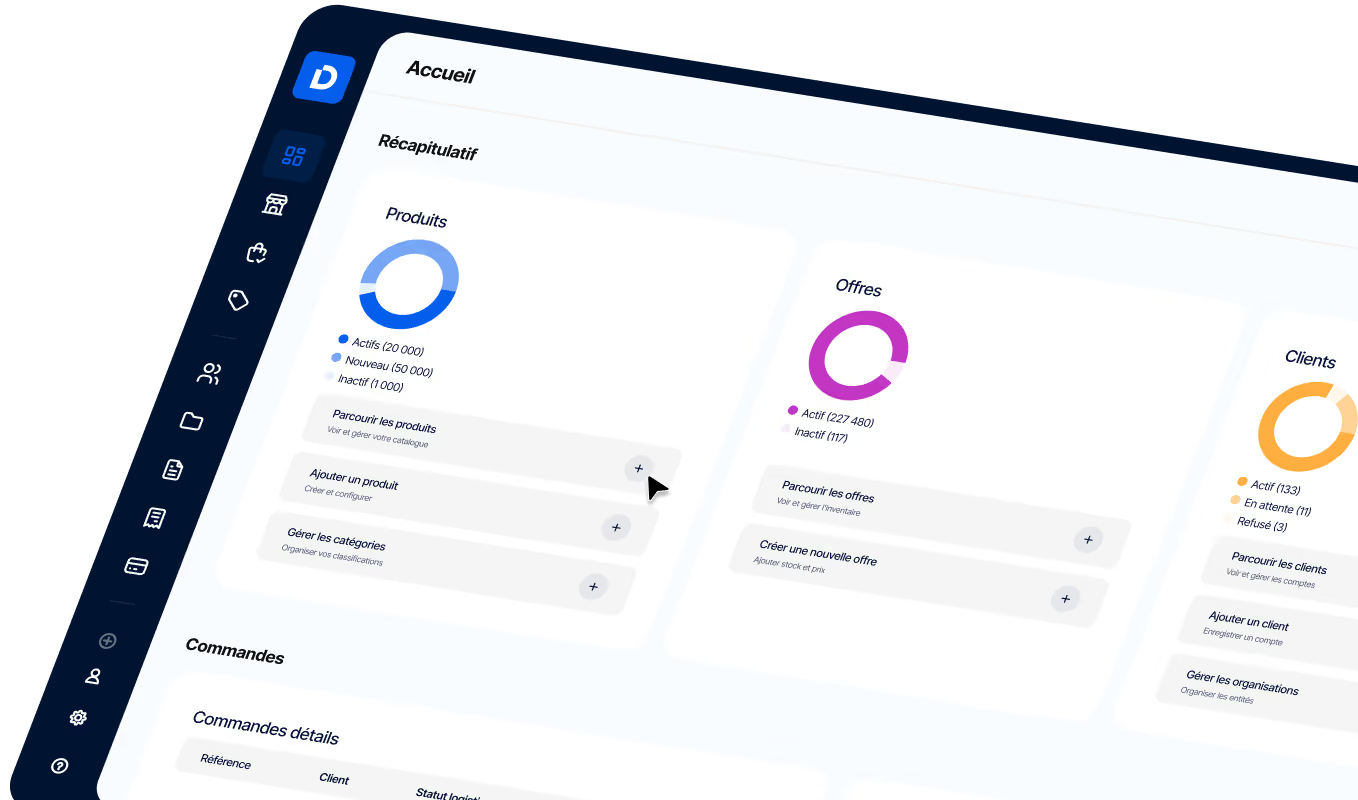
10 Must-Have Features for Your B2B Shopping Cart
Discover the 10 essential features your B2B shopping cart needs and how a unified commerce approach can transform your B2B e-commerce strategy.

In B2B sales, where time is money and every decision matters, having a high-performing shopping cart is essential to success. It’s the heart of your B2B store — the place where your customers make their final decisions.
But what sets B2B e-commerce shopping carts apart from their B2C counterparts? And which features are essential if you want to take your store to the next level?
We break it all down below, along with how a unified commerce platform can centralize every essential B2B shopping cart feature and create an exceptional customer experience.
Short on time? Here’s what to remember:
- B2B shopping carts need to meet the unique needs of business buyers, including multiple decision-makers and complex purchasing processes.
- B2B shopping carts must be flexible enough to handle everything from volume-based pricing to special rates for your most valuable customers.
- Workflow validation in a B2B cart ensures smooth approval processes for large orders, with key stakeholders signing off on each purchase.
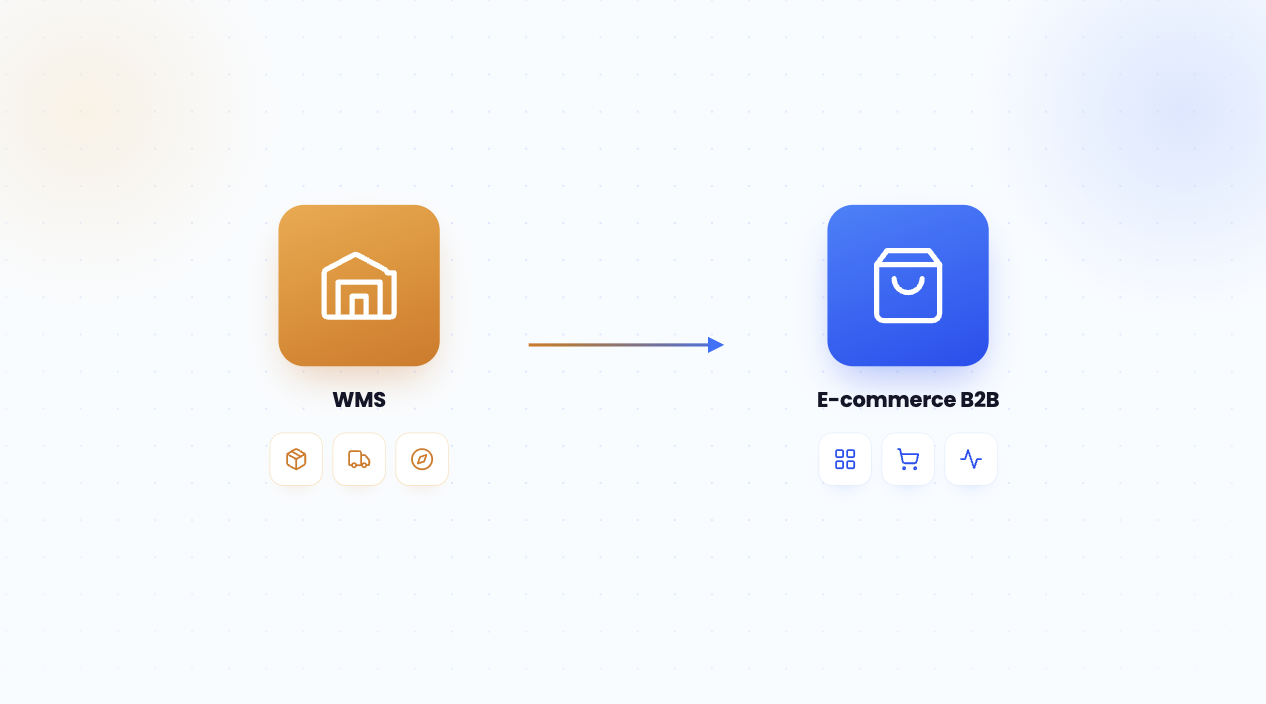
- Integrating your B2B shopping cart with other business systems, such as your ERP, helps keep inventory under control and your supply chain running smoothly.
- A unified commerce approach means your customers get the same seamless buying experience whether they’re at their desk or on the go.
What is a B2B shopping cart?
A B2B shopping cart is more than just a tool for holding items before a customer checks out. It’s a powerful solution designed to handle the unique challenges of B2B transactions.
Unlike its simpler B2C counterpart, a B2B e-commerce shopping cart often has to manage multi-step approvals, complex pricing models, and seamless integration with a range of business systems.
Let’s take a closer look.
B2C vs. B2B shopping carts: How do B2B shopping carts go further?
A B2C cart typically serves one person making personal purchases, while a B2B cart often supports multiple users within an organization, each with distinct roles and permissions.
Imagine a construction company where a project manager selects items, a procurement lead fine-tunes the order, and a finance executive gives final approval: a B2B cart has to orchestrate that entire process.
B2B shopping carts can also handle complex pricing models. Unlike B2C carts, which rely on simple fixed prices, B2B carts must juggle volume-based pricing, contract-specific rates, and even generate quotes instantly. This is especially important in industries like fashion, where bulk orders and seasonal pricing are the norm.
B2B carts also connect to other business systems. They can interface with a company’s ERP for inventory updates, sync with a B2B PIM system for the latest product details, or connect to a CRM for customer-specific insights. This interconnected setup streamlines the buying process and helps businesses keep tight control over their supply chain.
Take the automotive industry as an example: an auto parts manufacturer might rely on a shopping cart system that lets dealers place huge, complex orders with multiple approval steps. That cart would need to handle wholesale pricing, display real-time inventory levels, and integrate seamlessly with the manufacturer’s production planning system — far beyond the capabilities of a standard B2C cart.
10 must-have features your B2B online shopping cart should include
To truly satisfy your customers and drive sales, your B2B shopping cart software needs tools built specifically for B2B transactions. Look for the following must-have features when evaluating your options:
1. Multi-user functionality
In B2B, purchasing decisions are rarely made alone. Your shopping cart should support that collaborative reality with:
- Multiple accounts: allowing companies to create several accounts so everyone involved in the buying process can easily participate.
- Different permission levels: enabling administrators to assign specific actions to users, such as adding items to a cart, approving orders, or setting budget limits.
- Cart sharing: allowing team members to save and share carts so everyone can review and refine the order before it’s finalized. No more endless email threads!
By making team collaboration easier, you create a buying experience that’s efficient, transparent, and aligned with how your customers actually do business.
2. Flexible pricing models
B2B pricing isn’t one-size-fits-all. Your cart needs to be flexible enough to handle:
- Volume discounts: offering volume-based pricing with automatic discounts for larger purchases.
- Custom pricing: meeting the needs of individual customers with dedicated price lists.
- Contract agreements: supporting contract pricing for long-term partnerships.
- Custom quotes: generating real-time quotes for one-off or complex orders.
3. Personalized catalogs and customization
Every B2B customer is a VIP, and your shopping cart should treat them that way with features such as:
- Tailored catalogs: creating customer-specific B2B e-commerce catalogs with relevant product offerings.
- Smart recommendations: suggesting products based on customers’ past purchases.
- Custom codes: displaying custom SKU or part numbers for easy identification.
For example, imagine a large industrial equipment supplier creating a custom catalog for a construction company, showing only the heavy machinery and tools it needs, along with its special pricing and preferred payment options. That level of personalization doesn’t just improve the buying experience — it also makes replenishment easier.
4. Robust search and filtering
B2B buyers usually know exactly what they need when they visit an online store. Make it easy for them with:
- Advanced search: letting them filter by technical specifications and other relevant details.
- Code-based search: allowing searches by SKU, part number, or your customers’ internal product codes.
- Fast reordering: offering a streamlined process for repeat purchases.
Expert tip: Keep an eye on product bundle functionality to increase order value and help buyers remember easy-to-forget items.
5. Workflow validation and approval processes
Large B2B orders often involve teamwork. Beyond multi-step approvals, your cart should keep things organized with:
- Budget alerts: setting spending limits and triggering notifications when predefined thresholds are reached. For example, an alert could be sent when an order reaches 80% of the monthly budget.
- Custom approvals: allowing customers to define spending amounts that require additional approval.
- Multiple shopping carts: enabling users to manage separate carts for different product categories or departments, simplifying the buying process for complex organizations.
- Seller-initiated cart additions: allowing operators or sales reps to add products directly to franchisees’ carts, making guided purchasing easier for franchise systems.
This careful workflow validation ensures all required approvals are secured before an order is finalized, helping customers stay on budget and reducing errors in the ordering process.
6. Integration capabilities
Your B2B shopping cart should integrate seamlessly with other essential business tools and B2B commerce suites, such as:
- ERP systems to connect with real-time inventory and order management.
- CRM platforms to sync customer data.
- Price list software to enable dynamic pricing updates.
- Accounting software to simplify invoicing and payments.
This integration ensures your data stays consistent across your entire business ecosystem, giving you a full view of each customer’s journey.
7. Multiple payment options
B2B transactions often have unique payment needs. Your cart should meet those needs by supporting:
- Purchase orders and invoicing to provide traditional B2B payment methods.
- Credit lines and payment terms to fit established business practices.
- Multiple currencies to make international transactions easy.
- Various payment gateways to accommodate different preferences and offer maximum convenience, including increasingly popular options in B2B transactions such as credit cards, PayPal, and buy now, pay later (BNPL) services.
By offering flexible payment options, you can improve cash flow and keep your customers happy.
8. Responsive design and mobile optimization
With so many B2B buyers making purchases from their phones and tablets, your B2B online shopping cart needs to be accessible anywhere, on any device. Make sure it is:
- Responsive: adapting smoothly to different screen sizes, from desktops to smartphones.
- Easy to use: with simple navigation and interaction on mobile devices.
- Consistent: delivering the same functionality and user experience across desktop and mobile platforms.
9. Detailed analytics and reporting
To make smarter business decisions, you need insight. Your cart should provide comprehensive analytics, such as:
- Order history and buying behavior to understand how your customers shop.
- Abandoned cart analysis to uncover why potential sales fall through.
- Product performance to see which items are your bestsellers.
- Customer segmentation to group customers for targeted marketing campaigns.
Expert tip: Use your cart analytics to identify your most valuable customers and reward them with exclusive loyalty programs to boost retention and lifetime value.
10. Scalability and customization
Your cart should grow with your business. Look for solutions that offer:
- High-volume handling to keep pace as your business grows, with the ability to process thousands of order lines efficiently.
- Easy updates so you can add new products, categories, and features without hassle.
- A personal touch to customize your cart so it reflects your brand and your industry’s needs.
A scalable, customizable cart ensures your e-commerce solution is always ready to adapt to changing market conditions and your business’s unique requirements.
Expert tip: Supercharge your B2B cart with a unified commerce approach and a composable architecture. Unified commerce ensures a seamless buying experience across every channel, while composable architecture lets you build a custom e-commerce solution using the best available components.
In conclusion
Whether you’re dealing with uncertainty in the fashion industry, managing the complexity of B2B in construction or navigating the challenges of the automotive industry, a well-designed B2B shopping cart can be your secret weapon for smoother operations and a significant boost in sales.
A truly impressive B2B cart offers multi-user functionality, flexible pricing, personalization options, robust search, workflow validation tools, and integration capabilities. It also provides multiple payment options, is responsive, delivers detailed analytics, and scales with your business.
Combine these features with a unified, headless e-commerce platform (like DJUST) and adopt composable commerce for B2B to create a flexible, future-proof e-commerce solution that drives growth and keeps customers coming back.
FAQ
Imported item 260
Yes, many modern B2B shopping carts can handle both wholesale and retail transactions, often referred to as B2B2C functionality. This allows businesses to serve different types of customers through a single platform.

-modified.avif)
.png)
.avif)

.jpg)