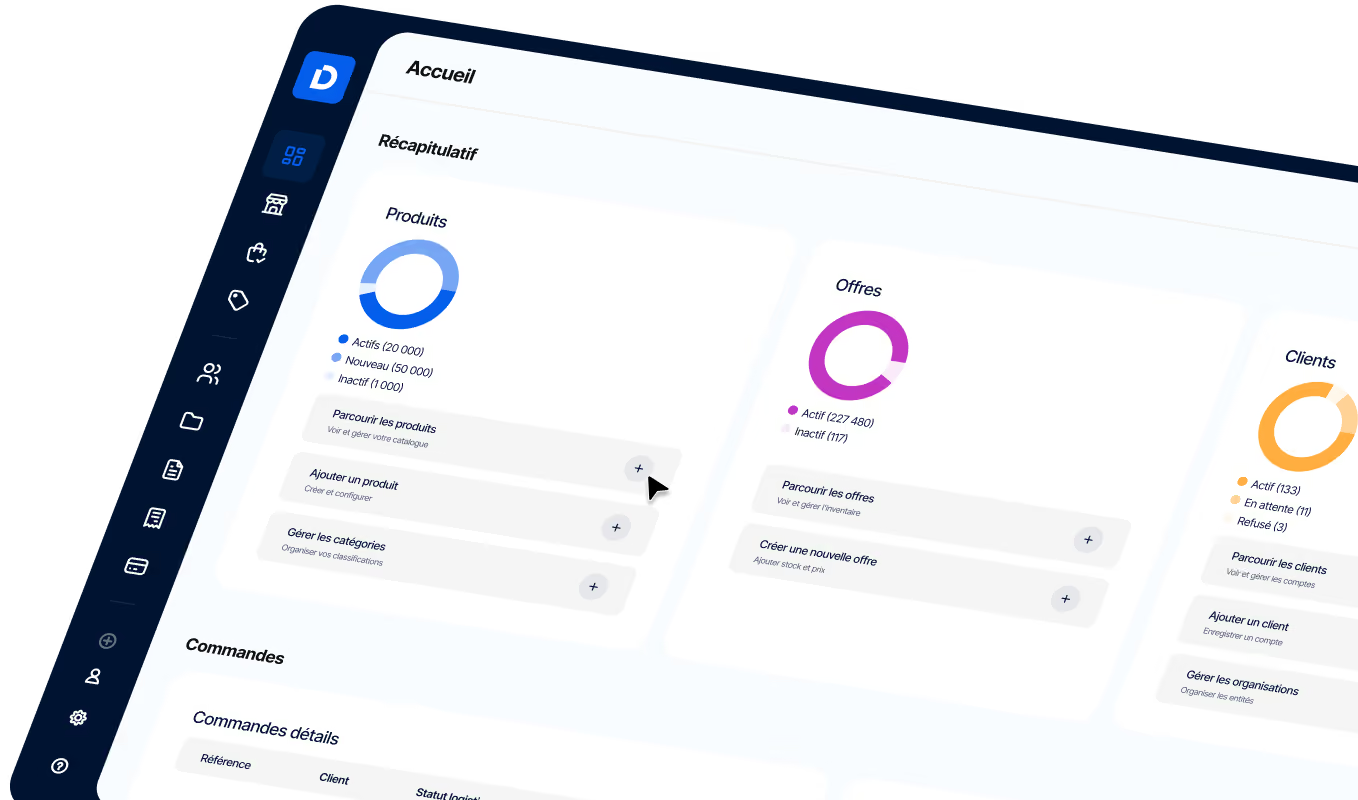
E-commerce and Fashion: Adapting to Global Change
Discover how a B2B e-commerce platform helps fashion brands manage their supply chain, sustainability, and customer loyalty.

If wholesale fashion brands want to survive the constant chaos of the global supply chain, a sophisticated B2B eCommerce platform will be essential.
Over the past decade, the supply chain has faced a steady stream of threats to its stability, from the pandemic and Brexit to the war in Ukraine, to name just a few. But what exactly can an eCommerce platform do to help B2B fashion businesses navigate that uncertainty?
Choosing a modern B2B eCommerce platform can help you anticipate supply chain issues, manage shortages, and avoid selling goods you can’t source. You’ll get clear visibility into your stock levels, for both raw materials and finished garments. An advanced system will also keep order intake and distribution records up to date, with accurate data available to all users, so you can keep a close eye on supply and demand.
So while a B2B eCommerce platform can’t prevent supply disruptions, it can give fashion brands the ability to spot a problem early and the time to develop a Plan B. After all, how you respond to supply chain issues will likely affect metrics such as brand loyalty and buyer satisfaction.
4 challenges in the B2B fashion industry
And how B2B eCommerce can help solve them
Supply chain disruption
The global supply chain has faced relentless challenges in recent years, from lockdowns and climate disasters to the war in Ukraine. An advanced eCommerce system means you’re better equipped to mitigate the impact of these disruptions. With a purpose-built eCommerce platform, you’ll have better inventory visibility, a more efficient sourcing process, and the ability to provide real-time stock updates to B2B buyers.
Sustainability expectations
Sustainability has become an increasingly important concern in the B2B and wholesale fashion industry. Many buyers are committed to moving away from fast fashion, while brands and manufacturers are under growing pressure to provide green credentials. An eCommerce platform makes it easier to bring transparency to the production lifecycle, with the ability to showcase garment passports and approvals from certification bodies such as B Lab or Solidaridad.
Competitive pricing for suppliers
Another challenge for fashion wholesalers is keeping pricing consistent across their own websites and third-party sellers. Whether you sell through digital-native marketplaces such as Amazon and ASOS, or through sellers with physical stores, price undercutting is bad for business. Moving from a static eCommerce platform to an open-architecture alternative means you can access tools that support individual pricing structures, powered by real-time industry data, so you can quickly align with your sellers’ prices.
The decline of brand loyalty
Because the market is oversaturated and comparison is so easy, brand loyalty is declining. Your eCommerce platform can be a core part of your strategy to counter this trend. With customer segmentation, you can deliver a personalized shopping experience and set up exclusive perks or discounts to reward repeat customers. Meanwhile, smart reporting features will give you the insights you need to improve metrics such as average order value, bounce rate, and cart abandonment rate.
How a women’s apparel brand increased sales by 300% with a B2B eCommerce platform
After years of relying on complex Excel spreadsheets, a contemporary women’s apparel brand had had enough of a frustrating, labor-intensive ordering process.
Without a centralized platform, sales reps were giving franchise buyers inconsistent pricing and struggling to keep up with orders, cancellations, and deposits.
Order processing was slow, and because it relied on archaic manual service methods, the brand was forced to turn customers away if they were already working with another buyer.
Migrating to an eCommerce platform changed everything. The brand now had access to an automated ordering system for fast order capture, so order processing delays were a thing of the past.
Listing creation is 2.5 times faster, and prices are displayed consistently across the platform, regardless of currency. Buyer confidence increased, and sales rose by 300%.
In the three years since moving to a professional eCommerce platform, the brand also gained 30% more customers. The numbers speak for themselves: eCommerce has a critical role to play in the B2B fashion sector, and the right platform can transform your brand’s performance.
Five key takeaways
In short, the five main benefits of using B2B eCommerce in the fashion industry are...
1. It gives you a better platform to win more customers and grow your business.
2. It delivers a better customer experience, which leads to higher average order value and stronger retention.
3. It streamlines sales and supply chain processes so perishable products can move from A to B faster and at lower cost.
4. It future-proofs your business by scaling with you, so you can always keep up with rising demand.
5. It future-proofs your business by scaling as you grow, so you can always keep up with increased demand.
-modified.avif)


.png)
.jpeg)