8 e-commerce growth strategies for B2B
Growing a B2B e-commerce business comes with unique challenges, and it calls for a unique approach. Here are 8 strategies you can use to boost your B2B sales today.
Article summary
- Enable unified commerce
- Personalize your customers’ journey
- Explore new acquisition channels (with expert help)
- Ensure a seamless customer onboarding experience
- Expand into global markets
- Use e-commerce automation : AI and machine learning
- Invest in your website’s user experience
- Create a customer advocacy program

The B2B market is growing at an unprecedented pace. According to one analysis, B2B e-commerce could grow at an annual rate of 18.2 % to reach a value of more than $57 billion by 2030. That creates a huge opportunity for existing B2B companies and for B2C businesses looking to move into B2B sales.
However, B2B companies that want to take part in this growth face unique challenges. In particular, B2B transactions are large and complex, so it can be difficult to scale or speed them up.
The good news is that at DJUST, we know how you can use your B2B e-commerce platform to drive growth.
Understanding the types of B2B e-commerce growth
Before you start implementing strategies to grow your e-commerce business, it’s important to understand the types of growth you can achieve. They are:
- Winning new clients.
- Selling more to existing clients by offering upsells and improving the customer experience so they place larger or more frequent orders.
- Driving operational growth — in other words, streamlining your sales funnel and shipping process so your team has more capacity to find new customers or develop new products that customers will love.
Let’s explore eight strategies that can help you achieve all three.
E-commerce strategies to grow your B2B business
1. Embrace unified commerce
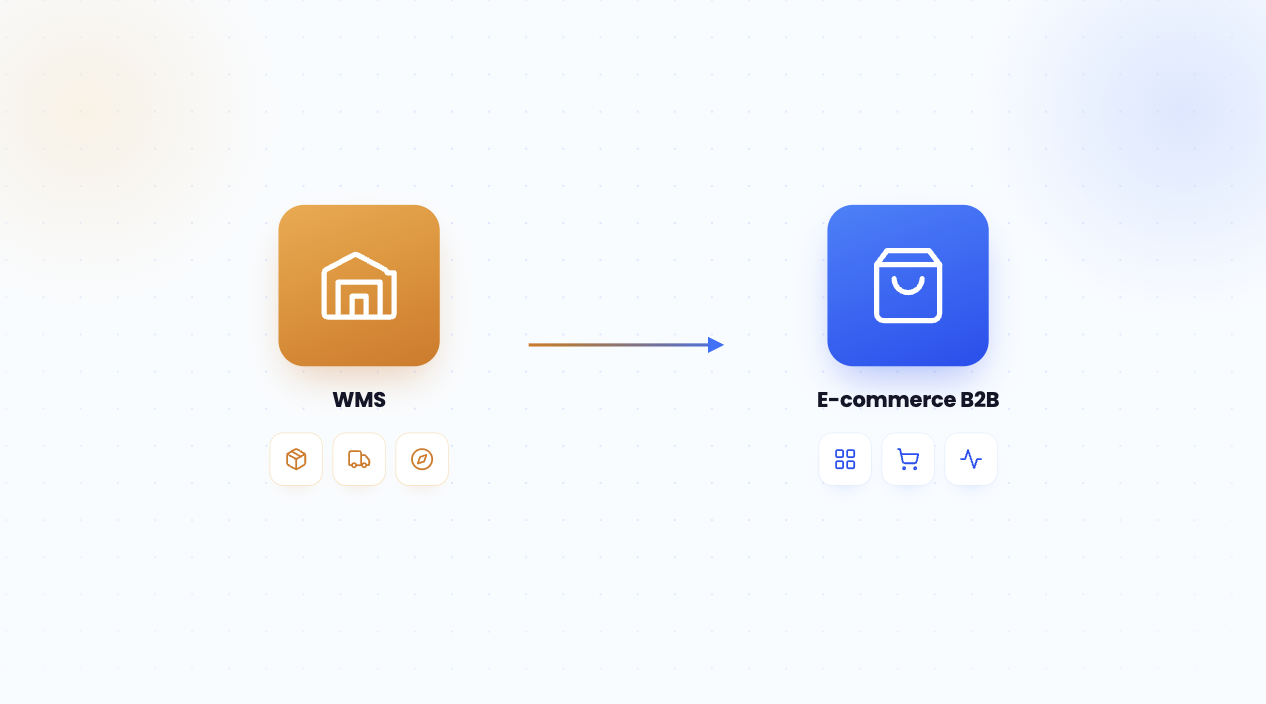
Connecting your e-commerce tools, such as your enterprise resource planning (ERP) software, product information management (PIM) platform, and order management system (OMS), in one centralized place is one of the best strategies for growing your B2B business.
When all your tools and sales channels work together on the same platform, you can reach customers wherever they are. Highly mobile B2B buyers can make purchases on any device with complete ease.
What’s more, your sales team can manage marketing and sales on a single enterprise e-commerce platform. There’s no back and forth between software tools and no information gets lost. The result is greater visibility into each customer’s journey and more personalized interactions, which are essential for closing sales.
And because unified commerce streamlines workflows, you can drive operational growth by reducing costs and giving your team more time to focus on revenue-generating activities.
Expert tip: DJUST’s platform is a great example of how unified commerce can support business growth. Customers can shop and place orders online, place orders through your sales team, or order through connected channels you manage via DJUST. No matter how they order, customers can access all their order details in one place.
2. Personalize the customer journey
Personalizing customer journeys is a highly effective e-commerce growth strategy. With personalization, you show the right product to customers at the right time, which encourages them to make a purchase.
In fact, Adobe’s 2023 B2B Commerce Growth Strategy Survey found that more than 60 % of companies using e-commerce personalization see a conversion rate increase.
Here are a few ways to personalize what your customers see:
- Show recently viewed or frequently viewed items at the top of a customer’s search results.
- Make it easy for customers to use the same payment and shipping options they’ve used before.
- Recommend products based on what customers in the same market or industry have bought.
3. Explore new acquisition channels with expert help
Another great strategy for growing B2B sales is to explore customer acquisition channels you may not be using today, or may not be using to their full potential. This is especially important if you’re moving from B2C to B2B sales for the first time.
There’s a good chance you’re already making B2B sales, but formalizing them and making them highly efficient is a different story.
To get the most out of this strategy, consider bringing in expert help. Companies with deep B2B experience know which acquisition channels work best across different industries, and they know how to adapt your messaging for B2B buyers rather than B2C customers.
At DJUST, we’ve helped companies, including Adore Me, a Victoria’s Secret subsidiary, move from B2C models to B2B or wholesale. We stay on top of the latest B2B e-commerce trends and know which acquisition channels are most effective for reaching business buyers.
In other words, experts can help you focus on the customers that deliver the best return on your time and your spend.
4. Ensure a smooth customer onboarding experience
Customers never forget their first experience with your company. You need to make a good first impression, or you risk driving them away.
With a smooth onboarding process, you can get off to a strong start and avoid costly e-commerce mistakes. This is especially important if your customers are used to placing orders by phone or email. You need to make it as easy as possible for them to start using your e-commerce platform.
5. Expand into global markets
Expanding into new markets around the world is a great way to broaden your company’s potential audience and add new customers. It can also help you diversify revenue and protect your business from a downturn in your home market.
To make global expansion easier, make sure your e-commerce platform offers these key features:
- Multilingual capabilities
- Market-specific product catalogs
- Support for multiple currencies and payment methods
6. Use e-commerce automation: AI and machine learning
Integrating AI and machine learning tools into your business can save your team time on repetitive tasks and free them up to close new deals. You can use e-commerce automation at every stage of your B2B sales process, from marketing to new leads, to upselling customers during the buying process, and providing support to existing customers.
Many e-commerce SaaS platforms now offer automated workflows to make these time-saving tricks as simple as possible.
Expert tip: One of the latest innovations in e-commerce is the ability to use AI to digitize text and place orders. For example, AI can read an order a customer sends by email and automatically place that order on your e-commerce platform. Want to learn more? Contact DJUST to see how we implement this feature.
7. Invest in your website user experience
Investing in your website user experience is essential to making sure customers enjoy placing orders with your company, which plays a major role in growth. The smoother your online experience, the more likely customers are to place larger orders or reorder more frequently.
It starts with making sure your site is easy to navigate. Organize your pages and products in a way that makes sense for your customers. You should also add a search bar and wish lists to make it easier for customers to find what they need.
Creating personalized customer journeys is also crucial. A McKinsey report found that companies offering exceptional personalization in online experiences generate 40 % more revenue than companies that fall short on personalization.
Also, make sure your site performs well on mobile devices and tablets. This is especially important for businesses in industries such as construction, where customers may frequently need to place orders while working in the field.
Expert tip: If your e-commerce website is publicly visible, make sure it’s optimized for search engines. At a minimum, it should include keywords relevant to your industry.
8. Build a customer advocacy program
Customer advocacy programs recruit your most loyal customers as brand ambassadors. Advocates actively promote your business to their peers, review your products, and provide honest, positive testimonials to new customers interested in working with your company.
Having advocates for your business is extremely important. A study by Gartner found that 76 % of B2B buyers consult at least three advocacy sources before making a purchase.
In addition, these programs have a flywheel effect: existing customer loyalty grows as they become more invested in your business. At the same time, they help you acquire new customers who, in turn, become future advocates for your business.
To identify potential advocates, look for repeat customers who buy many products from your company or customers who have reviewed your business favorably on industry forums. Customers who have switched from another B2B vendor to your company are especially strong advocates, because they can explain what made your business the better choice for their needs.
You can also encourage advocates to engage with your customers outside of transactions. For example, if a customer posts on social media about a business milestone, comment and congratulate them. You can also offer loyal customers early access to new products or one-on-one meetings with your product management team.
Expert tip: At the end of the day, customer retention is the best e-commerce growth strategy. When customers enjoy working with your company, they’re more likely to increase their purchases and recommend your business to their peers.
The bottom line
Leveraging e-commerce is one of the best ways to increase B2B sales from both new and existing customers.
We recommend using unified commerce to improve the buying experience for both your customers and your team. Your e-commerce strategy can also include personalizing customer journeys, exploring new acquisition channels, and improving customers’ online experience.
Finally, consider expanding into new markets, integrating automation into your sales process, and asking your best customers to act as brand ambassadors.
-modified.avif)
.png)
.avif)


.jpg)