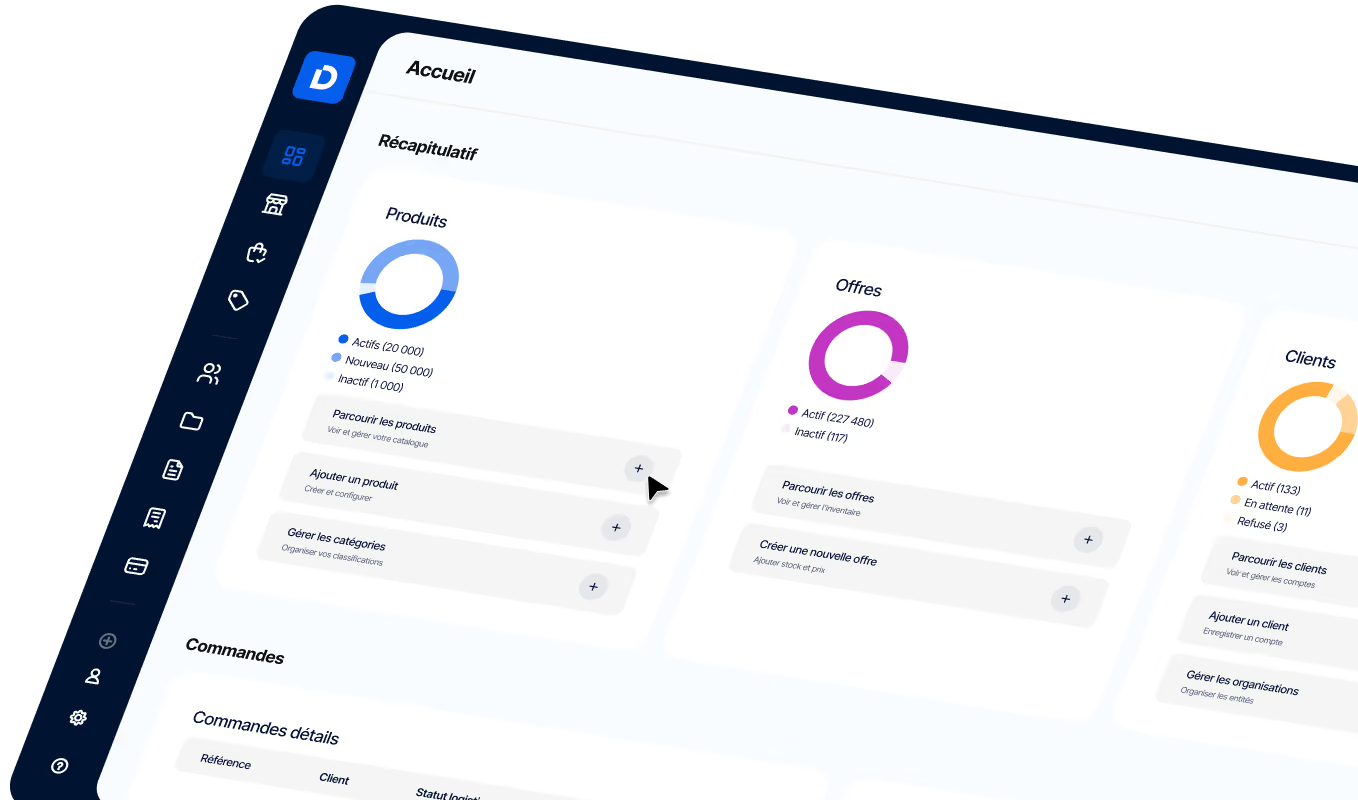
SaaS vs. On-Premise: Choosing the Right Model for Your B2B eCommerce
B2B SaaS e-commerce platforms and on-premise B2B e-commerce platforms each have their own advantages and drawbacks. We’ll help you choose the right one so your move to online sales is a success.

The right B2B eCommerce platform can help you reach more customers, diversify your company’s revenue, and grow sales. It’s a core part of any B2B eCommerce strategy and the foundation for selling your products online.
But before you launch a new eCommerce platform, you need to decide whether you want a SaaS (Software-as-a-Service) solution or an on-premise solution. SaaS platforms run in the cloud, while on-premise solutions run on hardware inside your company’s offices.
Your choice will affect how long it takes to get your eCommerce platform up and running, how well your system scales as your business grows, and much more.
Choosing between SaaS software and on-premise software is a major decision, but DJUST is here to guide you.
Short on time? Here’s the key takeaway
Let’s start with a quick look at the main differences between SaaS platforms and on-premise platforms.
- SaaS platforms are ready-to-go solutions, while on-premise platforms require a lot of hardware and an IT team.
- While SaaS software is relatively customizable, on-premise software gives you control over every aspect of your B2B eCommerce platform.
- SaaS solutions can scale over time, while on-premise platforms are expensive to upgrade as your business grows.
- SaaS platforms come with a fixed monthly cost that includes updates. On-premise software requires a significant upfront investment and costly maintenance. It also doesn’t include updates.

In the end, for most businesses, SaaS makes far more sense than on-premise. That said, both options have their pros and cons, so it’s worth understanding how they compare.
Let’s dive in.
Setup and implementation
Setting up a new B2B eCommerce platform can feel daunting. It’s not just a new software system — it’s the system your entire online sales operation depends on.
That’s why it’s important to understand how the implementation process differs between SaaS and on-premise platforms, and what impact that can have on your eCommerce business plan.
SaaS
SaaS platforms are out-of-the-box solutions that don’t require new hardware. The software provider owns and maintains all the technical infrastructure needed to run your eCommerce platform. SaaS platforms are usually easy to use.
When it comes to implementation, SaaS solutions are faster to configure and launch than most on-premise solutions. At DJUST, we can implement a new B2B eCommerce platform for your business in less than four months.
On-premise
By contrast, on-premise platforms are more complex. Your company has to buy and install servers and other IT equipment. In most cases, the software provider won’t help you choose that equipment or connect it to your company’s network. Getting on-premise software up and running can be quite challenging.
What’s more, implementing an on-premise solution can take 6 to 12 months, or even longer, depending on the platform and your IT team’s capacity. That’s a long time to wait to achieve your eCommerce goals. And delays in rolling out your platform can derail projects before they’re even finished.
Flexibility, customization, and updates
Both SaaS and on-premise eCommerce solutions offer plenty of flexibility, but they do it in different ways.
SaaS
SaaS platforms are flexible because they’re composable and modular. You start with a core software package that includes most of the functionality. Later, as your online sales grow, you expand into new markets, or you need more platform capabilities (for example, to handle customer service, marketing, visibility, and more), you can add modules with more advanced or specialized features.
SaaS solutions also support custom integrations for manufacturing, B2B retail, and a range of other industries. Most SaaS systems also offer an API for development.
On top of that, you get plenty of settings to customize your customer interface, product catalogs, order flows, and more. You can add your own copy and images for eCommerce, set up different product catalogs for different markets, and more. This adaptability is essential for supporting different eCommerce revenue models.
Another advantage of SaaS software is that it includes upgrades over time. As new technologies, such as AI, emerge, your SaaS provider will roll out new features that use them.
Expert tip: SaaS platforms are a great option if your business needs to meet specific online accessibility requirements. Many systems include built-in tools and features to help you stay compliant. For example, SaaS software can automatically add alt text and labels to content elements, making it easier for all users to access your site.
On-premise
On-premise platforms give you control over their setup. You decide which hardware your eCommerce software runs on and how your data is processed and stored. In addition, you can build custom hardware integrations that aren’t always possible with SaaS solutions.
It’s important to note that on-premise software doesn’t offer automatic updates. If you want to add new features, you’ll need to buy them, build them yourself, or hire a specialist developer. That can be a major undertaking.
Expert tip: You may have come across platform-as-a-service (PaaS) systems while researching SaaS and on-premise software. PaaS is similar to SaaS but requires more development. It sits somewhere between traditional on-premise software and fully managed SaaS systems in terms of development effort.
Scalability
SaaS platforms offer far better scalability and eCommerce performance than on-premise software solutions. (That’s actually the main reason we recommend them for businesses of all sizes!). In fact, SaaS systems scale with your business, while on-premise platforms can run into growth issues.
SaaS
If you’re using a SaaS B2B eCommerce platform and your customer base grows, no problem: your provider simply allocates more server resources to your business.
That flexibility matters a lot if your sales are cyclical. SaaS platform providers can automatically adjust their IT infrastructure to match your business needs. It’s also a plus for sustainable eCommerce, because you avoid wasting energy on oversized servers to run your software.
In addition, SaaS platforms are modular. So if your business grows and you need extra functionality, you just upgrade your plan to get it, which makes scaling easier.
On-premise
With an on-premise deployment, more traffic may require you to buy a larger server and move your platform to it. If your sales are cyclical, you may have to choose between running an oversized, expensive server during slower periods and struggling with a smaller server when traffic spikes.
Security
Your B2B eCommerce platform contains data about your business and your customers. That data needs to be highly secure.
SaaS
From a security standpoint, there’s not much to worry about with SaaS platforms. Because your data is stored on your provider’s servers, they carry most of the security burden. Most reputable SaaS providers have strong cybersecurity measures in place, such as data encryption and 24/7 network monitoring.
One important thing to look for is the ability to control who can access which data in your software. For example, DJUST offers user permissions that let you tightly control which employees can view order information or edit your workflows.
On-premise
On-premise platforms place the full security burden on your company. Your IT team has to make sure your servers are protected against cyber threats. You also need to consider the risk of physical attacks on your server by unauthorized people in your office.
If you develop integrations or new features for an on-premise solution, your team is also responsible for making sure they’re secure.
Backup and recovery
Backup and recovery are also much easier with SaaS platforms than with on-premise platforms.
SaaS
Most SaaS eCommerce software providers automatically back up your company’s data and have entire teams dedicated to the process. That helps you bounce back quickly after a cyberattack, or if you accidentally delete important data. Experienced providers also have detailed recovery plans that explain how they’ll help you handle catastrophic events such as a ransomware attack.
On-premise
With on-premise eCommerce software, you’re responsible for maintaining your own backups. You can create new backups as often as you want and decide how to store them.
However, many businesses using on-premise solutions fall behind on backups. There’s often only one person responsible for them, and if that person gets sick or goes on vacation, your data won’t be backed up. In that case, your company risks losing important data if something goes wrong.
Maintenance and support
SaaS and on-premise platforms are very different when it comes to maintenance and support.
SaaS
One of the most underrated benefits of SaaS solutions is that they include customer support. If you have questions about adding a new sales workflow, connecting to other systems such as PIM and ERP software, or configuring or using a feature, your software provider will be there to help. Most SaaS providers also offer extensive documentation to help you navigate the software with ease.
Another advantage of SaaS platforms is that you don’t have to worry about maintenance. SaaS providers maintain the hardware that powers your platform. They also roll out security updates and bug fixes. That means you don’t need an IT team to sell online.
On-premise
With an on-premise solution, you will need an IT team. Your software provider doesn’t offer ongoing support, so your IT team needs to know the software inside and out. Your IT team is also responsible for maintaining the servers that run your eCommerce platform and developing security patches as new threats emerge.
Cost
Ultimately, many businesses will choose between SaaS and on-premise solutions based on cost. This is another area where SaaS platforms come out ahead of on-premise solutions.
(Note: we can’t give exact pricing for SaaS or on-premise software. The cost of B2B eCommerce platforms depends heavily on the size of your business and the features you need).
SaaS
SaaS platforms require a monthly or annual subscription. In return, you get access to the software, customer support, and updates. There are no hidden costs or surprise bills. If you need to add advanced features as your business grows, your subscription fees will increase, but usually only marginally.
On-premise
On-premise platforms, by contrast, require a one-time license fee. That’s a high upfront cost, equivalent to several years of access to a SaaS platform. For that price, you only get the software itself, not the equipment needed to run it.
On top of the initial cost of buying a server, you can easily spend hundreds of thousands of dollars (or more) each year on IT staff to install and maintain it. If you need to handle more customers as your business grows, you may be forced to buy another expensive server.
On-premise software also doesn’t include updates. If you want to move to the latest version after a few years, you’ll have to pay another large license fee.
In our experience, over the long term, even the most expensive SaaS platforms are significantly cheaper for B2B businesses than on-premise solutions.
Why is SaaS replacing on-premise deployments?
SaaS B2B eCommerce platforms offer many advantages over on-premise solutions, and they’re becoming the preferred choice for many businesses, especially those with limited IT staff. In fact, Gartner reports that SaaS spending has grown by nearly 22%, reaching a staggering $597.3 billion — in just the last two years!
At DJUST, we’re fully committed to SaaS deployments because they’re a game-changer for sales. We’ve helped many businesses reach more customers and grow revenue without having to pour tons of resources into backend development.
Whether you’re launching a new B2B eCommerce platform or moving away from an existing on-premise solution, DJUST can get you up and running in four months or less. And we’ll be by your side every step of the way as your business grows.
In conclusion
Choosing between on-premise software and SaaS software is one of the most important decisions you’ll make when setting up a B2B eCommerce platform.
While on-premise solutions offer more flexibility than SaaS platforms, they’re also more expensive, harder to maintain and scale, and don’t come with support or updates.
That’s why we recommend choosing a SaaS eCommerce solution like DJUST so you can focus on growing your business and let us handle the backend of your platform.
-modified.avif)
.png)
.avif)
.jpg)