International E-commerce: Grow Your B2B Business
Discover how to grow your business internationally with B2B e-commerce. Also learn how B2B e-commerce software can support successful international expansion.
Article summary
- B2B e-commerce offers the fastest (a few months) and most cost-effective international expansion, ensuring total centralized control without the burden of local establishment or the loss of control associated with franchising.
- Success requires cultural adaptation of catalogs and payment methods, as well as strict compliance (Incoterms, import VAT, customs restrictions).
- A B2B platform natively manages cross-border complexity: personalized price lists per customer, real-time multi-currency support, and approval workflows.
- Real-time synchronization with an ERP (and OMS/TMS) is essential to automate quotes and orders, eliminate manual data entry, and ensure reliable logistics.
Discover how to grow your business abroad through B2B e-commerce and international e-commerce. Also learn how B2B e-commerce software can contribute to the success of international growth.
Expanding your business abroad gives you the opportunity to attract new customers, diversify your company's revenue, and even develop new, more resilient supply chains.
However, as exciting as it may be, international expansion can be tricky. You must navigate the laws and regulations of a new country, find your niche in a new business landscape, and overcome linguistic and cultural barriers.
Fortunately, DJUST is here to guide you. Below, we explain how to approach international e-commerce using a B2B strategy, and how finding the right platform can help you succeed.
Why is B2B e-commerce the smoothest path to international expansion?
B2B e-commerce is the simplest and most effective method to expand your business globally, but it is not the only option available. Let's explore the three main approaches to international expansion and see how they compare.
Local establishment: the most burdensome option
The first option is to launch your business in another country, a process that requires significant time, money, and resources. From finding new manufacturers and distributors to establishing partnerships with local companies and setting up operations in a foreign territory, it is a major undertaking.
Succeeding with this approach will allow you to fully own a new operation in a new territory. But that is usually easier said than done. Companies often encounter difficulties with this expansion approach, eventually withdrawing from markets they hoped to conquer. Even giants like Target and Walmart have failed in their international expansion efforts: Target exited the Canadian market and Walmart failed to gain a foothold in Germany.
Franchising: delegating at the cost of control
Another path to international growth is offering entrepreneurs in a foreign country the opportunity to open a franchise of your brand. You can sell through your local franchisees, who will handle logistics and build a local customer base.
This approach involves less direct work and helps you bypass some of the obstacles associated with replicating your business in another country. However, you also give up a great deal of control, and potential profit,to your franchisees. If they fail, your company's reputation will suffer.
B2B E-commerce: selling without on-site infrastructure
This brings us to B2B e-commerce, a market that has exploded in recent years as businesses and buyers have turned to digital channels.
B2B e-commerce involves selling your products online through existing channels, such as wholesalers, B2B marketplaces and department stores, to international companies, without the need for local, in-person facilities.
You can manage new international markets with little to no additional staff. Furthermore, B2B e-commerce is the least expensive option on our list. With this approach, you retain control of your operations, with no need to hand over the keys to local franchisees! The expansion timeline is relatively fast: you can see an increase in your net profit in a matter of months, not years.
What are the prerequisites for a successful international B2B e-commerce strategy?
Global expansion relies on two inseparable foundations: a deep understanding of local needs and strict adherence to the regulatory framework. Neglecting either one will undermine your entire cross-border strategy.
Market research: adapting your offering to local needs
First, you must conduct market research to understand your target audience and begin shaping your market entry strategy. Even within the same industry, businesses across different countries may have needs that differ from your current customers, influenced by cultural nuances, business practices, and consumer behavior.
When studying your international target audience, consider the following questions:
- Which sales channels do customers in your target market prefer to use?
- Which product types appeal to customers in your target market?
- Which payment methods do B2B buyers in your target market use?
Furthermore, remember that customers in different countries often require completely different inventories. For example, a sustainable sneaker brand we work with sells distinct shoes to customers in Europe and customers in Japan. Another of our partners, the lingerie brand Adore Me, offers products in different sizes and colors for its European and American markets.
Localized marketing directly impacts your performance abroad. Integrated into a global strategy, international SEO is a powerful acquisition lever for growing your online sales [4]. Communication channels and messaging must also be adjusted to the cultural preferences of each target market.
Regulatory compliance: Incoterms, taxes, and restrictions
Once your market research is complete, it is time to align your expansion strategy with local laws and regulations. Neglecting compliance could lead to legal hurdles or serious issues. Compliance is particularly important in sensitive industries such as food and beverage. Many countries prohibit the transport of certain agricultural products across borders. For example, Canada limits the import of certain poultry products from the United States.
Cross-border compliance checklist
- Incoterms : define delivery responsibilities and risk transfer between the seller and the buyer.
- Local taxes : calculate import VAT, check distance selling thresholds, and prepare customs declarations.
- Import/export restrictions : check quotas, prohibited products, and permit requirements.
- Industry-specific regulations : comply with standards specific to each sector (agrifood, chemicals, pharmaceuticals).
Here is a list of compliance requirements to check :
- International Commercial Terms (Incoterms)
- Local tax regulations
- Import/export restrictions and licensing requirements
- Industry-specific regulations
Managing the complexity of international B2B pricing and catalogs
The same product may have a different negotiated price depending on the buyer, the country, and the currency. This customer-specific pricing grid, combined with the assortments and standards unique to each market, is the primary friction point in cross-border B2B e-commerce. Without a platform capable of automating these business rules, sales teams spend all their time re-entering and recalculating data.
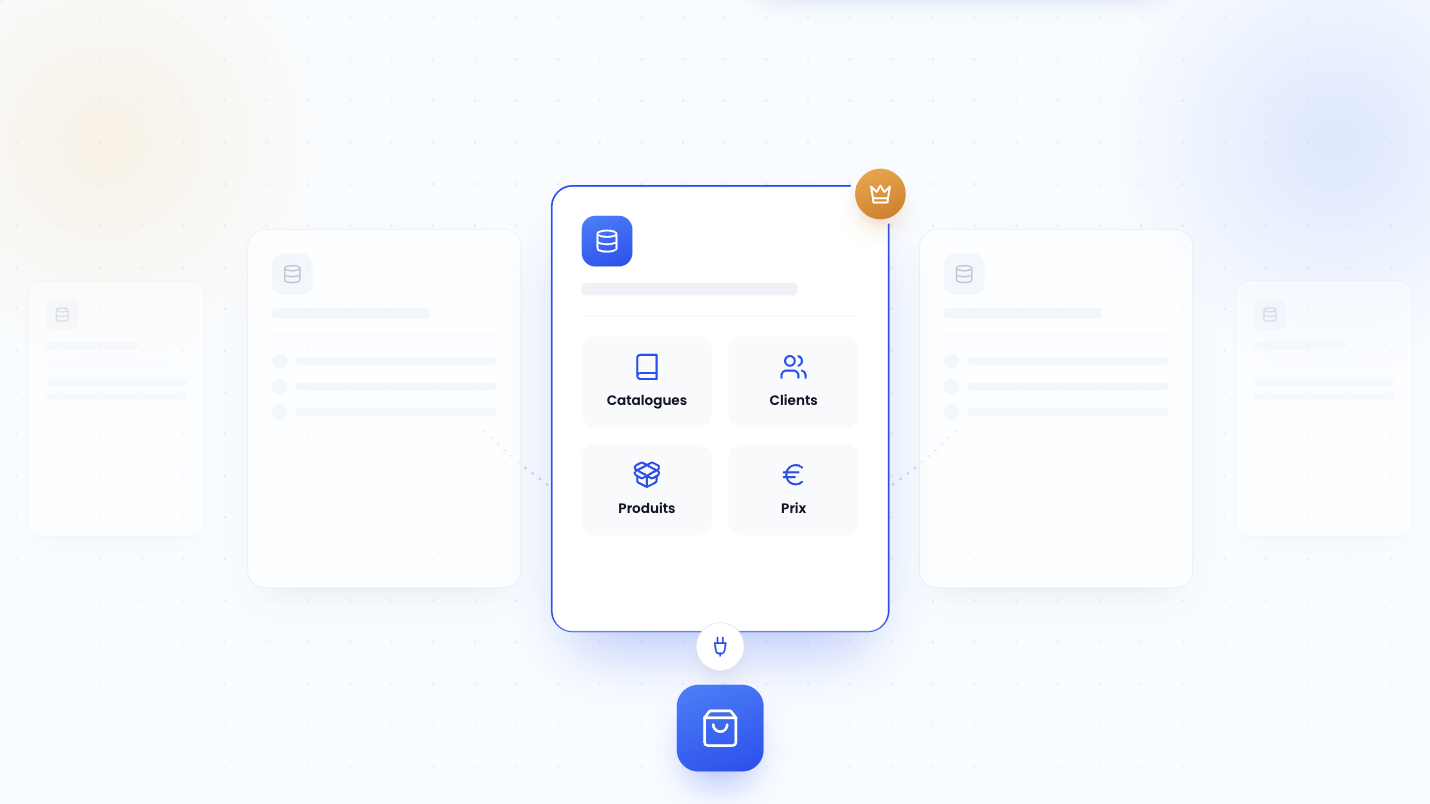
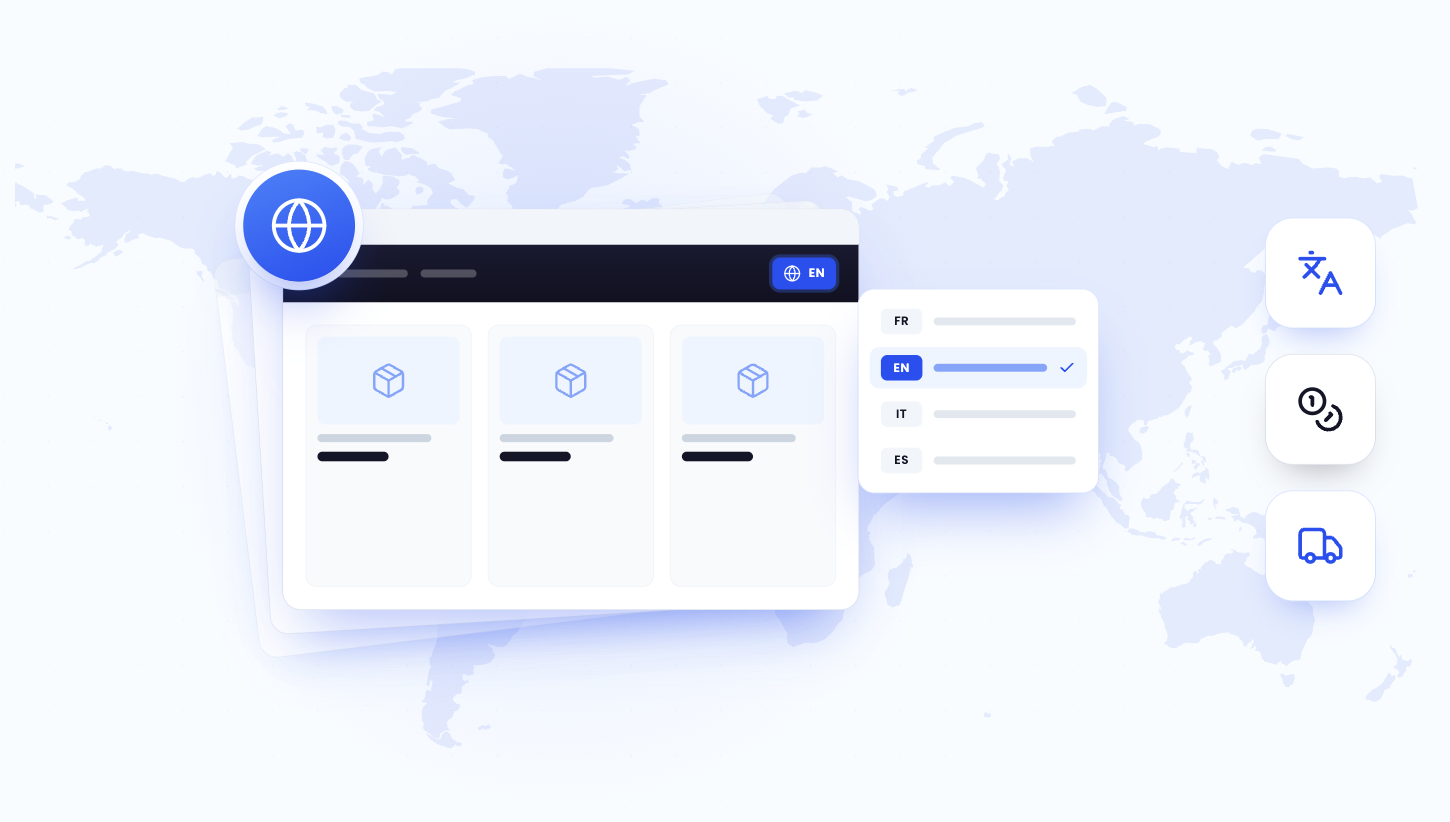
The market-specific catalogs mean that product assortments, packaging, languages, and standards vary from one country to another. A dedicated B2B e-commerce platform manages these variations without duplicating the catalog across separate systems. Regarding pricing, real-time currency conversion displays the price in the customer's currency while maintaining the reference price list in the ERP. Multilingual storefronts translate the entire purchasing experience, from product pages to the checkout process, without fragmenting data.
B2B business rules apply by market: minimum order quantities, discount terms, and delivery lead times by geographic zone. The platform manages these rules automatically, by customer and by country, without manual intervention for every transaction.
How can you automate cross-border order flows with your ERP?
Synchronize your e-commerce platform and your ERP in real time to eliminate manual entry of stock, pricing, and order statuses. Without this integration, your teams duplicate data entry, errors accumulate, and international flows slow down. A high-performance supply chain relies on this seamless circulation of data between systems.
B2B quotes illustrate this time-saving benefit: the document is generated from the catalog and negotiated rates, sent in the customer's language, and then converted into an order with a single click. Approval workflows apply rules based on amount, country, and customer type, without systematic manual intervention. To automate quotes and end-to-end orders, integrating an OMS (Order Management System) orchestrates order distribution between warehouses, return management, and international shipment tracking.
B2B payments and logistics: key points for international operations
Payment terms vary according to local practices, and the supply chain must be adapted to each zone to avoid disruptions.
Regarding payments, payment terms (30, 60, or 90 days), letters of credit, and down payments differ by country. For each international customer, assess the risk, take out export credit insurance, and set limits within your platform. Choose a payment service provider (PSP) that handles multi-currency and exchange rate fluctuations to avoid conversion losses.
On the logistics side, identify distributors and delivery partners by zone to avoid stockouts. Automate shipping documents, commercial invoices, certificates of origin, and customs declarations by integrating a TMS (Transport Management System). 51% of French merchants sell abroad, and 89% consider international expansion an important growth lever [5]. However, 80% of small businesses cite pricing as the main barrier to exporting [2], and cross-border delivery costs are on average 3 to 5 times higher than domestic deliveries [3].
DJUST Sales: the B2B e-commerce platform for international sales
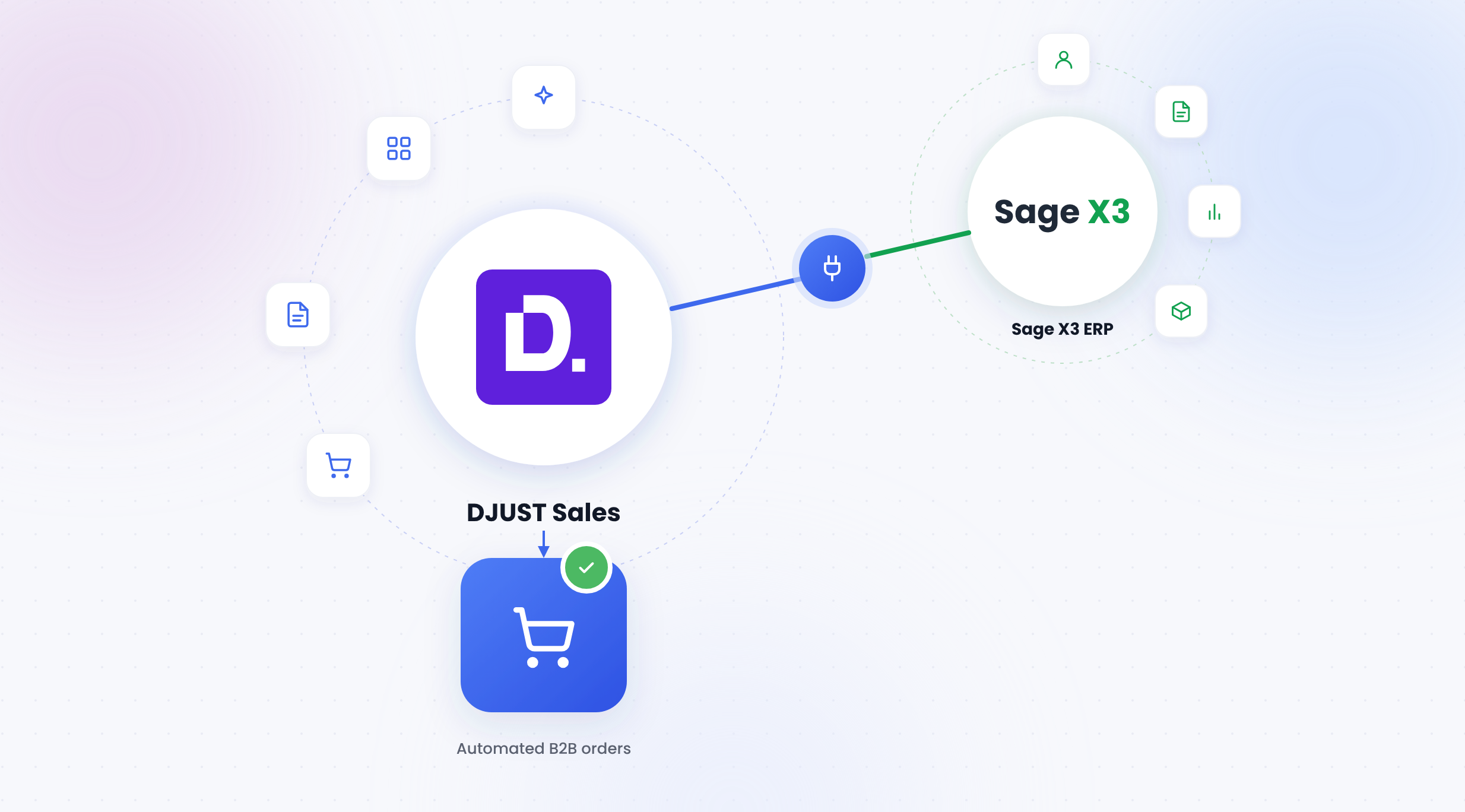
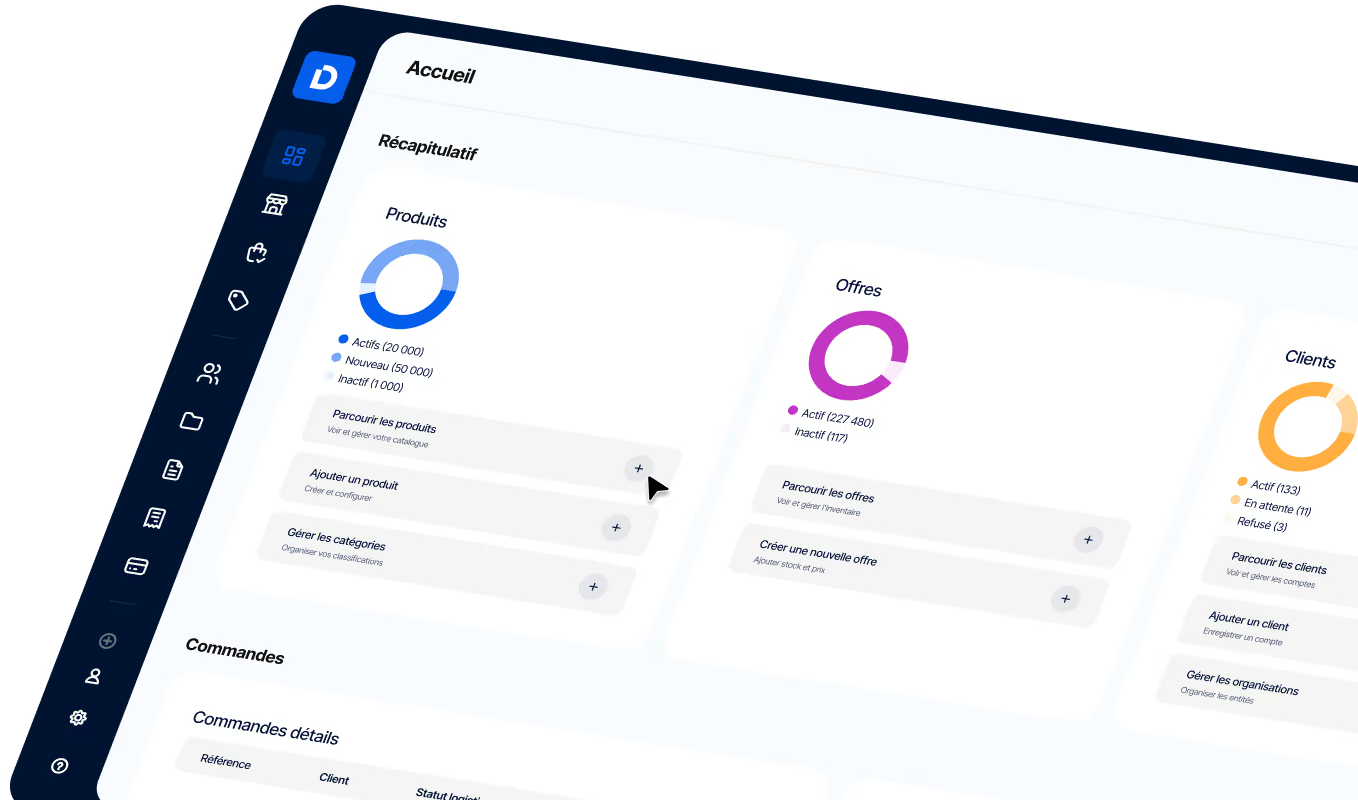
DJUST Sales is the B2B e-commerce platform designed to handle the complexities of cross-border business. It manages country-specific catalogs, multilingual storefronts, customer- and currency-specific pricing, and customizable order approval workflows. ERP integration, particularly with Sage X3, synchronizes prices, inventory, and orders without the need for manual data entry. Cross-border quotes and orders are automated from end to end, from the customer's request to delivery.
Our platform integrates with your existing systems; check out our case studies on international B2B deployments to assess the operational impact on organizations similar to yours.
FAQ
How long does it take to launch an international B2B e-commerce site?
With a dedicated platform integrated into your ERP, deployment is measured in months, not years. Market research and regulatory compliance remain the most time-consuming steps. Once these prerequisites are met, configuring country-specific catalogs, customer-specific pricing, and approval workflows is fast thanks to the integration of your existing systems.

How do you manage pricing in different currencies for international B2B customers?
Your reference price list remains in the ERP. The B2B e-commerce platform displays the price converted into the customer's currency in real time, while maintaining a record of the reference price for accounting and margin management. Exchange rate fluctuations are handled by the PSP or a dedicated conversion module.
Do you need an ERP for international B2B e-commerce?
The ERP synchronizes inventory, pricing, and orders. Without integration between the e-commerce platform and the ERP, manual data entry leads to errors and slows down cross-border workflows. A dedicated platform like DJUST Sales connects to your existing ERP to eliminate double entry and maintain a single source of truth for your data.
Which B2B payment methods should you use for international business?
International B2B payment methods include SWIFT transfers, letters of credit, corporate cards, and negotiated payment terms (30, 60, or 90 days). Your payment service provider (PSP) must support multi-currency transactions and local requirements to avoid payment blocks and currency conversion losses.
Which Incoterms should you know for international B2B e-commerce?
Incoterms (International Commercial Terms) define delivery responsibilities and the transfer of risk between cross-border buyers and sellers. The most common in B2B are: EXW (ex-works, where the buyer bears all costs), FCA (free carrier), DAP (delivered at place), and DDP (delivered duty paid, where the seller handles customs formalities). Your choice of Incoterm directly impacts your logistics costs and risk allocation.