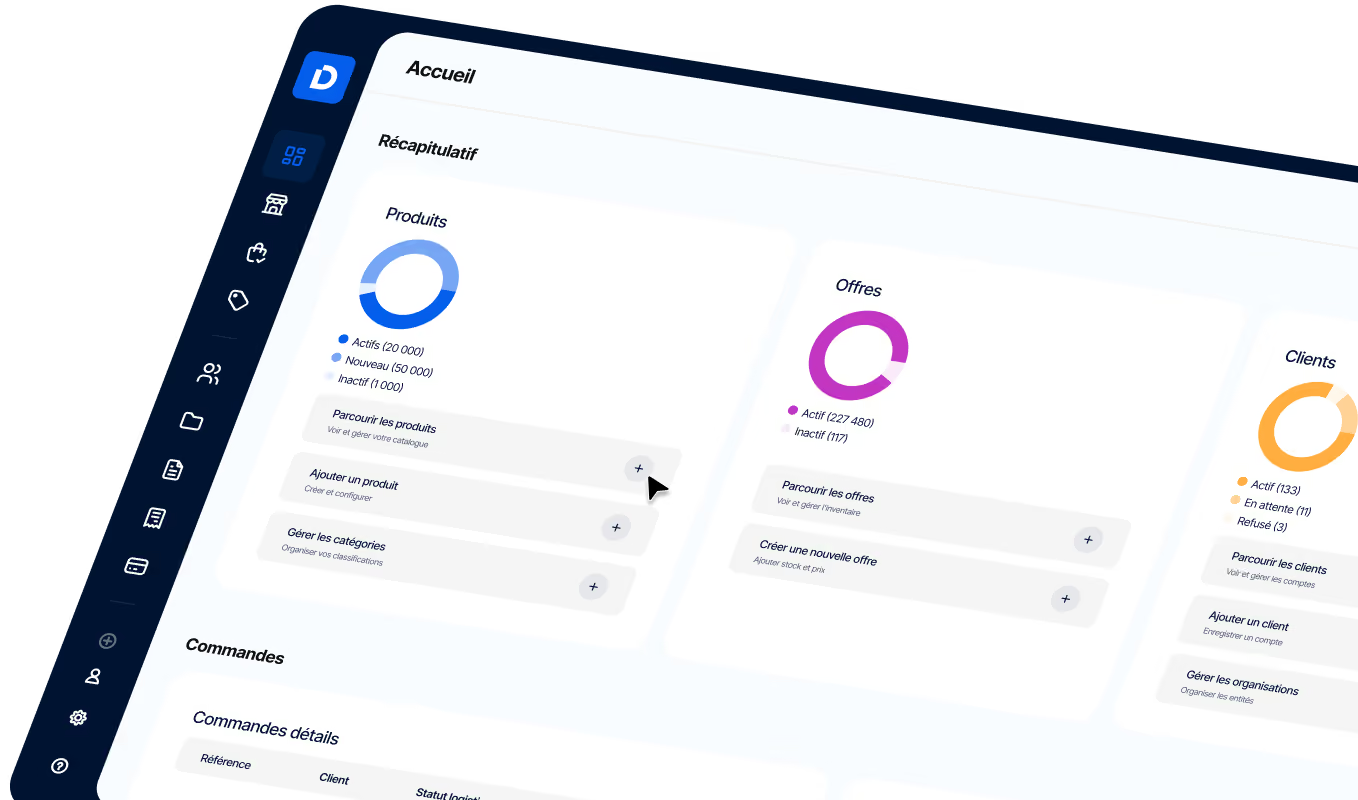
Autonomous B2B Marketplaces: The Rise of AI
Discover how AI is automating B2B e-commerce through intelligent marketplaces that simplify purchasing, negotiations, and ordering.

In summary:
- Autonomous B2B marketplaces rely on AI to automate the entire buying and selling cycle, from catalog management to contract negotiation, with little or no human intervention.
- Key technologies such as AI agents, NLP, IoT, and edge computing enable real-time orchestration of orders, inventory, and logistics, making transactions faster and more reliable.
- AI is pushing B2B from simple prediction to prescription, automatically triggering sourcing, negotiation, procurement, and delivery based on market signals.
- While the benefits are significant — time savings, lower costs, and stronger operational performance — these models also raise ethical, legal, and organizational challenges that require the right framework and governance.
Autonomous B2B marketplaces are reinventing how companies buy and sell. A B2B marketplace connects multiple sellers and buyers on a single platform. When it is autonomous, that platform automates every step of the transaction with little or no human intervention. This concept, built on advanced technologies, is similar to autonomous stores in consumer retail, such as Amazon Go. In this article, we explain how these marketplaces are transforming B2B trade.
What Is an Autonomous Marketplace?
An autonomous B2B marketplace is first and foremost an intelligent digital ecosystem. It orchestrates all the key functions without human intervention while optimizing the user experience:
- Product catalog management
- Buying rules (pricing, inventory, contracts)
- Automated processes
At the heart of the system, artificial intelligence analyzes data in real time — customer journeys, inventory levels, and logistics constraints — and triggers the necessary actions. The goal is to create an “operational brain” that orchestrates buying and selling autonomously.
The Rise of Autonomous B2B Marketplaces: Buying and Selling Without Human Intervention Thanks to AI
AI adoption is growing quickly across businesses. According to Insee, in France in 2024, 10% of companies with 10 or more employees said they were using at least one AI technology, up from 6% in 2023. The gap is wide by company size: 33% of large companies (250 employees or more) use it.
At the global level, a 2024 McKinsey survey shows that 72% of organizations now say they use AI in their operations, compared with about 50% a year earlier. These figures point to a strong shift toward intelligent automation in B2B.
This trend is driven by pressure to cut costs and speed up business processes. B2B companies are looking to digitize sourcing and procurement to stay competitive. A modern B2B e-commerce platform therefore increasingly embeds AI capabilities. For example, software agents can continuously scan supplier catalogs and automatically trigger orders when a need arises.
According to Saghafian & Van Oyen, 2023, such autonomous sourcing agents reduce procurement time by nearly 40% while improving quality and costs.
The B2B e-commerce trends reinforce this shift. Online commerce sites are increasingly using AI to optimize the entire buying cycle and improve the customer experience.
The Technologies Behind Autonomous Marketplaces
For a B2B marketplace to be autonomous, several technology building blocks must be combined within a flexible architecture.
Artificial Intelligence and Natural Language Processing
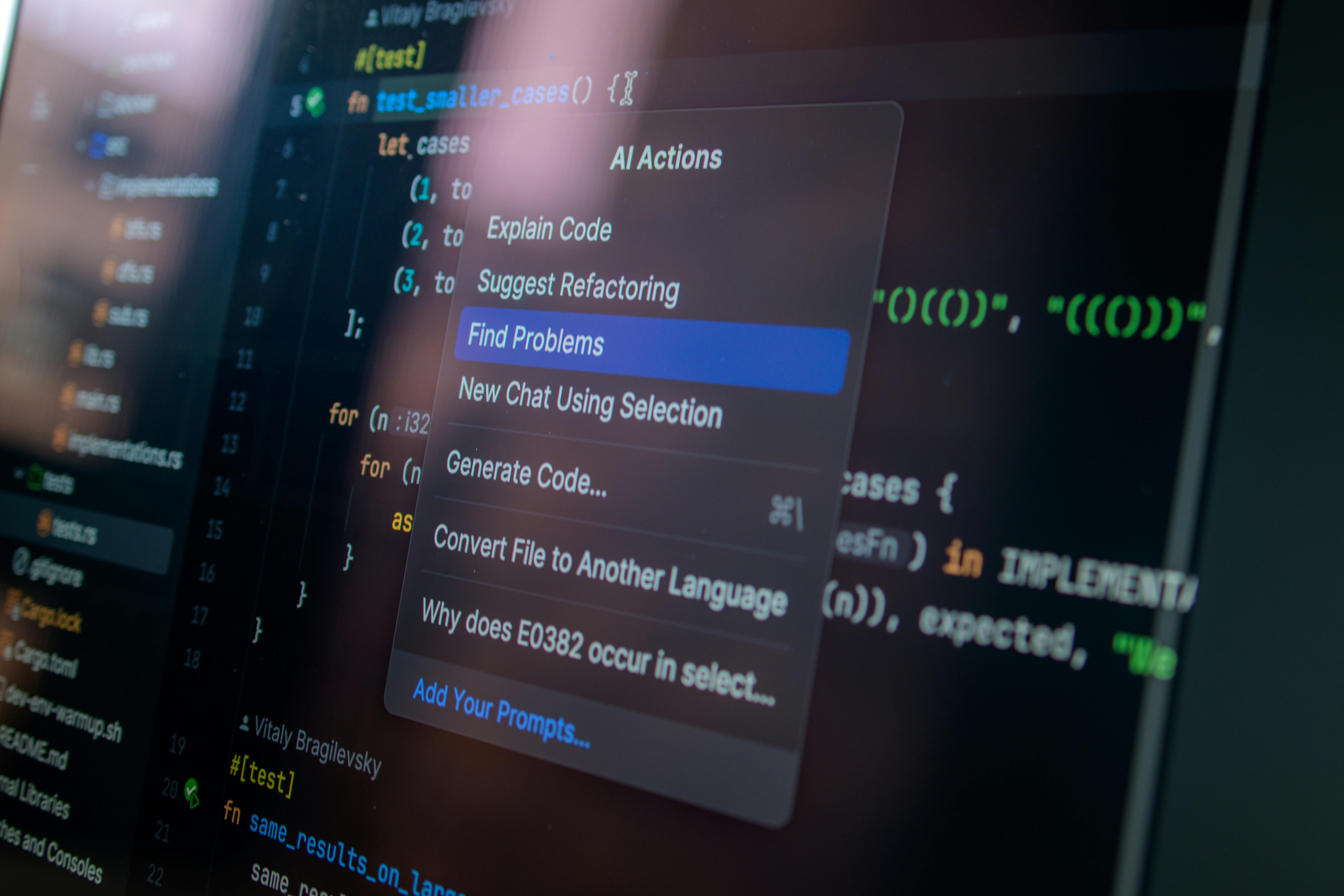
Modern AI models process and interpret huge volumes of data in real time. Natural language processing (NLP) allows them to understand technical specifications, contracts, and supplier communications.
An NLP engine can automatically analyze emails or supplier offers and extract key information such as pricing, lead times, and terms. It can then decide whether to renegotiate a contract or accept an order without human approval.
The algorithms adapt their recommendations based on the company’s goals — price, quality, and lead times. This intelligent approach goes beyond spotting trends (prediction) and can also recommend concrete actions (prescription):
- Launch a tender
- Optimize the shopping cart
- Adjust inventory levels in advance.
AI Agents and Algorithmic Negotiation
One of the most innovative uses of AI in B2B is autonomous negotiation. A B2B AI agent can run commercial negotiations with multiple suppliers in parallel, without human oversight. These agents use game theory, reinforcement learning, and NLP to behave in a credible and adaptive way during negotiations.
The advantage is scalability. Where a human buyer can only manage a handful of negotiations at once, an autonomous agent can handle thousands simultaneously, 24/7. These intelligent systems also improve with experience. They learn from counteroffers and market data, and continuously refine their negotiation strategy.
IoT, Edge Computing, and Real-Time Sync
Beyond software-based AI, autonomous marketplaces rely on sensors and IoT infrastructure to get a real-time view of the supply chain. RFID sensors, cameras, and connected IoT devices track inventory levels, pallet locations, and delivery progress.
These technologies, similar to those used in autonomous stores like Amazon Go, enable automated monitoring without dedicated staff.
Data is sent to edge computing systems for instant processing, which reduces latency.
From Prediction to Prescription: How AI Automates the Entire B2B Value Chain
Previously, e-procurement tools were limited to supporting workflows and the purchasing process. Today, autonomous platforms go beyond simple forecasting. AI no longer just analyzes past purchasing trends to predict demand: it acts directly across the entire B2B value chain.
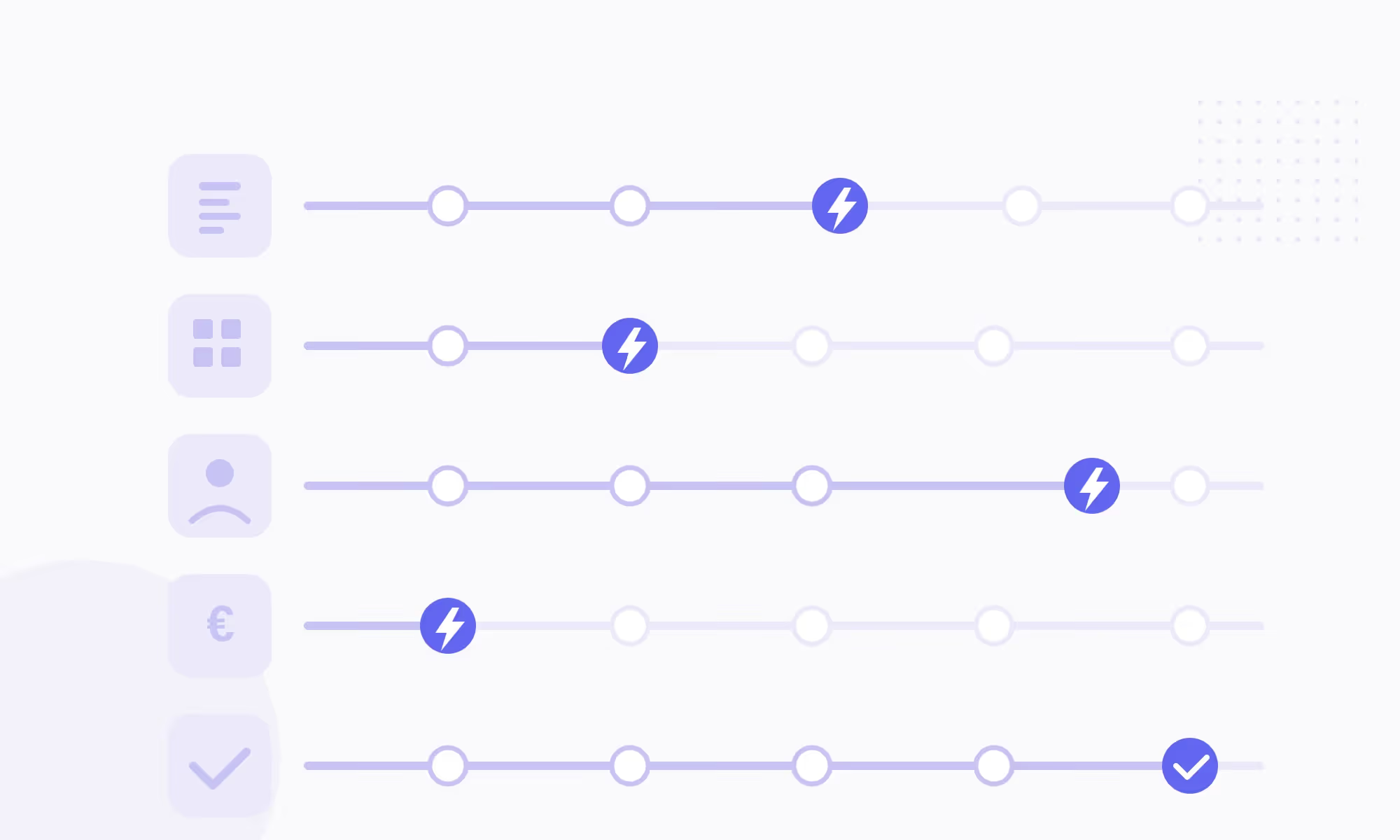
A predictive system can detect that a consumption gap is about to occur for a product. It can then trigger a fully automated action plan — an order to a supplier, logistics scheduling, ERP system updates. Advanced platforms use predictive-to-prescriptive models. They dynamically adjust sourcing, promotions, and inventory allocation based on real-time market signals. In practical terms, a B2B order can be created, negotiated, and shipped without anyone needing to step in.
This automation also extends to product data and catalog management. Platforms continuously sync information — pricing, stock, technical sheets, product images — between suppliers and buyers.
Autonomous Negotiation: Pactum and the Rise of Algorithmic Agreements
Autonomous negotiation marks the most radical shift in B2B commerce. Historically, negotiating with a supplier required experienced human buyers. Now, specialized solutions deploy AI agents capable of simulating these commercial exchanges autonomously.
Pactum is a leading example. This startup offers software where AI manages multi-round negotiations across a large volume of contracts. Walmart used Pactum’s AI to automatically renegotiate the terms of thousands of low-value contracts. The results are tangible: the tool closed about 68% of the negotiations it initiated and generated an average of 3% in additional savings for the retailer.
These seemingly modest gains represent millions of dollars across annual volumes. Other major accounts, such as Maersk, are testing similar systems in logistics.
Seamless Execution: Automating the Entire Loop Through Delivery
For a marketplace to be fully autonomous and effective, logistics coordination must also be automated end to end. Order management, logistics, and invoicing systems are interconnected through APIs and AI. After an AI agent closes a contract, the order is automatically sent to an order management solution and then to a logistics optimizer.
That optimizer can be fed in real time by GPS and IoT data — truck geolocation, local weather conditions, stock status. If an issue occurs — a delay, a local stockout — AI reacts instantly. It can reroute a delivery, reassign stock from one warehouse to another, or adjust transport schedules.
In this context, every flow is optimized against multiple criteria — cost, efficiency, and carbon impact.
Where Machines Stop: Ethical and Operational Limits
Autonomous marketplaces deliver real benefits — lower costs, time savings, and more — but they also raise important questions. First, who is responsible when AI makes a bad commercial or contractual decision? If an autonomous agent enters into an unfavorable or non-compliant contract, legal responsibility must be clearly assigned.
There is also a transparency and fairness issue in negotiations. Using a highly capable AI agent against a human counterpart can seriously unbalance the commercial relationship. That’s why it’s important to set rules of conduct for these systems and, in some cases, keep human oversight in place.
In regulated sectors such as healthcare, defense, and finance, a lack of explainability can be a problem. That’s why many projects include safeguards: a system can alert a human manager if the algorithmic confidence level on a contract is too low.
Finally, the human and cultural dimension matters. Delegating strategic purchasing decisions to an algorithm requires strong trust in the technology and a deep organizational shift. Companies need to drive real internal change:
- Train teams
- Clearly define new roles
- Preserve collective intelligence on complex topics.
Implementing an autonomous marketplace is as much a strategic challenge as a technical one.
The Future of Autonomous Marketplaces in B2B
Autonomous B2B marketplaces are no longer science fiction. They are already emerging among pioneers and will continue to gain ground as AI and related technologies advance. To keep up with this shift, technology choice is critical. Modular platforms built on composable commerce architectures — microservices and open APIs — will make it possible to roll out targeted AI features quickly.
A company will be able to add an autonomous negotiation engine to its existing B2B e-commerce platform, then integrate an order management module. B2B SaaS marketplace solutions like DJUST make this kind of fast, scalable deployment easier, while offering a high degree of flexibility.
In the long run, these practical autonomous platforms will become intelligent orchestrators of B2B commerce. When properly implemented, an autonomous system doesn’t replace human intelligence — it frees it up for higher-value work. B2B leaders have every reason to anticipate this revolution.
-modified.avif)
.avif)

.jpg)