Optimizing B2B Sales with Artificial Intelligence
Discover how artificial intelligence is transforming B2B sales: automation, forecasting, personalization, and sales performance.
Article summary
- AI is becoming a strategic lever for optimizing B2B sales and purchasing by making use of massive volumes of data.
- It automates low-value tasks, boosts team productivity, and speeds up sales cycles.
- With predictive analytics, AI anticipates demand, personalizes offers, and optimizes pricing.
- Platforms like DJUST make these use cases accessible, integrated, and ready to act on.

Not adopting AI means falling behind in your industry. Decision-makers know it: 80% of companies have integrated AI solutions into their sales processes over the past 12 months. The effort is worth it. In fact, 63% of companies that have deployed AI report higher revenue. Here’s the breakdown in this article.
Why AI is becoming a strategic lever for B2B sales and purchasing
- Data explosion: companies are generating and collecting unprecedented volumes of customer, transaction, and supplier data. AI can analyze this massive data set in real time, spot patterns, and surface key insights that would be impossible to detect manually. It also helps businesses better understand customer needs and respond to them in a more personalized way.
- Automating low-value tasks: a large share of work in commerce and procurement goes into data entry and customer follow-ups. By taking over these repetitive, time-consuming tasks, AI frees up teams’ time. Sales reps save around 2 hours a day thanks to intelligent automation. That time can be reinvested in higher-value work such as complex negotiations and customer relationships.
- Data-driven decisions: AI improves decision quality by providing predictive analytics and objective recommendations. No more relying on intuition alone. Teams can use facts and models to guide their strategy. The result: AI-powered decision support, better choices, and stronger outcomes.
From automation to performance: what AI really changes in B2B
It’s important to stress that AI is not just about automating things to “do the same work, only faster.” It truly changes the game in B2B.
- Greater operational efficiency: by automating many administrative and data-entry tasks, AI reduces errors and speeds up workflows. For example, an AI and order management automation feature removes bottlenecks.
- A proactive, predictive approach: where humans react after the fact, AI anticipates. It predicts future sales, forecasts customer demand and supplier risks, and detects weak market signals. This proactive approach lets you act earlier and capture opportunities that traditional methods would miss. You might adjust inventory before a stockout or reach out to a prospect before they lose interest.
- Personalization at scale: AI makes it possible to tailor the customer experience and offers with precision, at scale. Each prospect or customer can receive the right message, at the right time, through the right channel, based on their profile and history. That level of mass personalization was impossible to do manually.
How AI is transforming B2B sales processes
AI is transforming every stage of the B2B sales cycle, from lead generation to closing deals.
Lead generation with AI
Here’s how prospecting benefits from AI:
- Dedicated tools analyze large data sets, such as customer data and purchase histories, to identify the most promising prospects.
- Tools like LinkedIn Sales Navigator or ZoomInfo use AI to identify the most relevant prospects based on their behavior and profile.
- Salesforce Einstein AI scores and ranks leads using predictive analytics.
As a result, teams can focus on the highest-value opportunities.
Automating interactions and engagement
AI changes the game with intelligent interaction automation:
- Advanced conversational agents (chatbots) can engage with prospects or customers in real time, 24/7:
- Drift or Intercom handle initial online conversations and guide prospects through their journey.
- Email automation tools like HubSpot or Outreach.io use AI to personalize messages and sending sequences.
These automated yet personalized interactions ensure every prospect gets the attention they need without constantly tying up a sales rep.
Sales forecasting with AI
AI brings valuable predictive analytics that make forecasts much more reliable. How? By training machine learning models on the company’s historical data and external market trends.
AI tools such as Gong.io or Chorus.ai also give managers real-time visibility into deal progress. They analyze sales calls, emails, and ongoing interactions. Then, these systems detect signals that a deal may be stalling or that a customer is ready to buy, and they recommend the best actions to take.
Conversion with AI
AI-powered recommendation engines can suggest the best pricing strategies and the most effective commercial terms. By analyzing historical data, AI determines the optimal price to win the deal while maximizing margin. According to McKinsey, intelligent AI-driven sales automation can increase sales productivity by nearly 30%.
Good to know: virtual assistants like Conversica automate follow-ups with inactive prospects, ensuring no hot lead slips through the cracks.
AI in procurement: is manual sourcing coming to an end?
Procurement teams are benefiting just as much from the AI revolution. AI now automates a large share of these processes.
Supplier selection with AI
Intelligent procurement platforms make this process far more efficient and objective. Solutions like SAP Ariba or GEP Smart continuously analyze:
- The performance of existing suppliers (on-time delivery, quality, pricing
- Supplier market trends
- Risk factors.
AI then recommends the ideal partners for a given need.
Another example: IBM Watson’s AI capabilities help companies assess suppliers against ESG criteria (environmental, social, and governance). It’s a reliable way to make sure they meet expected sustainability standards.
Demand forecasting with AI
AI makes forecasts more reliable and more precise by incorporating a wide range of external data and real-time signals. AI-powered predictive models take into account:
- Current market trends
- Economic indicators
- Geopolitical or weather events.
Amazon’s AI-powered supply system continuously uses real-time sales data and predictive algorithms. Why? To optimize inventory replenishment. It anticipates needs, reducing both stockouts and costly excess inventory.
Procurement negotiation with AI
Automated negotiation tools like Pactum or Keelvar analyze:
- Past contract terms
- The history of negotiations with each supplier
- Real-time market conditions.
Based on this, AI proposes optimal agreements that satisfy both sides. These tools are especially effective for repetitive, low-value negotiations. They also allow procurement teams to focus on strategic sourcing. A 2023 Harvard Business Review study found that AI-driven procurement systems can cut sourcing lead times by up to 50%.
Dynamic B2B pricing with AI: a game changer?
How AI-based dynamic pricing works
AI-based pricing engines analyze sales data and customer profiles. Tools like PROS or Pricefx combine this information with costs, market prices, and economic shifts. AI then adjusts pricing continuously to maximize revenue while staying competitive. What used to take months can now be done in minutes.
Benefits of AI-based dynamic pricing
- Higher profit margins: AI identifies optimal price points to maximize revenue without losing customers.
- Better customer satisfaction: personalized pricing strategies ensure fair prices based on the value customers perceive.
- Market responsiveness: AI reacts instantly to market changes, helping companies stay more agile.
Challenges and considerations
- Prices that change frequently can unsettle customers if the logic isn’t explained transparently.
- AI models need to be governed by business rules that ensure a fair pricing policy.
- In some industries, pricing is monitored or regulated by authorities. Human oversight and regular algorithm audits are essential to ensure compliance.
How to deploy AI across your B2B sales and procurement operations
Identify the processes with the highest automation potential
The first step is to pinpoint where AI will deliver the most value. Look for processes that are time-consuming, repetitive, and likely to benefit from automation or data analysis. By prioritizing these high-potential use cases, you can define a pilot scope for AI. Starting with quick wins helps demonstrate AI’s value internally.
Integrate AI into an existing ecosystem
AI should not operate in a silo: its power comes from access to company data and integration into workflows. As Salesforce points out, two-thirds of marketers believe their data isn’t ready for generative AI because of silos and quality issues. It’s often necessary to bring together and clean up scattered data from CRM, ERP, and historical systems before deploying AI.
Support teams and secure adoption
The human factor is critical to the success of any AI project. It’s essential to support teams from the start to ensure successful adoption. Sales reps and buyers need to understand that AI is there to help them, and you need to invest in training
DJUST, accelerating AI-driven sales and procurement optimization
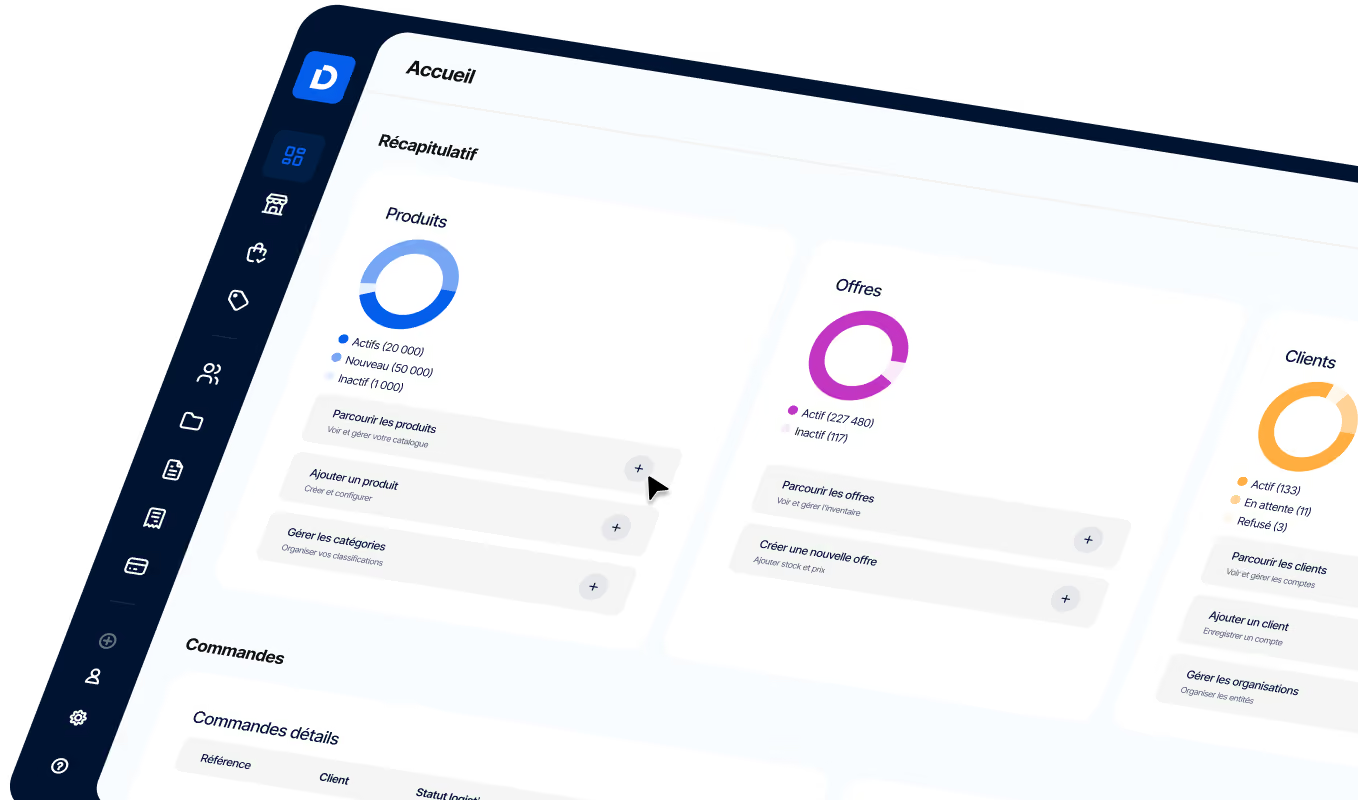
DJUST is a catalyst for this digital transformation in B2B. Its B2B commerce platform natively integrates AI solutions to optimize both sales and purchasing processes.
DJUST uses AI and eCommerce to:
- Improve and personalize the online experience,
- Deliver relevant product recommendations,
- Automate order management...
Our B2B and data experts work with your teams to identify the best optimization opportunities and integrate AI tools into your workflows.
FAQ
How DJUST Uses AI to Optimize B2B Sales
DJUST builds AI directly into its B2B commerce platform to:
- Recommend the right products to the right customers,
- Automate order management,
- Prioritize sales opportunities,
- Personalize the buying journey,
- Track performance through intelligent dashboards.
DJUST acts as an AI copilot for B2B sales, connected to the company’s real data.

What Is the Impact of AI on B2B Procurement Teams?
On the procurement side, AI makes it possible to:
- Select the best suppliers,
- Anticipate risks,
- Forecast demand,
- Automate simple negotiations.
It turns a function that has historically been reactive into a strategic, predictive lever.
How does AI actually improve sales performance?
AI improves performance by:
- Increasing conversion rates,
- Reducing the sales cycle,
- Improving offer relevance,
- Identifying buying signals earlier,
- Making forecasts more reliable.
Teams spend less time searching for information and more time selling.
What Is AI-Powered B2B Sales Optimization?
Optimizing B2B sales with AI means using algorithms to analyze customer data, predict buying behavior, and recommend the best sales actions. AI can support the entire sales cycle: prospecting, lead qualification, offer personalization, sales forecasting, and pricing.

.avif)
.jpeg)