Top 4 B2B Marketplace Platforms in 2025
A B2B marketplace provider can help you grow your online business and better serve your customers. Explore the best platforms available, their key features, and how to get started.

Launching a B2B marketplace can help you reduce fulfillment costs, reach more customers, and grow sales.
But be careful: a poorly designed online marketplace can push customers away and hurt your growth. That’s why it’s essential to choose the right platform to launch your B2B marketplace.
In this guide, we explain how to choose a B2B marketplace provider and introduce the four best platforms for increasing your online sales.
What Is a B2B Marketplace Provider?
A B2B marketplace provider is a software solution that helps you build a B2B eCommerce marketplace. It provides the back-end user interface you need to create a marketplace, add sellers, support payments, manage orders, and more.
B2B marketplaces built on these platforms act as online meeting places for businesses and wholesalers. A marketplace can include dozens, hundreds, or even thousands of sellers.
Running a B2B marketplace offers many benefits for your business, your suppliers, and your customers.
First, your business can list a broader range of products than a traditional online store, thanks to B2B partnerships with third-party sellers. That makes your business more useful to customers and encourages them to buy from you.
In addition, with a marketplace, sellers can showcase their products to more customers and benefit from your company’s strong reputation. They can also take advantage of transparent tools to manage and fulfill orders.
As for customers, they can find everything they need in one place and compare prices across multiple sellers, which makes sourcing easier.
In short, B2B marketplaces make it easier to buy and sell wholesale items and make them more accessible to everyone involved. That drives sales and helps diversify your revenue.
Types of B2B Marketplaces
There are several types of B2B marketplaces, and it’s important to know which one you want to build when choosing B2B marketplace software. Let’s look at the three main categories of B2B marketplaces.
Distribution Marketplace
A distribution marketplace is a traditional B2B eCommerce store segmented by brand or supplier. It can help you build a large product catalog from multiple wholesalers.
However, instead of bringing individual sellers onto the marketplace and letting them sell their own products, you control all sales. You have the final say on what’s sold, the price of each product, and more.
Digikey is an example of this type of marketplace. It sells electronic products from manufacturers such as Panasonic, Texas Instruments, 3M, and others, but those vendors aren’t involved in the sales process. Customers pay Digikey directly for the products, and Digikey is responsible for fulfillment.
Choosing a distribution marketplace provider can help you create a one-stop shop for business customers in a specific industry.
Sourcing Marketplace
A marketplace is a platform where suppliers can open a storefront and build their own product catalog to sell alongside yours. In essence, they bring multiple sellers together for the same industry, making it easy for business buyers to find what they need.
Customers can search for an item and compare prices from multiple suppliers. They can also visit a supplier’s storefront on the marketplace and browse available products.
Pinpools, which brings together more than 1,000 chemical suppliers, is an example of this type of marketplace. Customers can search for the chemical they need and compare prices, purity, and variants from different suppliers, then choose the product that best fits their needs.
With a sourcing marketplace provider, you can expand your product selection and earn revenue from sales made by other vendors on your marketplace.
Global or Regional Marketplace
B2B marketplaces can be global or regional.
Global B2B marketplaces connect customers and suppliers around the world. They work well if your customer base is global or if you serve businesses with international supply chains. Global marketplaces are ideal if your products can be shipped worldwide with ease.
Choosing a global marketplace provider can help you reach more customers and accept payments in multiple currencies.
Regional B2B marketplaces serve customers in a specific country or region. They’re useful in industries where the target audience is limited to a specific geographic area. For example, in the food service industry, running a regional marketplace can allow suppliers to deliver products to customers just hours before a busy service begins.
Choosing a regional marketplace provider can help you serve your customers better and drive repeat sales.
Key Features of B2B Marketplace Providers
A lot depends on the marketplace provider you choose. For it to be truly valuable, it needs the right features.
It must support not only your own eCommerce operations, but also those of every supplier selling on your marketplace. In addition, your provider should give you the ability to control how sellers operate on your marketplace, including what they can sell and how they interact with your customers.
With that in mind, let’s look at the key features to look for when choosing B2B marketplace software.
Multi-Vendor Support (and Everything That Comes With It)
If you’re planning to launch a B2B marketplace, your software must let you onboard suppliers. It should also make it easy for your sellers to customize their product listings and create their own storefronts once they’re on your marketplace.
In addition, your software should let you require approval for new product listings so you can control what’s sold on your marketplace. You should also be able to define marketplace policies, including shipping rules and refund policies.
Finally, if you plan to charge fees for products sold by vendors, you need to be able to apply different rates depending on the seller.
B2B Order Tools
Business customers often need hundreds or even thousands of units of a specific item — for example, pens, computer monitors, or parts for a manufacturing process. That’s why it’s important for your marketplace software to support bulk orders seamlessly.
In addition, customers should be able to easily search for a specific product and filter results by supplier, price, delivery time, and more. Look for marketplace solutions that offer advanced search functionality.
Customer Management
The best B2B marketplace software will let you create unique profiles for each customer on your marketplace.
Different customers may see different product catalogs or pricing depending on their contract with your company. They may also see payment terms, shipping options, or customer support channels specific to their account.
Order Management
Look for software that gives you order management and fulfillment options. More specifically, make sure the provider lets you set up order approval workflows and offer cross-channel sales options, such as buy online, pick up in store.
You should also be able to integrate shipping services so you can automatically generate shipping labels, send tracking codes to customers, and minimize fulfillment delays.
Financial Management
With your B2B marketplace platform, you should be able to process customer payments using a range of payment methods. These may include purchasing cards, bank transfers, and contract-based credit.
Also look for providers that can generate invoices for each order and send them automatically to customers. The best ones will also help you manage sales tax across multiple jurisdictions.
Sales Reporting
With the right marketplace software, you and your sellers will have access to detailed sales analytics. Look for providers that let you see which products sell best and which customers buy which products (and from which sellers). Also look for the ability to track product return rates and customer retention.
Integrations
Many B2B marketplace platforms integrate with inventory management, enterprise resource planning (ERP), and accounting software. These integrations can make it much easier to run your business and ensure nothing slips through the cracks.
Check which integrations are available for each B2B platform you’re considering. If no integration is available for the main software your business uses, you may be able to build a custom integration if the marketplace you choose offers an API (application programming interface).
Expert tip: at DJUST, we can connect to any existing order system using an API. That means your business can run smoothly and integrate quickly without having to overhaul your order process.
Ease of Use
Choosing easy-to-use B2B marketplace software can help you launch your marketplace faster. It can also save you time and money in the long run. Intuitive software requires less training for your employees and reduces the risk of costly order management mistakes.
Expert tip: look for software providers that offer support when launching your marketplace. At DJUST, our development team works with your business to make sure your transition to our marketplace software goes smoothly.
The Best B2B Marketplace Providers in 2024
Now that you know what to look for in B2B marketplace software, let’s take a closer look at our four favorite providers in 2024.
Note that most providers offer quote-based pricing only. You’ll need to contact providers directly to find out how much it will cost to build a marketplace with them.
DJUST
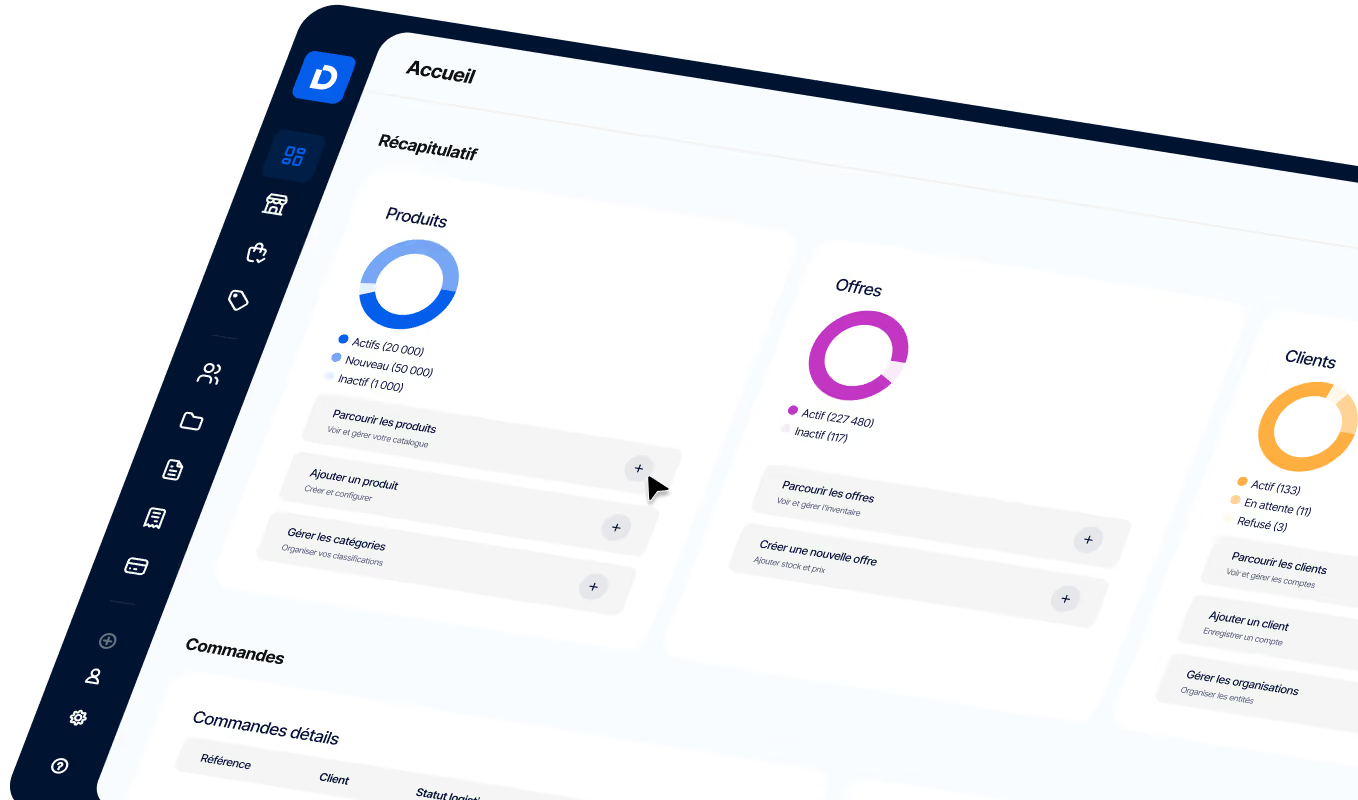
DJUST is a powerful online platform for building a B2B marketplace and getting your business in front of more customers. We may be a little biased (after all, we’re DJUST!), but we know our platform is the best overall B2B marketplace provider in 2024.
With DJUST, you can build a distribution marketplace that works with all your existing order processes and pricing options. You can offer a dedicated catalog view, bulk discounts, and customer-specific pricing. Plus, you can create quotes and set up an online tender process.
DJUST helps you grow revenue by personalizing the items customers see based on their past purchases. Customers can reorder items in seconds, and the checkout process is completely seamless.
Behind the scenes, DJUST makes order approval and automated workflows easy to set up. You also get advanced inventory management to make fulfillment as seamless as possible.
Key Features
- Multiple order flows: Create quotes, launch tenders, or let customers reorder items by SKU in seconds.
- Custom pricing: Create unique price lists for different customers or groups.
- Multilingual catalog: Sell to businesses around the world by offering your catalog in multiple languages.
- Customer segmentation: Segment your customers to provide top-tier support or gain sales insights.
- Omnichannel support: Sell across all your existing channels, including by phone and email.
Things to Consider
DJUST is especially well suited to businesses that have multiple pricing systems or want to offer custom contract pricing. The software is easy to use and gives you access to a wide range of order management tools. Overall, DJUST is a great option for fast-growing businesses.
Oro
Oro is a marketplace software provider that offers highly flexible tools. It lets you build multiple marketplaces for different regions and add an unlimited number of sellers to sell alongside your business.
Sellers get access to a self-service portal to make their selling experience more seamless. They can create branded storefronts and take advantage of Oro’s inventory management tools.
Oro stands out especially for service- and booking-focused marketplaces. The platform lets you and your sellers sell memberships and subscriptions, and you can require customers to have a membership before buying on the marketplace. An integrated calendar tool also makes it possible to book appointments and manage your availability and your sellers’ availability.
Key Features
- Integrated calendar: Sell and manage bookings with a built-in calendar.
- Built-in CRM: Track leads and get a full view of what your customers are buying on your marketplace.
- Branded storefronts: Sellers can create branded storefronts within your marketplace using a self-service portal.
- Custom pricing: Offer personalized pricing based on customer segments or individual accounts.
Things to Consider
Oro software can be used to build B2B, B2C, or D2C marketplaces, so it isn’t designed specifically for B2B marketplaces. As a result, additional setup is needed to meet the needs of business buyers.
VTEX
VTEX is a digital commerce platform provider that offers marketplace capabilities for businesses that want to allow third-party sellers. You can add sellers you already work with or search VTEX’s supplier network for sellers to add to your marketplace.
VTEX offers a full order management system, making it a good option for businesses that want complete control over their marketplace. You can control inventory for all sellers and products on your marketplace, and fulfill orders on behalf of your sellers.
This software also supports omnichannel marketplace sales. You can ship items to customers, offer buy online, pick up in store options, or ship items via dropshipping from third-party suppliers.
Key Features
- Multi-vendor support: Add trusted suppliers or find suppliers to add to your marketplace from VTEX’s network.
- Sales dashboards: Monitor sales across all your sellers and give them self-service portals so they can track their own performance.
- Split B2B payment processing system: Automatically split customer payments between your business and the sellers on your marketplace.
- Dropshipping: Offer products from more suppliers through dropshipping.
Things to Consider
VTEX doesn’t offer quote-based or custom account-based pricing for business customers. So it may not be the best platform if your business offers different prices on the same products to different customers.
Spryker
Spryker offers a highly customizable B2B marketplace platform that lets you meet the unique needs of customers across different industries or regions.
With Spryker, you can set up multiple front ends for your marketplace, creating a unique experience for different customer segments. For example, you could have one front end for U.S. customers and another for European customers. Each front end can have its own pricing, currencies, tax rules, shipping rules, and more.
In addition, Spryker has search functionality to help customers find what they need. They can search across your entire site or browse products by supplier. Customers can also apply custom filters and search in multiple languages.
Key Features
- Multi-region support: Create region-specific marketplaces with different pricing, currency, and shipping rules.
- Data exchange: Instantly share data such as inventory, customer profile updates, and more with your sellers.
- Custom pricing: Offer personalized pricing based on customer segments or accounts.
- Built-in customer service: Let sales reps place orders on behalf of customers.
Things to Consider
Because Spryker is a complex B2B marketplace solution, expect implementation to take longer than with other software.
Final Thoughts
Launching a B2B marketplace can help you reach new customers and grow your business sales. These marketplaces let you sell more products from a wider range of sellers and even allow suppliers to sell their products alongside yours.
There are many B2B marketplace software platforms to choose from, but our top recommendation for 2024 is DJUST. With DJUST, you can improve the customer experience, sell across multiple channels, and expand your product catalog to meet customer needs.
-modified.avif)



.jpeg)