International E-commerce: Grow Your B2B Business
Discover how to grow your business internationally with B2B e-commerce. Also learn how B2B e-commerce software can support successful international expansion.

Expanding your business abroad gives you the opportunity to attract new customers, diversify your company’s revenue, and even build more resilient supply chains.
However exciting it may be, international expansion can be tricky. You need to navigate the laws and regulations of a new country, find your place in a new business landscape, and overcome language and cultural barriers.
Fortunately, DJUST is here to guide you. Below, we explain how to approach international e-commerce using a B2B strategy, and how finding the right platform can help you succeed.
Why use B2B eCommerce to approach international expansion?
B2B eCommerce is the simplest and most effective way to scale your business globally, but it’s not the only option available.
Let’s explore the three main approaches to international expansion and see how they compare.
Option 1: Do it yourself (Hardest)
The first option is to launch your business in another country, a move that takes a lot of time, money, and resources. From finding new manufacturers and distributors to building partnerships with local businesses and setting up operations in a foreign market, this is a major undertaking.
If you succeed, you’ll fully own a new operation in a new territory. But that’s usually easier said than done.
Businesses often struggle with this expansion approach, and often end up pulling out of markets they hoped to win. Even giants like Target and Walmart have failed in their international expansion efforts: Target left the Canadian market, and Walmart failed to gain traction in Germany.
Option 2: Franchising (Medium difficulty)
Another path to international growth is to give entrepreneurs in a foreign country the opportunity to open a franchise of your brand. You can sell through local franchisees, who handle logistics and build a local customer base.
This approach involves less of the do-it-yourself work and helps you sidestep some of the challenges of replicating your business in another country. However, you also give up a lot of control, and potential profit, to your franchisees. If they fail, your company’s reputation will suffer.
Option 3: B2B eCommerce (Easiest)
That brings us to B2B eCommerce, a market that has exploded in recent years as businesses and buyers have gone digital.
B2B eCommerce means selling your products online through existing channels (such as wholesalers and department stores) to international businesses, without requiring local in-person operations.
You can manage new international markets with little or no additional staff. On top of that, B2B eCommerce is the most cost-effective option on our list.
Even better, with this expansion approach, you keep control of your operations — no handing over the keys to local franchisees! Staying in control helps minimize risk and maximize your share of the profits.
Best of all, the expansion timeline is relatively fast. You could see an increase in your bottom line in months, not years.
Take it from us at DJUST: B2B eCommerce is the smoothest path to international growth.
Launching international eCommerce: 4 steps to consider
A lot goes into scaling globally (we could talk about it for days!), but there are four main steps every business should consider. Following them will help you build a strong international eCommerce strategy and set yourself up for success.
Step 1: Market research
First, you need to conduct market research to understand your target audience and start shaping your market entry strategy. Even within the same industry, businesses across countries may have different needs from your current customers, shaped by cultural differences, business practices, and consumer behavior.
When researching your international target audience, consider these questions:
- Which sales channels do customers in your target market prefer to use?
- Which product types appeal to customers in your target market?
- Which payment methods do B2B buyers in your target market use?
Also, remember that customers in different countries often need completely different inventory. For example, a sustainable sneaker brand we work with at DJUST sells different shoes to customers in Europe and customers in Japan. Another of our partners, lingerie brand Adore Me, offers different sizes and colors for its European and U.S. markets.
Step 2: Ensure legal and regulatory compliance
Once the market research is done, it’s time to align your expansion strategy with local laws and regulations. Overlooking compliance could lead to legal roadblocks or serious issues.
Compliance is especially important in sensitive industries such as food and beverage. Many countries prohibit the transport of certain agricultural products across borders. For example, Canada restricts the import of certain poultry products from the United States.
Here’s a list of compliance requirements to check:
- International commercial terms (Incoterms)
- Local tax regulations
- Import/export restrictions and permit requirements
- Industry-specific regulations
Step 3: Manage your supply and sales chain
Next, your business needs to build a local sales chain for B2B cross-selling. Identify which retailers, marketplaces, or businesses you want to sell to, then build a network of local distributors and other partners to help you reach those customers.
For example, if you sell clothing, you need to identify the local retailers through which you want to sell. Then you need to work directly with those retailers, or with distributors that count them as customers, to get your products on the shelf.
You also need to make sure you can deliver products to customers on demand so there are never any stockouts. That may mean identifying multiple delivery or distribution partners and strengthening your own upstream supply chain.
Step 4: Market to your new audience
As you get ready to launch in your new market, start marketing to your target audience.
Remember that what worked at home may not translate abroad because of cultural differences or unique product demands. So, study local preferences and target the most effective marketing channels and messages in your target country.
Don’t forget about visibility, either — your new end users need to be able to find your products! Think about optimizing your online presence with localized SEO. If your products are available through local retailers, highlight the stores that carry them.
How B2B eCommerce platforms help make international expansion successful
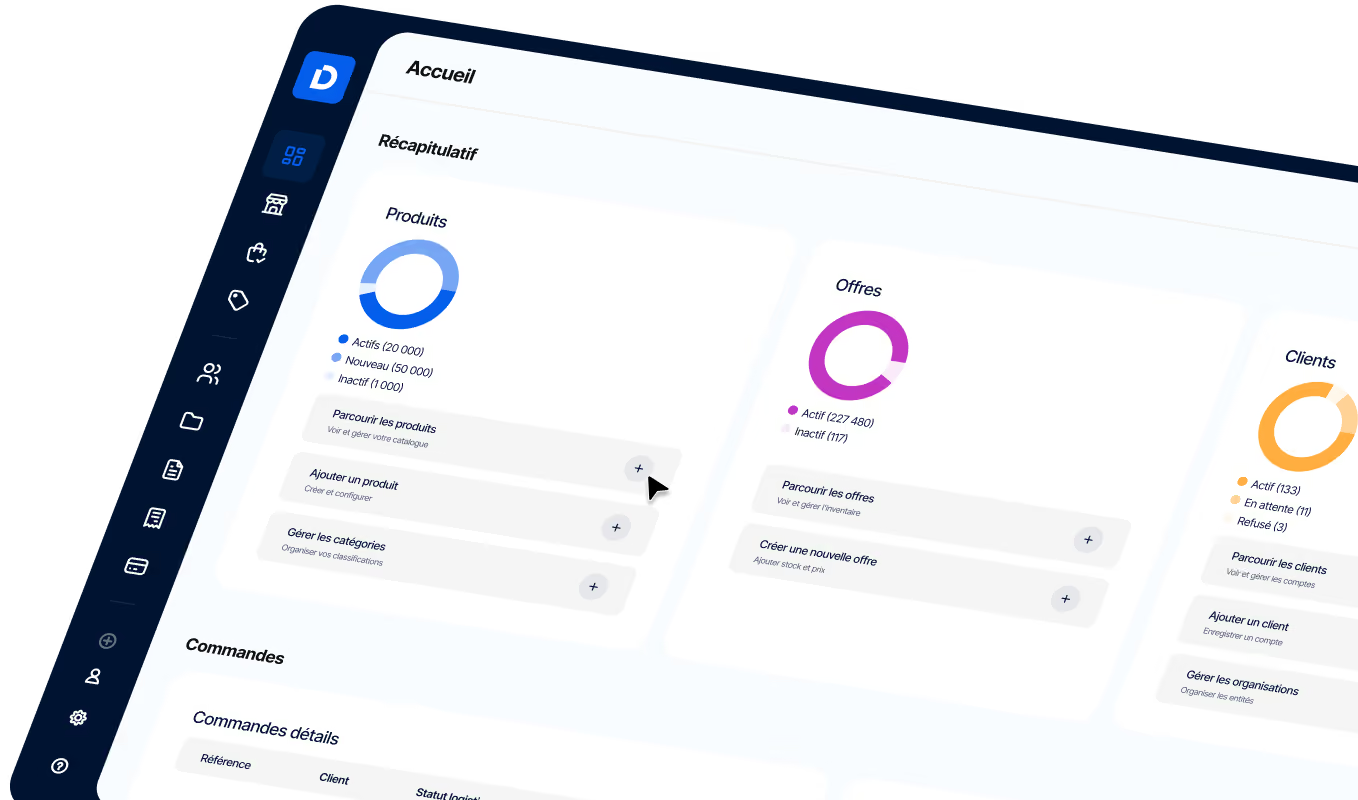
Our final tip is to have a best-in-class B2B eCommerce platform when you expand your business abroad. An eCommerce platform won’t just act as your ordering platform — it will also help you solve the logistics challenges of selling internationally.
How exactly do international eCommerce solutions do that?
Let’s dive in.
Multilingual catalogs
Many B2B eCommerce platforms offer a storefront in multiple languages, making it easy for customers around the world to access and understand your ordering system in their preferred language, for example English, Spanish, French, Romanian, Italian, and more. This reduces complexity and makes it easier to expand your business into more countries in the future.
In addition, many platforms let you set up separate storefronts for selling in different countries. This gives you more flexibility to tailor your B2B eCommerce system to the specific needs of different markets.
For example, a fashion company could use multiple storefronts to sell one product assortment in the UK and another in the Middle East. The storefronts could look completely different and offer different ordering tools, meeting the varied tastes and needs of buyers in those regions.
Best of all, all orders are sent to the same back-end system, so you can track them easily no matter where they come from. (Simplifying orders like this is our specialty here at DJUST!)
Country-specific product catalogs
Some B2B eCommerce platforms let you offer different products to customers in different countries.
This flexibility matters when you need to meet the varied tastes of different markets. For example, DJUST partner Monoprix offers a unique Middle East catalog that includes fewer alcoholic items.
Country-specific product catalogs also let you set different prices for the same products depending on the region. That can be very useful if you work with different suppliers around the world, each with different costs for the same item.
You can also create dynamic product assortments — catalogs that change automatically based on the custom rules you define. This is useful for recommending products based on what other businesses in a customer’s market have bought. Managing dynamic product assortments well can increase customer loyalty and average order value.
Document management
The best B2B eCommerce platforms help you manage Incoterms, import/export permits, customer contracts, and other essential documents for international eCommerce. Streamlined document management helps your team track which contracts apply to each sale and make sure deliveries don’t get held up at customs.
Shipping and delivery management
Some platforms also include shipping and delivery management tools for international eCommerce, allowing customers to check the status of their orders in real time through a self-service portal.
This feature improves the customer experience and reduces the workload on your sales team, since they can focus on closing new deals instead of answering questions about when existing customers can expect to receive their products.
You can also manage shipping separately for each country or region where you operate. For example, you can set up one shipping zone for Northern Europe and another for Southern Europe. These two zones can involve different carriers and use different pricing models.
Order approval workflows
Order approval workflows are another common feature of B2B eCommerce software, but not all of them support international order approval workflows. The best systems let you create different workflows for different markets.
You’ll need this feature when expanding globally, because some countries have import restrictions on certain products, regulatory checks for transactions above a certain size, or other requirements that need to be built into your sales process.
Expert tip: We recommend choosing a B2B eCommerce software-as-a-service (SaaS) platform like DJUST for international sales. SaaS platforms are easy to use, quick to implement, and low-maintenance, so you can focus on growing your B2B business instead of wasting time on your eCommerce software.
DJUST offers all the features we’ve covered, can be up and running in four months or less, and is trusted by leading retailers around the world.
In conclusion
Expanding your B2B business into international markets is a major opportunity to win new customers and diversify your revenue. In our experience, selling online with an international B2B eCommerce platform is the most direct and effective way to approach cross-border expansion. You can use software to reach your target market quickly, ensure compliance with international regulations, and manage your sales chain.
DJUST offers all the essential features you need to sell successfully abroad, including country-specific catalogs, multilingual storefronts, customizable order approval workflows, and much more.



.jpeg)