B2B SMB Digital Transformation: How to Accelerate It?
How to Accelerate the Digital Transformation of B2B SMBs: Key Challenges, Barriers, Practical Levers, and Essential Tools for Success
Article summary
- Discover how to accelerate digital transformation for B2B SMBs
- Challenges, barriers, practical levers, and key tools for success.

In short:
- Digital transformation is a strategic driver of growth and resilience for B2B SMBs, and it has become essential in the face of customers’ digital expectations.
- It means embedding digital tools — cloud, CRM, e-commerce, AI — at the heart of business processes, far beyond a simple website.
- The main barriers are human, financial, and cultural, but they can be overcome through training, automation, and management buy-in.
- Unified platforms like DJUST help accelerate the transition by centralizing data, sales, and performance management.
Digital transformation is a growth engine for B2B SMBs. According to the France Num barometer, 79% of leaders of very small businesses and SMBs see digital as an asset, a figure that rises to 85% for SMBs. The OECD also confirms that digitalization gives companies new opportunities to improve performance and drive innovation. For B2B SMBs, going digital is no longer optional: business customers expect high-performing online services, and companies need to adapt quickly.
Why digital transformation has become a key issue for B2B SMBs
Digital transformation first and foremost strengthens resilience. Digital technologies — cloud, remote work, advanced supply chain management — help companies absorb economic shocks and adapt their offering.
B2B SMBs gain flexibility: an online sales site or a CRM can attract new customers and retain existing ones. In France, this momentum is supported by public authorities (France 2030 plan, France Num grants). Failing to modernize your business model exposes the company to losing ground to the competition.
Digital transformation: what does it really mean for a B2B SMB?
Digital transformation is not limited to creating a website. It means embedding data and digital tools at the heart of business processes (sales, purchasing, logistics, HR). The OECD notes that SMBs often lag behind in adopting cloud computing and data analytics solutions.
In practice, that means:
- Automating manual tasks (e-invoicing, order tracking)
- Connecting inventory in real time
- Providing business customers with a seamless journey.
The most common barriers to digital transformation for SMBs
Several barriers to digitalization slow the modernization of B2B SMBs:
- Limited internal resources: scarce technical skills and tight budgets are among the main obstacles companies face.
- Cybersecurity: the most common concern. Nearly half of leaders fear their data being hacked.
- Access to infrastructure: stable broadband and affordable cloud platforms are still unevenly distributed across regions.
- Internal culture: many SMBs are hesitant to change proven processes, which slows the shift to digital.
- Lack of training: without the right skills to lead IT projects, transformation can seem complex.
Practical levers to accelerate digital transformation
To overcome these obstacles, several levers can help:
- Team training: raising awareness among leaders and employees is necessary to make the transition successful.
- Committed management: a clear strategy helps unlock budgets and assign specific goals.
- Automating routine tasks: a top priority. For example, AI in order management automation reduces errors and speeds up sales cycles.
- Investing in cloud platforms and modular SaaS solutions (ERP, CRM, procurement management): this brings flexibility and scalability.
- Artificial intelligence: it makes it possible to personalize offers for each customer or identify upsell opportunities.
- Public support programs (France Num, digital loan): they provide practical support for building a reliable transformation plan.
Where to start? Digital priorities for a B2B SMB
Launching the transformation starts with a clear assessment. You need to identify the company’s needs and bottlenecks. In practice, a simple audit helps pinpoint time-consuming processes: manual invoicing or dependence on paper documents, for example…
To get started, a B2B SMB can focus on high-impact areas. For example, B2B eCommerce (online sales to business customers) is now a strategic channel. Fevad estimates that B2B online revenue grows by an average of +9% per year (+52% in 2024 vs. 2019). Setting up a high-performing B2B e-commerce site can significantly expand the sales reach and free up time for the sales team.
Likewise, digitalizing purchasing processes speeds up procurement and reduces errors. More broadly, France Num recommends starting with e-invoicing and customer relationships through a CRM. These are two areas where gains are quick.
These “quick wins” build initial momentum. Once invoicing is digitalized or a website is up and running, the company can then invest in more advanced tools according to its strategic plan.
The key role of platforms in accelerating transformation
Digital platforms play an important role in the digital transition. A unified cloud platform (B2B commerce, ERP, and CRM connected together) aggregates customer, product, and order data in a single source of truth. This system also enables omnichannel: by integrating inventory management and e-commerce, it ensures consistent information across every channel.
DJUST as a driver of digital transformation for B2B SMBs
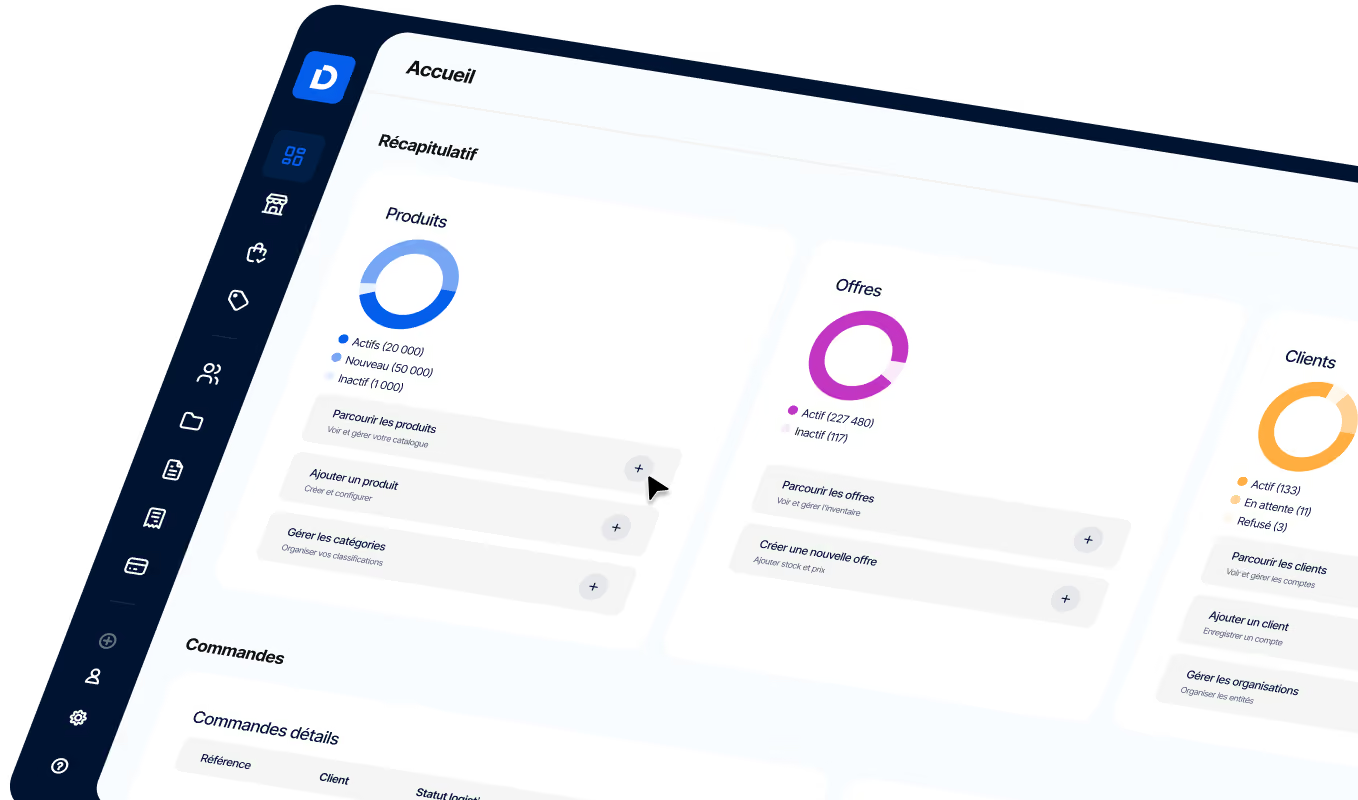
The DJUST solution illustrates this approach. Designed for B2B, it unifies all sales channels in a single interface and manages the entire journey (quotes, orders, payments). Thanks to its modular architecture, an SMB can connect its existing ERP to the system. DJUST enables AI-powered sales optimization and provides decision support through AI via smart dashboards. The platform also includes order automation capabilities, freeing up time for teams.
Measuring the impact of digital transformation
It’s essential to track the impact of each initiative: adoption rates for new tools, growth in online revenue, time saved.
As for the return on investment of an e-commerce site, it can be measured simply by the growth in digital sales. The key is to set clear goals from the outset and adjust the action plan based on results.
Conclusion: accelerate today to stay competitive tomorrow
Digital transformation for B2B SMBs is a must for the future. An SMB needs to carry out a clear assessment, define its priorities, and rely on suitable solutions such as DJUST and support networks. By accelerating the digital shift now, B2B SMBs give themselves the means to stay competitive and innovative.




.jpeg)