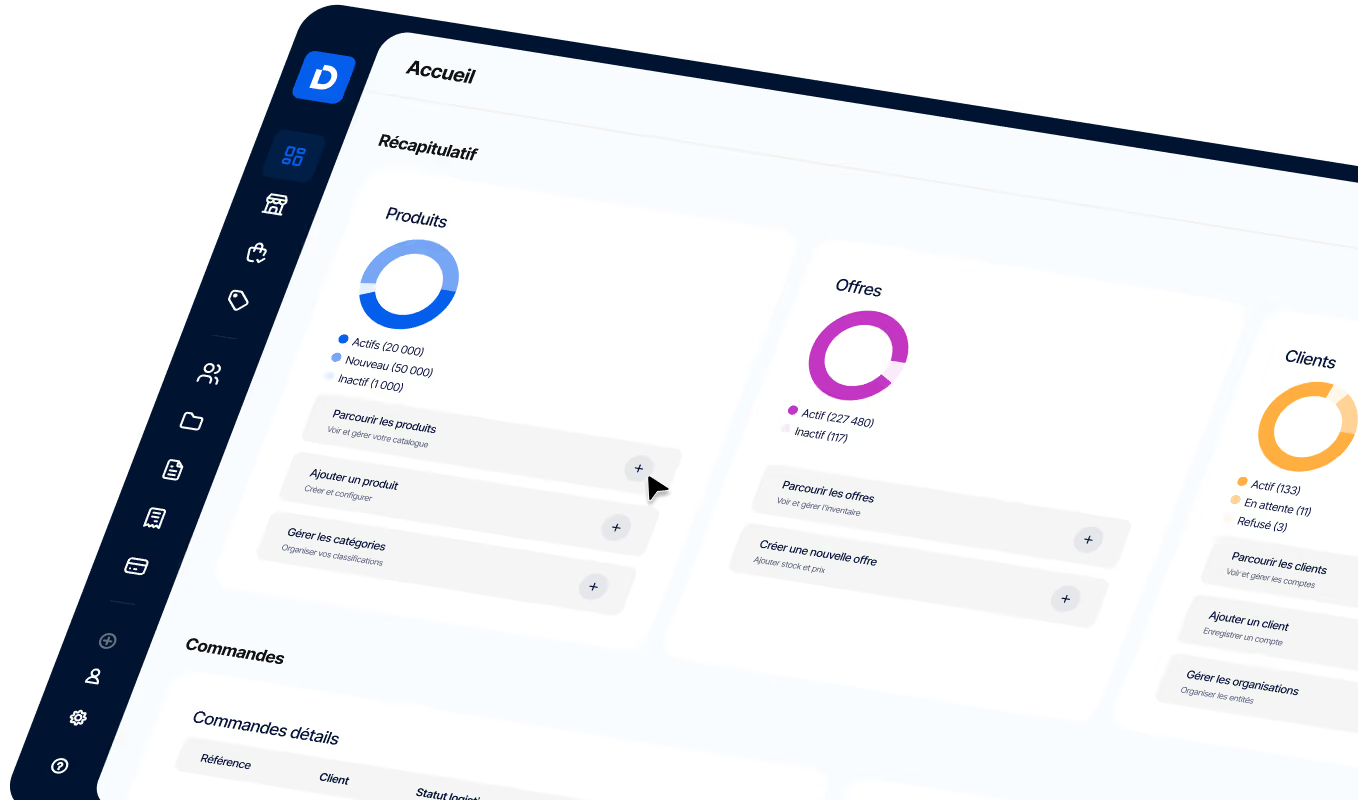
10 B2B E-Commerce Pricing Strategies to Implement in 2025
Discover 10 proven B2B pricing strategies that drive profitability and growth. Learn how to build a pricing strategy that meets market demands in 2025.

10 B2B E-commerce Pricing Strategies to Implement in 2025
Setting the right price in B2B e-commerce is harder than ever. With greater price transparency, shifting buyer expectations, and constant market changes, many B2B companies struggle to strike the right balance between profitability and competitiveness.
Outdated pricing approaches often leave money on the table, while rigid systems make it difficult to deliver the personalized experience B2B buyers now expect. The result: lower margins, missed sales opportunities, and weaker customer relationships.
In this guide, we explore ten proven pricing strategies to help you tackle these challenges head-on. Whether you want to refine your current approach or rethink how you price from the ground up, you’ll find practical advice you can put to work right away.
Key takeaways
- Value-based pricing offers the strongest profitability potential: 28% of B2B companies now prioritize customer willingness to pay over traditional cost-plus pricing methods.
- Dynamic pricing lets you adjust prices in real time based on market demand, competitor behavior, and inventory levels, with margins increasing by up to 10%.
- Segmented pricing strategies, such as tiered pricing and contract pricing, create personalized experiences that strengthen loyalty and increase average order value.
- DJUST helps B2B companies implement complex pricing logic that scales with growth while staying consistent across every channel.
The role of pricing in modern B2B e-commerce
B2B pricing works differently from B2C pricing. While consumers may make impulse purchases driven by emotion, B2B buyers follow structured processes, involve multiple decision-makers, and expect pricing tailored to their relationship with you.
A well-designed B2B pricing strategy has a direct impact on three key metrics: margins, sales volume, and customer experience. Get pricing right, and you’ll see stronger profits, greater market share, and better customer relationships. Get it wrong, and you risk eroding margins, disappointing customers, and missing opportunities.
10 proven B2B e-commerce pricing strategies for 2025
1. Cost-plus pricing
Cost-plus pricing is straightforward: calculate what it costs you to produce or source a product, then add a standard margin to determine the selling price.
For example, if a product costs $100 to manufacture and you want a 35% margin, you would sell it for $153.85.
Selling price = Cost / (1 - Margin)
= $100 / (1 - 0.35)
= $100 / 0.65
= $153.85
This method remains popular because it’s simple and feels fair: it ensures costs are covered and margins stay consistent. It works especially well for companies with stable sourcing costs and standardized products.
However, cost-plus pricing has its limits. It doesn’t account for market conditions, competitor pricing, or, most importantly, the actual value customers get from your product.
When to use it
It’s especially useful when you sell standardized products in high volumes, with stable sourcing costs, in markets where pricing is relatively transparent.
How to make it work
To implement cost-plus pricing effectively, make sure you understand every direct and indirect cost tied to your product. Review and update your calculations regularly to account for changes in raw materials, labor, or overhead.
2. Value-based pricing
Value-based pricing aligns your prices with the benefits your customers actually get from your products. Instead of focusing on your costs, this strategy focuses on what customers are willing to pay based on the problems you solve for them.
This approach requires a deep understanding of your customers, but it offers the strongest profitability potential. According to McKinsey research, a price increase of just 1% can drive a 20% increase in enterprise value for distributors.
When to use it
It works especially well for clearly differentiated products that deliver measurable ROI or significant advantages over alternatives. It’s particularly effective for specialized equipment, proprietary technology, or services that have a direct impact on customer outcomes.
How to make it work
To apply value-based pricing effectively:
- Identify customer segments that perceive different levels of value in your product.
- Estimate the financial benefits your product delivers to each group.
- Create pricing tiers that reflect those value differences.
- Make sure your marketing and sales materials clearly explain that value.
Many companies also build ROI calculators to show prospects the potential financial impact of their solutions.
3. Competitive pricing
Competitive pricing means setting your prices based on what your competitors charge, rather than relying only on your costs or the value customers perceive. This approach helps you stay relevant in the market and avoid pricing yourself out of the buyer shortlist.
Pricing data is more accessible than ever, which makes it easier to get started. But matching competitors’ prices too closely or undercutting them can trigger a price war and squeeze margins. This approach therefore requires careful thought.
When to use it
It works especially well in markets where products are similar, prices are transparent, and buyers are price-sensitive. It’s particularly relevant when entering new markets or when a few competitors hold significant market share.
How to make it work
A balanced approach may include:
- Regularly monitoring competitor prices across channels
- Making strategic decisions about where to match, charge more, or discount
- Differentiating through service, delivery, or other non-price factors
The key is to use competitive data as one input in your pricing decision, not the only one.
4. Dynamic pricing
Dynamic pricing uses algorithms to adjust prices in real time based on factors such as demand, inventory levels, time of day, customer behavior, and competitor actions. For example, a manufacturer might automatically lower the price of slow-moving stock or raise the price of in-demand items with limited supply.
It’s the same principle airlines and hotels have used for years, now applied to B2B. This approach maximizes revenue opportunities and helps maintain optimal inventory levels.
Eiffage’s BlueOn marketplace shows how dynamic pricing can transform an industry. By integrating carbon data into pricing information, the platform created a new purchasing standard that takes both economic and environmental factors into account.
When to use it
Dynamic pricing is ideal for companies dealing with:
- Fluctuating supply and demand
- Seasonal products
- Perishable or time-sensitive inventory
- Large product catalogs
How to make it work
Implementing dynamic pricing requires the right technology. With a platform like DJUST, you can define sophisticated pricing rules that automatically adjust based on inventory levels, customer segments, purchase history, and market conditions, while staying connected to your existing systems.
5. Tiered pricing
Tiered pricing groups customers into different price levels based on specific criteria, such as:
- Purchase volume
- Company size
- Industry
- Loyalty or relationship length
- Service-level requirements
This approach recognizes that customers have different needs, budgets, and perceptions of value. It lets you cover more of the market while maximizing revenue from each segment.
Tiered pricing also increases customer satisfaction by giving buyers the option that best fits their needs and budget. It also creates natural upsell opportunities as customers grow.
When to use it
It works well when:
- Your customer base is diverse, with different needs and budgets.
- You can clearly define the additional value in each tier.
- Your business can deliver different service levels.
How to make it work
To use tiered pricing effectively:
- Clearly define the features, services, or volume thresholds tied to each tier.
- Make sure each tier’s value proposition is distinct and compelling for the target segment.
- Present the tiers transparently so customers can easily understand the benefits of moving up.
- Regularly review each tier’s performance and customer feedback to refine pricing and keep it attractive and profitable.
6. Contract pricing
Contract pricing involves creating customized pricing agreements for each customer, usually over a defined period. These agreements often include volume commitments, discount mechanisms, and specific terms.
This strategy remains essential for many B2B relationships in 2025, especially with enterprise accounts that expect tailored pricing reflecting their specific needs and purchasing volumes.
When to use it
Contract pricing works especially well for:
- High-value strategic customers
- Long-term business relationships
- Complex products or services with custom elements
- Industries where personal relationships play a major role in buying decisions
How to make it work
The main challenge with contract pricing is complexity. Without the right systems, tracking and enforcing hundreds or thousands of individual pricing agreements becomes nearly impossible.
That said, modern B2B e-commerce platforms like DJUST make it possible to manage that complexity by automatically applying the right contract terms to each customer account. This ensures consistent pricing across channels while preserving the personalization B2B buyers expect.
A strong example is DJUST’s work with Jeff de Bruges. By centralizing order management, the company improved the execution of its pricing policy, even in a highly seasonal, multichannel environment.
7. Subscription or recurring pricing
Subscription models have transformed B2B buying by shifting sales from one-time transactions to recurring revenue. They’re popular across many industries, from software to industrial supplies, because they give sellers predictable revenue and buyers better budget visibility.
Beyond stable cash flow, subscriptions make it possible to deliver ongoing value through updates, services, or support.
When to use it
Subscription pricing works especially well for:
- Products consumed regularly or requiring periodic replacement
- Software and digital services
- Equipment that needs maintenance or recurring supplies
- Services delivered on an ongoing basis
How to make it work
To succeed with subscription pricing in B2B, focus on demonstrating ongoing value, reducing churn, and creating flexible packages that fit different customer needs.
8. Geographic or regional pricing
Geographic pricing adjusts your prices based on regional market conditions, competition, costs, and purchasing power.
This approach recognizes that the same product can have different value propositions and cost structures depending on the geography.
In the global market of 2025, this strategy helps B2B companies balance international reach with local market fit. It also makes it possible to set strategic prices in regions where competition differs.
When to use it
Geographic pricing is relevant when:
- You operate in multiple countries or regions.
- Local competition varies significantly by area.
- Delivery or service costs differ meaningfully from one region to another.
- Local economic conditions influence willingness to pay.
How to make it work
Implementing geographic pricing requires in-depth market research, compliance with applicable regulations, and systems that can manage location-based pricing rules.
💡 The DJUST platform lets you manage multiple markets from a single back end, so you can define different pricing strategies by region while keeping a unified infrastructure.
9. Bundle pricing
Bundle pricing groups several products or services into one offer sold at a single price, usually at a discount compared with buying each item separately.
In B2B, bundles often include complementary products, services, or options that strengthen the core offer. For example:
- Equipment sold with installation and maintenance services
- Raw materials paired with technical support
- Software sold with implementation and training services
This strategy increases average order value (AOV) while giving customers the feeling they’re getting a better deal.
When to use it
Bundle pricing works especially well when:
- Products naturally complement each other.
- You want to introduce customers to new product lines.
- Some products have higher margins that can offset discounts.
- You want to stand out from competitors who sell items separately.
How to make it work
Effective bundle pricing requires understanding which products naturally go together, setting the right discount levels, and creating offers that deliver real value rather than forcing unwanted items on customers.
10. Freemium or trial-based pricing
Traditionally associated with B2C and SaaS companies, freemium and trial-based models are gaining traction in B2B e-commerce. This approach offers a basic version or time-limited access for free, while premium features or extended use require payment.
The freemium model lowers adoption barriers by letting prospects try your product before committing. It works especially well for software, digital services, and information products where the cost of serving additional users is low.
When to use it
Consider freemium or trial-based pricing when:
- Your product benefits from network effects that grow as user adoption increases.
- The cost of serving free users is minimal.
- You have a clear path to convert users to a paid version.
- Your sales cycle is typically long and complex.
How to make it work
To make this model profitable, you need a clear conversion strategy and enough value difference between the free and paid tiers to encourage users to upgrade.
How to choose the right pricing strategy for your B2B business
Choosing the best pricing approach depends on your specific context. Answer these questions:
- Who are your customers? Consider their buying behavior, budget constraints, and what they value most.
- What are you selling? Complex, differentiated products lend themselves to value-based pricing, while commodity-like offers may require more competitive approaches, such as cost-plus pricing.
- What are your goals? Are you trying to gain market share, maximize profit, or improve customer retention?
- What resources do you have? Some strategies require advanced analytics and execution capabilities.
You should also assess your current strategy:
- Does your pricing reflect the full value you deliver to customers?
- Can you clearly explain your pricing structure to customers?
- How quickly can you adjust prices in response to market changes?
Often, the most effective approach combines several strategies. For example, you might use value-based pricing as the foundation, add tiered pricing for different segments, and layer in dynamic elements to manage inventory.
💡 With DJUST, you get the flexibility to test different pricing approaches while staying integrated with your existing systems. That means you can evolve your strategy as your business needs change.
The impact of pricing strategy on customer experience and loyalty
Pricing isn’t just about numbers: it directly shapes customer experience and loyalty. When B2B buyers encounter prices they see as fair, transparent, and aligned with their needs, they’re more likely to become repeat customers.
Consistency matters too. B2B buyers expect the same pricing terms whether they order on your website, work with a sales rep, or use a procurement system. Channel-to-channel differences create confusion and erode trust.
Modern B2B buyers also expect self-service options. According to Forrester research, younger B2B buyers prefer self-service digital channels to research products and complete purchases. Your pricing strategy needs to support that preference while still honoring negotiated terms and contracts.
💡 DJUST’s approach simplifies this complexity by centralizing pricing data and automatically applying the right rules across channels, so customers get consistent pricing no matter how they buy.
Common pricing mistakes B2B e-commerce brands should avoid
1. Underpricing to win volume
Discounts can drive short-term sales, but they can also damage your pricing position and shrink margins. Instead, focus on communicating value and identifying the customers who truly appreciate what you offer.
Example: a supplier of specialized parts may maintain a premium position while bundling value-added services such as express delivery and integration support to justify the price and attract high-quality customers without eroding margins.
2. Giving too many discounts without segmentation
Not every customer should receive the same discount. Define clear segmentation criteria and discount structures that align with each customer’s value and potential.
Example: a software company may offer larger discounts to enterprise accounts that commit to long-term contracts or high volumes, while smaller businesses receive standard pricing or more modest volume-based discounts.
3. Ignoring market conditions
Prices shouldn’t be set in a vacuum. Regular competitor monitoring and market analysis help keep pricing relevant without triggering a race to the bottom.
Example: an electronics distributor doesn’t adjust prices when a major competitor launches a promotion or when new tariffs raise raw material costs. By failing to respond, it may lose market share or see margins decline.
4. Making pricing too complex
Complex pricing structures confuse customers and create friction in the buying process. Aim for pricing that’s clear and easy to understand, while keeping only the complexity you truly need.
Example: a B2B services company offers dozens of à la carte options and variable surcharges based on obscure metrics. Customers may struggle to predict their final cost, leading to frustration and potentially abandoned sales. A simpler bundled or tiered approach could work better.
5. Neglecting testing and iteration
Pricing isn’t a one-and-done decision. Put systematic testing in place and use analytics to continuously improve your approach.
Example: an industrial equipment manufacturer may keep its old pricing model for years without analyzing how customer segments respond to price changes or how new features affect perceived value. Testing different price points for new offers or asking customers about pricing satisfaction can uncover major optimization opportunities.
💡 DJUST’s predictive analytics capabilities can help identify pricing optimization opportunities across your product catalog.
Build a resilient, profitable pricing strategy with DJUST
B2B e-commerce pricing is evolving fast. In a market where buyers expect personalization, transparency, and clearly demonstrated value, static, one-size-fits-all approaches are reaching their limits.
The most successful B2B companies in 2025 will treat pricing as a dynamic capability, continuously refined through customer feedback, market data, and business goals. The key is finding the right balance between precision and flexibility, and using the right tools to manage that complexity.
DJUST’s unified B2B commerce platform makes that possible. It gives teams the ability to deploy advanced pricing strategies at scale, without adding friction for customers or IT teams.
Ready to future-proof your pricing strategy? Get in touch with DJUST today to see how we can help you simplify B2B pricing and deliver exceptional customer experiences across every channel.
FAQ
Imported item 144
E-commerce scalability refers to an online store’s ability to handle growing traffic, order volume, and business demands. Scalable e-commerce systems can absorb traffic spikes during peak periods, such as holiday sales and other promotional events.


.png)
.avif)

.jpg)