Enterprise Headless Commerce: The Ultimate Guide
Discover how enterprise wireless commerce can benefit your business, explore best practices, and get expert advice on implementation and maintenance.
Article summary
- Headless commerce decouples the frontend and backend to give enterprises maximum flexibility, faster updates, and the freedom to innovate across channels.
- An API-first architecture enables true omnichannel commerce, ensuring consistent pricing, catalogs, and experiences across web, mobile, sales-assisted, and emerging touchpoints.
- Enterprises adopt headless to improve performance and scalability, reduce long-term maintenance costs, and future-proof their commerce stack.
- B2B-ready headless platforms like DJUST unify complex pricing, catalogs, and integrations, making headless commerce operational at enterprise scale.

With more than 26.5 million e-commerce sites worldwide, competition is inevitable, no matter the niche. This market saturation has created a need for highly dynamic, personalized websites.
Enterprise headless commerce makes it possible to do exactly that without complicating the backend functionality of your website. If you want to take advantage of the many benefits of headless commerce, you’ve come to the right page. This blog is the only guide you need to understand the essentials of this innovative technology.
Short on time? Here are the key takeaways
- Headless commerce can be highly beneficial for your website because it lets you customize the front end without affecting the back end.
- Some of the best headless commerce platforms are DJUST, Shopify, BigCommerce, and Adobe Commerce.
- Don’t rush your decision. Choose a scalable platform that’s easy to integrate with your website. While most of them offer monthly subscriptions, you’ll need to choose their custom plan for headless commerce.
What Is Headless Commerce?
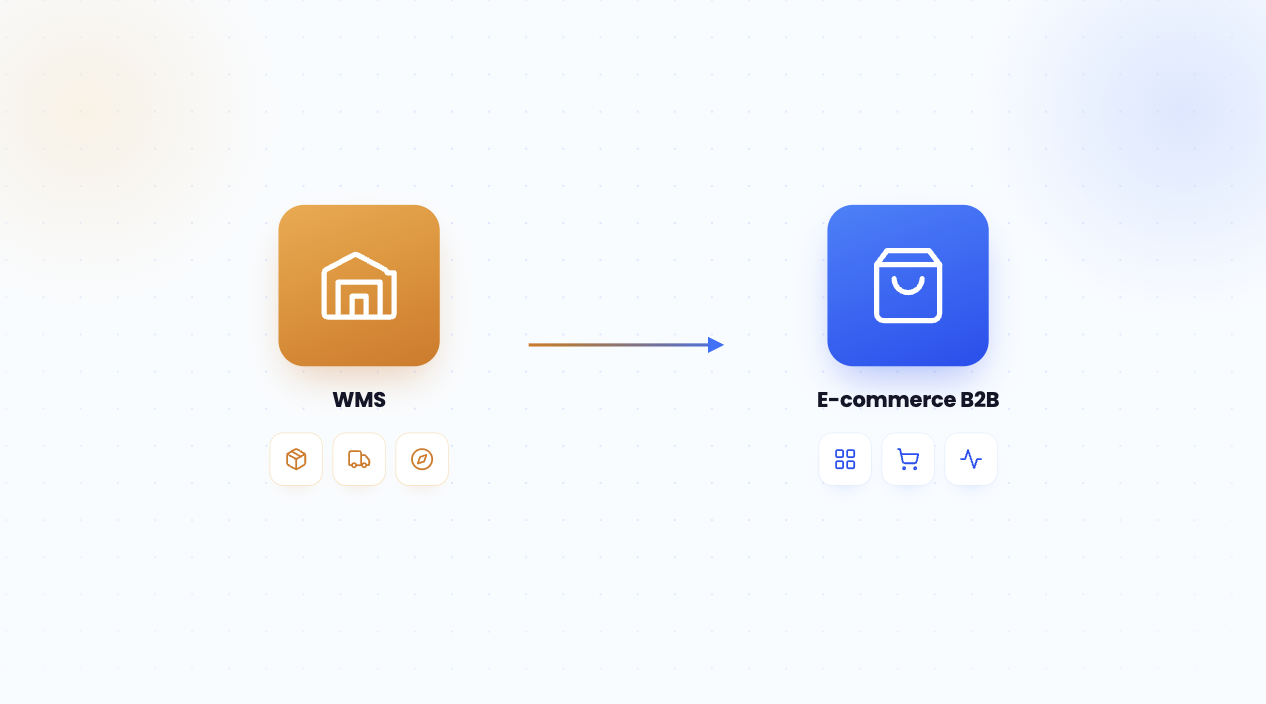
Headless commerce is a relatively new technology that website owners use to decouple the customer experience from core functionality. It’s called “headless” because it essentially separates a website’s “head” (front end) from its “body” (back end).
This makes it possible to make custom changes that improve the website’s user experience without sacrificing backend efficiency. It gives a previously monolithic website architecture more agility and encourages developers to innovate further.
Headless Commerce, Traditional Commerce, and Composable Commerce
While many have already adopted headless commerce, plenty of businesses still use traditional and composable commerce. The table below compares the three to help you better understand their specific roles in the e-commerce ecosystem.

While all three have their advantages, headless commerce stands out for its flexible, customizable front end.
Why Headless Commerce Matters for Enterprises
Reports show that 72% of U.S. businesses are turning to headless commerce architecture for greater flexibility. Why? Because many e-commerce companies still rely on older technologies, including monolithic architectures. This legacy tech can be a major obstacle when it comes to improving efficiency and adapting to changing customer expectations.
With complex sales cycles, diverse product lines, and the need to operate across multiple markets and channels, traditional e-commerce solutions often aren’t built for operations at scale.
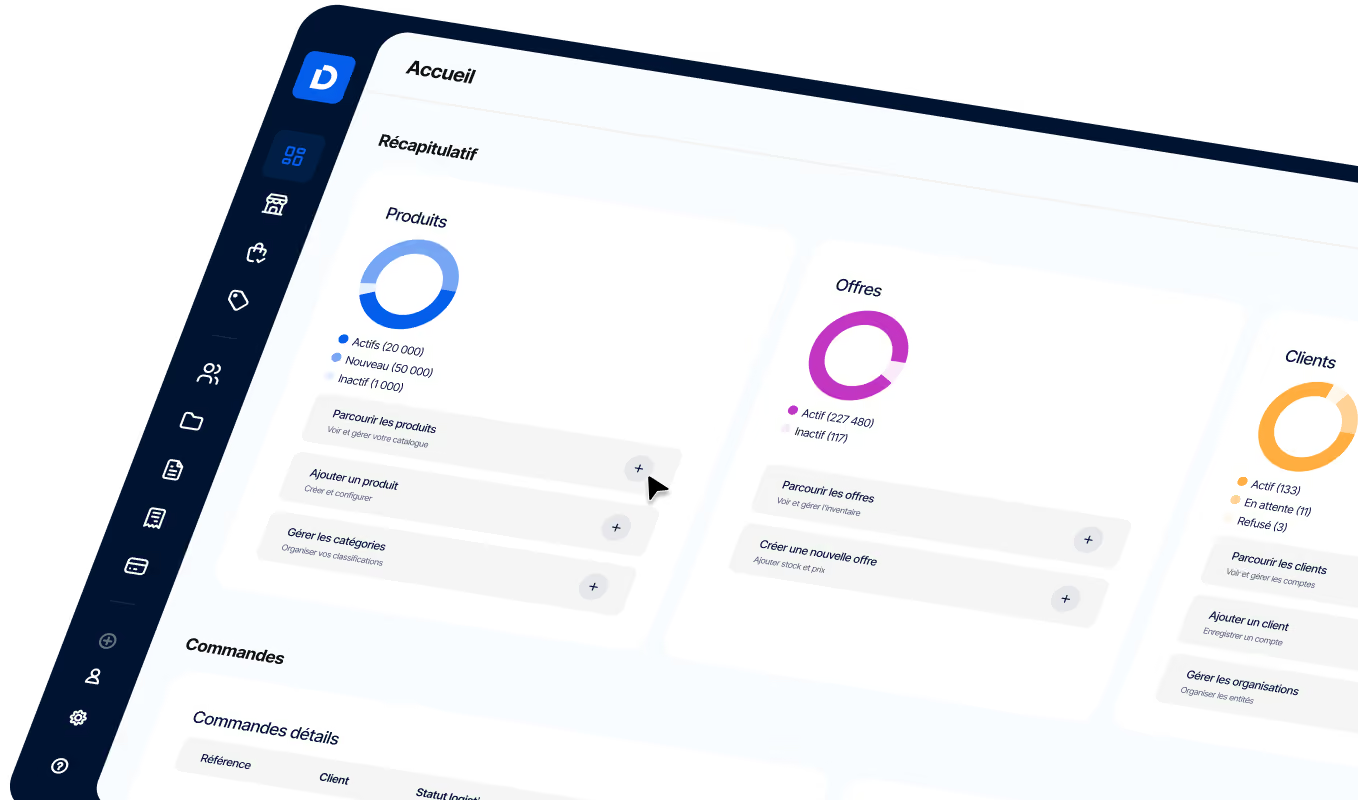
That’s why headless commerce has become an important transformation for businesses. It delivers the flexibility, scalability, and integration capabilities needed for modern enterprise e-commerce. By separating the front end from the back end, it lets businesses build adaptable systems that can respond quickly to market shifts and new technologies.
4 Benefits of Headless Commerce for Enterprises
If you choose headless commerce, you’ll benefit from the following:
1. Flexibility and customization
Businesses need solutions that can handle complex commercial requirements. Headless commerce gives you far more flexibility in designing an e-commerce site’s front end, allowing developers to use the programming language or tech stack they prefer to build a dynamic, custom user interface.
For example, a construction equipment manufacturer can use a custom front end to showcase its extensive product catalog, while the back end independently manages complex inventory and order management systems. This lets front-end and back-end teams work independently without risking disruption to each other’s work.
2. Greater website agility
Businesses need to react quickly to market changes and customer demands. With headless commerce, front-end updates can be made without affecting backend systems, enabling faster deployment of new features and improvements.
For example, an automotive parts supplier can quickly launch a new feature that lets business customers configure and order custom parts directly through the website. This front-end enhancement can go live quickly without requiring changes to the underlying supply chain or order processing systems.
3. Lower maintenance costs
Shorter development cycles and fewer required upgrades translate into lower maintenance costs. In addition, the decoupled nature of headless commerce lets businesses focus on other areas of growth instead of maintenance.
4. Improved performance and scalability
Businesses often face fluctuations in traffic and transaction volumes. A headless architecture lets you scale front-end and back-end systems separately so you can handle load spikes efficiently. That ensures consistent performance even during periods of high demand.
The Best Headless Commerce Solutions for Enterprises
There are many promising headless commerce solutions for enterprises on the market. However, the following are the best of the bunch.
1. DJUST
DJUST offers many powerful B2B e-commerce features you can use to improve the buying experience for your target audience. What sets it apart, though, is its exceptionally powerful catalog management tool.
Key features
- Multiple prices and offers: Easily manage countless offers at once, linking them precisely to products, variants, or customer groups. For example, if you’re a pharmaceutical distributor, you could set up a pricing structure where pharmacies and clinics get a 30% discount when buying a specific medicine in bulk, while also running a “buy three, get one free” offer on another product.
- Custom catalogs: With DJUST, you can create custom catalogs that show only the products and pricing relevant to specific customer groups, reducing information overload and improving the user experience. For example, a wholesale food distributor could offer different product ranges and pricing tiers to restaurants, grocery stores, and catering businesses. A high-end restaurant might see bulk options, while a small café would get a more limited selection.
- Dynamic catalog: With this feature, you can set automated rules that trigger actions and update your catalog in real time. For example, if you’re an electronics reseller, you can define rules to automatically sort products based on their specifications. When a new smartphone is added to inventory, it can be instantly assigned to categories like “5G-compatible,” “High-resolution camera,” or “Extended battery life” based on its features, with no manual input.
Pricing
We offer custom solutions, and pricing depends on your specific needs. Request a demo with us to discuss the many possibilities DJUST offers and what it would cost you.
2. Shopify
Shopify can be a powerful tool for headless commerce, offering a robust backend foundation with a few key features to consider:
Key features
- Diverse system integrations: Integrate Mailchimp, Slack, Google Sheets, and more through apps built specifically for them.
- Built-in marketing tools: Launch email marketing campaigns, create discount codes, and use SEO features to improve your store’s search rankings.
Pros
Easy-to-use interface with reliable hosting and server security.
Cons
Headless commerce isn’t available on all plans. You won’t get a highly customizable solution.
Pricing
Headless commerce is only available with Shopify Plus, which offers custom pricing plans. You can contact their team for more information.
3. BigCommerce
BigCommerce positions itself as a user-friendly platform for headless use cases, offering features that let you build custom storefronts.
Key features
- Headless app marketplace: Discover and integrate apps designed specifically for headless commerce capabilities in BigCommerce.
- Built-in security: It handles backend security, allowing developers to focus on the front end without security concerns.
Pros
BigCommerce doesn’t limit API calls.
Cons
It’s not a beginner-friendly setup, and you’ll need professional support.
Pricing
Pricing typically starts at $29 per month. However, you’ll need to request a custom quote for enterprise-level needs.
4. Adobe Commerce
Now known as Adobe Commerce, Magento offers robust capabilities for businesses looking for a powerful, scalable e-commerce platform.
Key features
- B2B features: Built-in functionality for managing complex B2B workflows such as quotes, customer segments, and custom pricing.
- Advanced SEO: Offers comprehensive tools to optimize your online store for search engines.
Pros
A highly customizable platform with excellent control over functionality and design.
Cons
You’ll need a Magento expert to get the most out of it and its features.
Pricing
It offers two packages: Commerce Pro and Managed Services. You’ll need to request a quote for both.
While these platforms are all very promising, one may be a better fit for your needs than the others. That’s why you should first understand what you want to achieve with headless commerce, then choose the platform that fits best.
Factors to Consider When Choosing a Headless Commerce Platform
Before selecting the ideal headless commerce platform, make sure it offers the following:
- Security: E-commerce platforms rely heavily on online payments, but consumers would never make transactions on a shady website. You need to make sure the platform offers fraud protection and data backup. In addition, your website must be PCI compliant (Payment Card Industry).
- Technical support: Their customers are a clear sign of how reliable enterprise e-commerce platforms are. Your ideal platform should offer proper technical and customer support at any time of day. It would be great if it could also provide that kind of support to your customers. That’s exactly what DJUST does: it offers a self-service portal that lets customers handle their day-to-day tasks seamlessly.
- Ease of integration: There’s no telling what direction your business may take in the future, or what it has gone through in the past. That’s why you need a platform that lets you integrate any backend system easily, without friction or data loss.
- Scalability: Your inventory, catalog, traffic, or transaction volume can grow at any time. You can’t switch platforms every time there’s a sharp increase. So find a platform that can adapt to those changes and support them.
- Automated front end: An AI-driven front end like DJUST’s lets you place orders automatically by simply reading order details from an email, with no manual input.
The Bottom Line
Businesses around the world are starting to realize that their websites need headless commerce. So you should integrate it into your website before your competitors do.
But as appealing as that may sound, you shouldn’t just pick the first platform you come across. Instead, think it through, use this blog as your guide, and choose the ideal platform for your e-commerce needs.
If you don’t want to spend too much time researching, DJUST gives you everything you need in one B2B e-commerce platform. You get it all: an easy-to-use customer portal, integration with core systems, custom customer catalogs, and a self-service portal. To learn more about how the solution can help your organization, book a demo now!
-modified.avif)
.png)
.avif)
.jpg)