B2B Product Data Management
Structure and centralize your product data to make your B2B e-commerce more reliable. Best practices and solutions.
Article summary
- Product data management is a cornerstone of B2B e-commerce performance. Large catalogs, customer-specific price lists, and tailored commercial terms: the complexity is far greater than in B2C.
- Without a centralized source of truth, inconsistencies quickly multiply. Pricing errors, outdated information, and a degraded customer experience. Excel and ERP systems that aren't built for this purpose quickly reach their limits.
- Effective management rests on three fundamentals: a single source of truth, clear governance, and real-time synchronization across every channel.
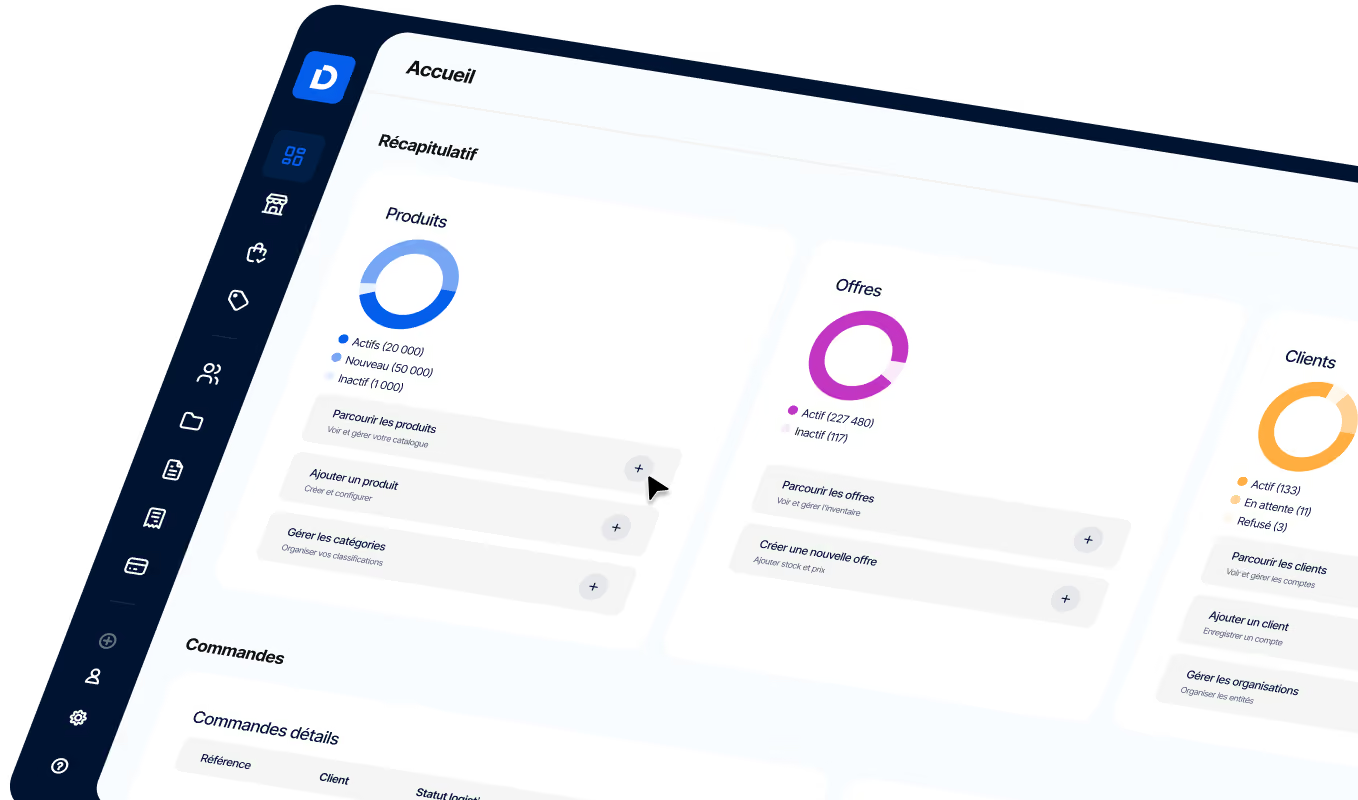
- DJUST natively integrates product data management into its platform. Centralized catalog management, variant and pricing management, multi-channel synchronization, collaborative workflows. Fewer errors, more efficient teams, and a more reliable customer experience.

Extended catalogs, custom pricing grids, personalized commercial terms: B2B companies have to manage far larger and more complex volumes of data than in B2C.
Yet product data management is still too often fragmented across your tools, files, and teams. How do you prevent that from leading to inconsistent information, pricing errors, and, ultimately, a degraded customer experience? In this article, we look at the key challenges of product data management, the best practices to adopt, and the technology solutions suited to the specifics of B2B.
What Is Product Data Management (PDM / PIM)?
Product data management is about organizing, securing, and making all product-related information usable. In other words: taking back control. It comes into play throughout the product lifecycle, through two key concepts:
- PDM (Product Data Management), which handles the technical and internal data for products: SKUs, technical specifications, bills of materials, industrial information, and regulatory data.
- PIM (Product Information Management), which focuses on distributing product information across sales channels: commercial descriptions, marketing attributes, visuals, pricing, and variants.
Why So Many Companies Still Overlook This Topic
Many companies still rely on Excel files, scattered databases, or ERPs that are poorly suited to the complexity of B2B. Unfortunately, these solutions quickly reach their limits. They may have been enough in the past, but they no longer hold up as catalogs expand or sales channels multiply.
On top of that, internal organizations are often too siloed. Product, sales, marketing, and IT teams work with their own tools and reference data. In reality, those silos need to be broken down. Without clear governance and a centralized source of truth, organizational debt builds quietly, errors multiply, and updates become time-consuming.
The Challenges of Product Data Management for B2B E-Commerce
In B2B e-commerce, nothing works without reliable data. Product data is your raw material, your fuel. It powers the online store, marketplaces, logistics, and invoicing. When it is poorly structured or poorly synced, issues multiply, like indigestion.
Consistent Information Across All Channels (Website, Marketplace, Sales, etc.)
Website, sales team, catalog exports, marketplaces: every touchpoint must show the same data, in the right format and at the right time.
Without a centralized source of truth, gaps appear quickly. A price is out of date, a technical specification differs from one channel to another, a product reference is misread by a partner. These inconsistencies are symptoms of the need to improve, and they directly undermine the company’s credibility.
Time Savings and Fewer Internal Errors
Teams spend time correcting errors, answering internal requests, or checking information scattered across multiple tools. It’s invisible time lost, but very real and rarely measured.
With strong product data management, sales teams have reliable information, e-commerce teams publish catalogs faster, and operations teams secure B2B order management.
A Better Customer Experience: Accurate, Up-to-Date Product Information
Do you know what your customers want today? Buyers expect an out-of-the-box solution where they can act independently. Complete product sheets, reliable technical specifications, and clear commercial terms. One missing or incorrect piece of information can be enough to block an order.
With a structured management system, what is displayed matches reality. Your customers access up-to-date information tailored to their profile and needs. The buying experience becomes smoother and trust is strengthened.
Agility as the Product Catalog Evolves (Variants, Options, Attributes, etc.)
New products, variants, specific packaging: your data structure must keep pace with these changes step by step without becoming overly complex.
That way, you can quickly add new attributes, manage complex variants, and adapt the catalog to market needs without starting from scratch.
Best Practices for Structuring Your Product Data Effectively
Effective product data management starts with clear organization and shared rules.
Standardize Attributes, Categories, and Naming Conventions
Here’s what standardization means: define common rules for naming products, structuring categories, and describing attributes. This approach improves internal understanding through greater consistency and makes information easier to read for customers.
In a product catalog, this standardization also makes it easier to manage variants and simplifies searches, for both teams and buyers. It makes information easier to access and simpler to use.
Set Up a Centralized Repository (Single Source of Truth)
A single repository for product data prevents duplicates and discrepancies. All teams work from the same information base, which reduces errors and speeds up updates.
This “single source of truth” principle is essential in an omnichannel environment and fits perfectly with a headless e-commerce approach, where data is consumed by different channels and applications.
Ensure Data Governance: Roles, Workflows, Quality
Think data quality depends only on the tool you use? It also depends on your governance. By defining who creates, who validates, and who changes the data, you secure the entire process.
Clear workflows ensure information stays consistent and make collaboration between teams easier.
Keep Data Up to Date: Import, Update, and Validation Processes
Product data changes constantly. So put reliable update processes in place, connected to your existing tools.
This synchronization directly helps optimize order flows and reduce logistics costs, while limiting downstream errors.
Tools & Technology Solutions for Product Data Management
In a B2B environment, your tools structure digital continuity throughout the product lifecycle, from design and manufacturing to market launch and customer relationships.
Traditional PIM / PDM Solutions: Benefits and Limits
PDM, often rooted in the industrial world, is tied to design, CAD, and product development processes. It helps manage design data, versions, revisions, and change control, in close connection with engineers and manufacturing teams.
PIM solutions focus on the commercial and marketing side of products. They make it easier to manage information for digital channels, catalogs, and customers. However, in the B2B e-commerce space, these solutions quickly reach their limits. They can struggle with complex pricing grids or with real-time synchronization requirements with ERP and existing commerce systems. The challenge is to build strong integration so you avoid siloed operations that would slow down overall performance.
How to Choose a Product Data Management Tool (Scalability, Interface, Integrations, etc.)
A tool that can’t grow with you quickly becomes a bottleneck. Scalability is essential to support catalog growth, the addition of new product versions, or expansion into new markets. A simple, accessible interface encourages adoption across the organization, whether for product, marketing, or sales teams. On the other hand, what frustrates teams gets abandoned.
A high-performing tool must fit into a broader B2B e-commerce strategy, connected to the ERP, sales management tools, and sales platforms. You don’t want a standalone tool that creates more problems than it solves.
How a Solution Like DJUST Can Simplify Product Data Management
At DJUST, product data is designed as a core element, not an isolated building block. The B2B e-commerce platform natively integrates product data management within a global management system built to centralize, structure, and leverage information at scale.
Centralizing Catalog & Product Data in a B2B Model
With DJUST, companies get a centralized product repository, a single source of truth. All data is brought together in a single catalogue produit b2b, which can be shared across teams and synced across all channels. This centralization improves information consistency and reduces errors caused by re-entering data or using outdated versions.
This setup is especially well suited to complex B2B organizations, where multiple departments, offices, or subsidiaries need access to the same data. The catalog becomes a shared resource, available in real time, supporting both sales and operations teams.
Managing Variants, Pricing, Volumes, and Product Attributes
DJUST makes it possible to manage product variants, technical attributes, minimum quantities, and pricing terms specific to each customer or market segment in detail.
Order frees up your action. This ability to structure commercial data makes teams’ work easier, reduces configuration errors, and secures transactions, while delivering real added value to the sales process.
Multi-Channel Synchronization: Website, ERP, Marketplace, Catalog Export
Product data only has value if it is properly distributed. DJUST ensures information is synchronized between the e-commerce site, the ERP, internal tools, and a B2B marketplace solution.
This synchronization is fully aligned with a digitalization of procurement processes, streamlining exchanges between suppliers, systems, and customers.
Workflows & Roles for Collaborative Data Management
Define the roles and the permissions that go with them. That way, every change, creation, or validation happens within a secure framework, with access rights set according to each user’s responsibilities.
You make data quality control easier while speeding up data availability. You also open the door to advanced technologies, especially around AI and e-commerce, to automatically enrich product information and optimize how it is used commercially.
Expected Benefits of Optimized Product Data Management
Structured, centralized data management delivers concrete benefits across the business, from sales to logistics to the customer experience.
Fewer Product Errors & Customer Returns
Customers get clear information on products, quantities, and terms, which significantly reduces errors and returns.
This reliability strengthens trust with buyers and secures commercial exchanges, while easing the burden on support and customer service teams.
Time Savings and Greater Efficiency for Internal Teams
Well-managed product data lets teams focus on higher-value tasks. Search, correction, and validation times go down, while processes become smoother and faster.
Sales, marketing, and operations teams work from a shared base, which improves coordination and speeds up day-to-day decision-making.
Better Conversion and Higher Customer Satisfaction
Complete, consistent, and easy-to-access product information makes buying decisions easier. Your customers can then quickly find what they need and order with confidence.
This quality of information is a major differentiator, supporting conversion, customer satisfaction, and overall performance.



.png)
.jpeg)