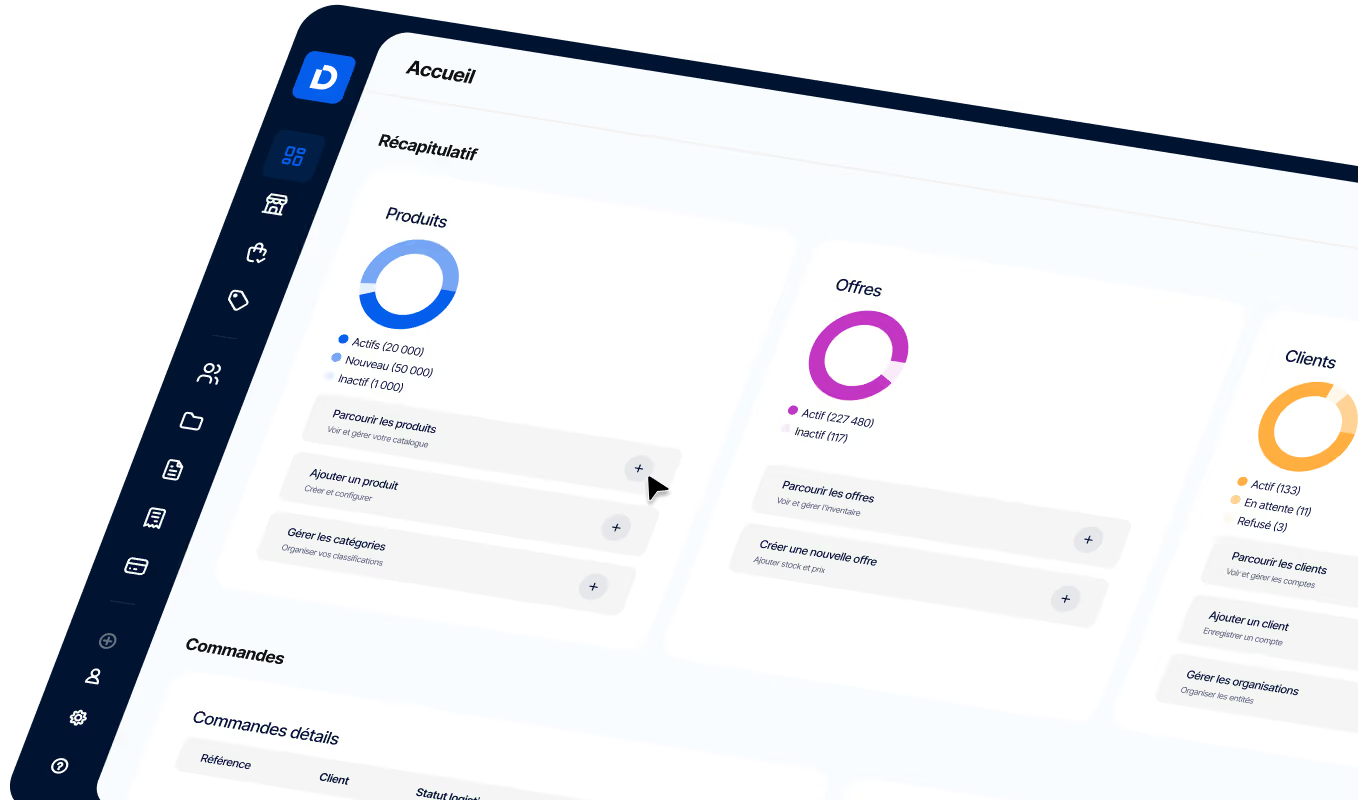
Price List Management Software: Everything You Need to Know
See how price list management software can transform your B2B pricing strategy. Explore its benefits, key features, and how to choose the right solution.
Article summary
- Price list software automates and optimizes B2B pricing processes, saving time and improving accuracy.
- This software also gives you real-time insights and analytics so you can make informed decisions about your pricing strategy.
- With the right platform, you can significantly boost your profit margins and keep your customers happy with fair, transparent pricing.
- When choosing a solution, look for one that integrates easily with your existing systems, can grow with your business, and offers features tailored to your specific industry.

In B2B commerce, managing pricing can feel like juggling a lot of high-stakes constraints. But what if there were a tool that could simplify it all?
Price list management software is changing the way companies — whether they’re tackling the specific challenges of the fashion industry or navigating the complex world of B2B construction — manage their pricing strategies.
This article is your go-to guide to price list software. We explain what it is, why it matters, and how to find the right solution for your business.
What is price list software?
Price list management software, often called price list software or pricing management software, is a specialized tool that helps businesses design, manage, and refine their pricing strategies. Originally used in travel and hospitality for revenue management, these solutions have evolved to meet the needs of many industries, from manufacturing to industrial services.
In more advanced deployments, price list software can be integrated into a unified commerce platform. This integration helps businesses keep pricing consistent across every sales channel, from e-commerce sites to face-to-face sales.
Today’s pricing software generally falls into four main categories:
Pricing analytics
This type of software helps businesses understand how their pricing is performing today and identify opportunities for improvement. It often includes features such as margin driver analysis, which breaks down the factors affecting margins and delivers actionable insights.
Advanced pricing analytics solutions can also combine market data, competitor prices, and historical sales trends to give you a complete view of pricing performance.
Price optimization
Price optimization software uses artificial intelligence and machine learning algorithms to analyze market data, measure price elasticity, and predict the results of different pricing strategies. It helps businesses set optimal prices that maximize revenue or profit.
These systems can handle complex variables such as seasonality, inventory levels, and competitor pricing to recommend the best pricing strategy for each product or customer segment.
Price execution
Price execution software focuses on how prices are calculated and communicated to customers or sales reps. It often includes quote creation, agreement management, and integration with other systems such as ERP (enterprise resource planning) systems, CRM (customer relationship management) solutions, or e-commerce platforms.
Advanced price execution software can automate the entire quote-to-cash process, reducing manual errors and speeding up transactions.
Price management
This type of software is used to set prices for new products, update existing price lists, and manage customer-specific pricing. It is especially useful for businesses that handle complex pricing structures across multiple regions or product lines.
Price management software often includes version control, approval workflows, and bulk price updates, making it easier to maintain consistency across large catalogs.
In a B2B context, pricing software must handle additional complexity such as contract pricing, volume discounts, and rebate management. It also needs to integrate with B2B commerce suites to ensure seamless pricing across all sales channels, including B2B customer portals and B2B carts.
The challenges B2B companies face when managing pricing manually
When B2B companies rely on manual processes to manage their price lists, they often run into several challenges:
- Outdated price lists that no longer reflect current market conditions or costs.
- Inconsistent pricing across different sales channels or regions.
- Difficulty managing complex pricing structures for large product catalogs.
- Slow responses to market changes or competitor pricing.
- A higher risk of pricing errors that can lead to lost revenue or unhappy customers.
- An inability to effectively implement volume-based pricing or customer-specific discounts.
- Limited visibility into pricing performance and its impact on profitability.
These issues can be especially significant in industries facing rapid change or sector-specific challenges, such as the automotive industry.
They also create the perfect conditions for missed opportunities. When pricing managers are buried in administrative tasks, they have less time to focus on strategic decisions that can improve profitability. And without the ability to adjust prices in real time, you risk losing sales, especially in fast-moving markets or during promotions.
The benefits of price list software
Price list software gives B2B companies a wide range of benefits that streamline operations and improve pricing strategies. The software:
- Acts like a dedicated pricing expert by automating tasks such as calculations and updates, freeing your team to focus on strategic initiatives.
- Reduces errors and ensures consistent pricing across every sales channel, no matter where the customer is located.
- Lets you respond instantly to market shifts or cost changes, so you can stay ahead of the competition.
- Provides valuable insight into market trends and customer behavior through powerful analytics, enabling data-driven decisions that maximize profitability.
- Makes it easy to implement custom pricing models, such as volume discounts or special offers for specific customers.
- Helps you stay compliant with regulations through detailed pricing histories and audit trails.
- Builds customer trust and satisfaction by delivering accurate pricing information in real time.
- Supports international growth with features such as multi-currency management and regional pricing strategies.
- Uses historical data and performance metrics to forecast future sales and revenue.
- Helps streamline approval workflows so price changes can be rolled out faster.
- Lets you test different pricing strategies to identify the most effective approach.
What to look for in a price list software provider
When evaluating price list software vendors, consider the following key factors to choose a solution that fits your business needs:
Industry expertise
Look for a provider with experience in your specific industry. For example, if you work in B2B construction, you’ll need a solution that understands the pricing challenges unique to that sector.
At DJUST, we offer solutions tailored to different B2B industries, including food and distribution. Our deep understanding of the pricing complexities specific to each sector ensures our software can handle the realities of each market.
Integration capabilities
Your price list software should integrate easily with your existing systems, including your ERP, CRM, e-commerce platforms, and catalog management software. This integration ensures smooth data flow and helps you create a consistent B2B customer portal experience.
Expert tip: when evaluating integration capabilities, ask potential vendors what experience they have with your tech stack. This can significantly reduce implementation time and costs.
At DJUST, we excel here thanks to a robust API-first architecture that makes it easy to integrate with a wide range of business systems.
Scalability
As your business grows, your pricing needs can become more complex. Choose a solution that can scale with your business and adapt to changing requirements. Look for support for multiple price lists and currencies, as well as the ability to handle large product catalogs.
Scalability is a major priority at DJUST, and we designed our platform with that in mind. It can handle large product catalogs and complex pricing structures as your business grows.
Intuitive interface
The software should be intuitive and easy to use, even for team members who aren’t comfortable with technology. A user-friendly interface can significantly reduce training time and increase adoption across the organization.
Advanced analytics and reporting
Strong analytics capabilities are essential for making data-driven pricing decisions. Look for software that provides detailed insight into pricing performance, customer behavior, and market trends.
DJUST, for example, offers comprehensive analytics features, including pricing data visualizations that help businesses optimize their pricing strategies.
Workflow validation and approval processes
To keep control of your pricing strategy, choose software with workflow validation features. This ensures price changes go through the proper approval processes before they are implemented.
Expert tip: we recommend choosing a solution (like DJUST!) that offers customizable approval processes you can adapt to your organization’s needs and hierarchy.
Support for complex pricing models
B2B pricing often involves complex models, including tiered pricing, volume-based pricing, customer-specific discounts, and promotional pricing.
For example, the DJUST platform is designed to handle even the most sophisticated pricing models, allowing you to implement strategies tailored to the specifics of your business relationships.
Mobile access
Being able to access your pricing data anytime is extremely valuable. Look for solutions that offer mobile apps or responsive web interfaces.
Security and compliance
Given how sensitive pricing data is, robust security features are essential. Make sure the provider follows industry best practices for data protection and meets relevant compliance standards. Also prioritize providers, like DJUST, that offer state-of-the-art encryption and access control measures to protect your sensitive pricing information.
Customer support and training
Implementing new software can be complex. Choose a provider that offers comprehensive training and ongoing support so you can get the most out of your investment.
Composable architecture
A composable accelerator approach can deliver major advantages. Look for providers like DJUST that offer a headless e-commerce platform and support composable commerce for B2B. Our composable approach helps you adapt quickly to market changes and integrate new technologies as they emerge, so your pricing strategy stays future-ready.
In conclusion
Price list software is an essential tool for B2B companies that want to optimize pricing strategy and stay competitive. By automating pricing processes, delivering real-time insights, and enabling sophisticated pricing models, this software can significantly improve efficiency and profitability.
When choosing a solution, consider factors such as the provider’s industry expertise, the platform’s integration capabilities, scalability, workflow approval process, and mobile accessibility. With the right solution, you can turn pricing from a challenge into a real strategic advantage.
FAQ
Imported item 281
Both manage product information, but a B2B PIM (product information management) system focuses on product data, while price list software specifically handles pricing information, strategies, and execution across multiple channels.

Imported item 9
Yes, most modern price list software solutions can integrate with your B2B eCommerce catalog, ensuring consistent pricing across all sales channels and providing a seamless experience for your customers.
Imported item 95
Price list software can dynamically update pricing on the product detail page in your B2B store, ensuring customers always see accurate, up-to-date pricing information, including any applicable volume discounts or special offers.
-modified.avif)
.png)
.avif)

.jpg)