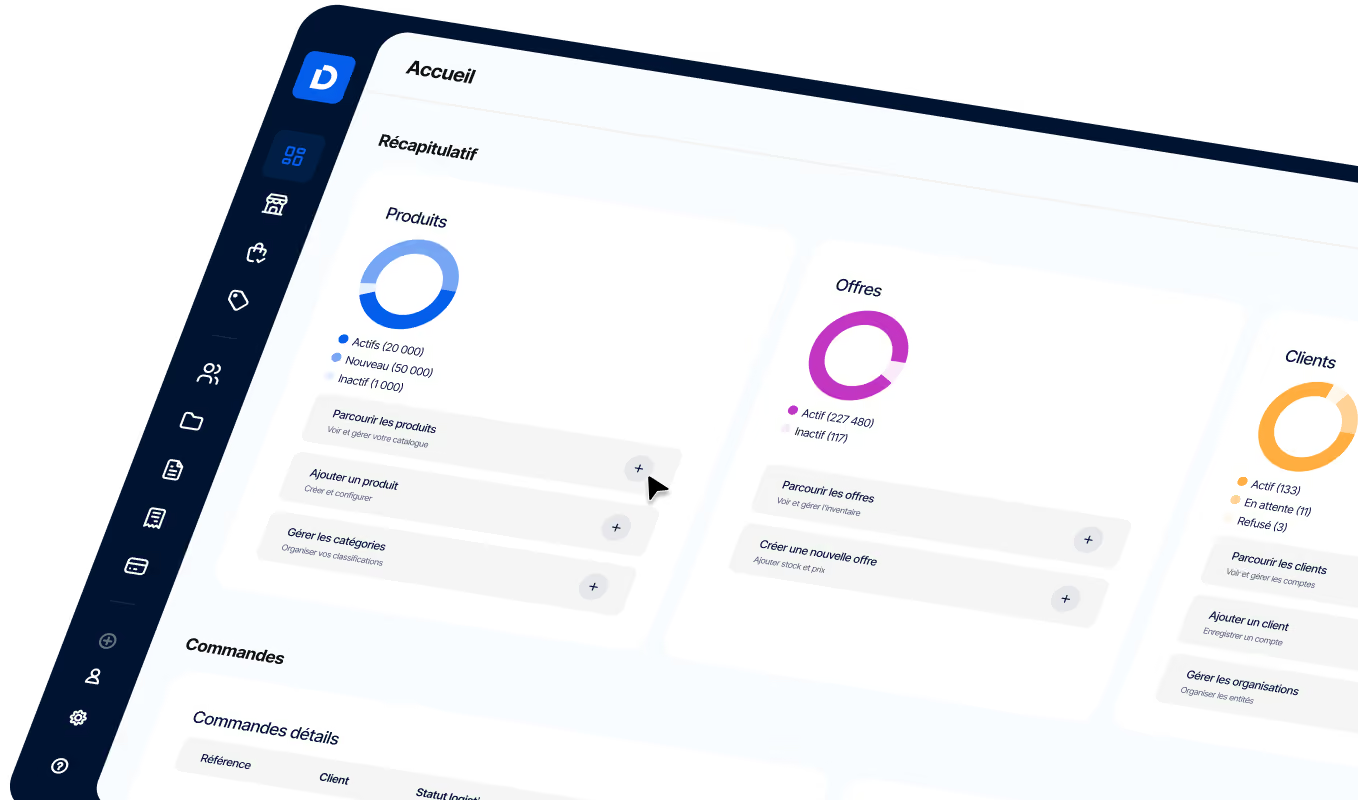
SaaS vs. PaaS: Which Cloud Model Is Right for B2B?
Discover the differences between SaaS (software as a service) and PaaS (platform as a service), and which one best fits your B2B e-commerce strategy.

Cloud computing services have evolved significantly since they first emerged. According to Statista, the market was worth $145 billion in 2017, but that figure climbed to $573 billion in 2023, with a projected value of $678 billion in 2024. Among the wide range of cloud services available today, software as a service (SaaS) and platform as a service (PaaS) are two of the most popular options for B2B e-commerce platforms.
Before launching your new e-commerce site, you need to decide between SaaS and PaaS. Your choice will affect sales and business growth, so it’s essential to choose the solution that best fits your needs. While the decision may seem complex, DJUST is here to help you determine the best fit for your B2B e-commerce strategy.
Short on time? Here’s the key takeaway:
Before diving into the details, let’s quickly look at the main differences between SaaS and PaaS solutions.
- SaaS and PaaS solutions can be set up quickly, but PaaS requires development expertise for setup and implementation.
- SaaS and PaaS solutions are highly scalable, but PaaS solutions are generally designed for building scalable applications.
- With SaaS platforms, the application is largely managed by the service provider, while with PaaS, you have a bit more control over the application and data. However, the provider still retains most of the control over the infrastructure and operating systems.

SaaS: Software as a Service
Software as a service (SaaS) is a cloud solution that delivers ready-to-use software managed by a third-party service provider. The provider handles infrastructure and application management, and the software is accessible only via the internet. SaaS solutions are ideal for B2B e-commerce platforms looking for fully managed, easy-to-use, fast-to-implement solutions that don’t require advanced technical knowledge from many team members.
Key features
SaaS products are accessible from any device with internet access and a web browser, except mobile devices. While there are some mobile apps, you’ll usually need desktop access. The customer simply logs in from a compatible device using valid credentials. The provider owns and manages all the infrastructure needed to run your e-commerce site, and handles everything from bugs and errors to security concerns.
SaaS platforms typically offer their products through a fixed monthly billing model. Customers don’t have to pay for licenses or updates unless they want to move to a higher-tier plan than the one they’re currently on.
SaaS products support single sign-on capabilities to help ensure data security and privacy. This allows employees to access multiple applications using one set of credentials.
Benefits
Building a new B2B e-commerce site can feel daunting, but with SaaS, it doesn’t have to be. Setup and implementation are quick and easy, because many SaaS platforms can be configured rapidly. With DJUST, your e-commerce platform can go live in four months. Since SaaS solutions are designed for end users and the provider manages the technical infrastructure, you don’t need to be a technical expert to run and update your e-commerce site.
In addition, your staff will get personalized login credentials based on their access level. All they need to do to access the software is log in through their web browser. Your IT team won’t have to worry about downloading software or rolling out updates across office computers.
With SaaS, scalability isn’t an issue. If your business is growing quickly and you need more storage or advanced features, you simply upgrade your service for more storage and bandwidth. The provider takes care of everything, so there’s no risk of running into infrastructure limits. As customer traffic increases, your provider automatically adjusts its IT infrastructure to avoid overloaded servers, which is great for sustainable e-commerce.
Limitations
While convenient and a great option for e-commerce platforms, SaaS gives you less control. Choosing a SaaS provider means trusting them with functionality, performance, and your sensitive data. You need to make sure you trust the provider before committing.
In terms of security, the provider is responsible for protecting your company and customer data, as well as your credentials. If the provider isn’t reputable or suffers a data breach, your company’s data privacy could be compromised. That said, reputable providers have robust security measures in place, including data encryption and 24/7 monitoring. In the event of a cyberattack, providers will have detailed recovery plans to help, and you can rest assured that the provider automatically backs up all your data.
While smaller SaaS solutions may lack a broad range of integrations, that’s not the case with DJUST. Most of our software is highly customizable, and we have a sophisticated integration process that supports custom integrations for B2B construction and retail.
Examples of SaaS solutions
SaaS products can take many forms. While it’s also an enterprise platform, DJUST is a strong example of a sophisticated SaaS solution. Our dynamic software lets you build your ideal e-commerce platform. Other well-known examples of SaaS e-commerce platforms include Salesforce, BigCommerce, HubSpot, MailChimp, OpenCart, and Squarespace, while Google Workspace is an example of non-e-commerce SaaS.
What this means in an e-commerce context
SaaS is the best choice for B2B e-commerce because of its flexibility and scalability. As your sales grow and you expand into new markets, add-ons give you access to more advanced features, such as stronger customer management, catalog, and order capabilities. You can also customize your customer interface and order flows, create different product catalogs for different markets, and much more, wherever you are, as long as you have reliable internet access.
SaaS solutions give you the tools and analytics you need to manage your e-commerce site efficiently. Platforms like DJUST provide backend dashboards that let you monitor and manage growing sales and other data. With these dashboards, you can easily manage inventory, accept payments, review key performance indicators (KPIs), track supplies and orders, monitor customer data, and much more.
Expert tip: Keep in mind that there are many “fake SaaS” solutions out there. These companies are really just on-premise cloud platforms that are not fully SaaS.
PaaS: Platform as a Service
Platform as a service (PaaS) gives developers the framework and tools they need to build applications and software over the internet. A simplified version of infrastructure as a service (IaaS), PaaS gives customers access to servers, storage, and networks. However, the third-party provider still owns all of these resources and rents them to customers. A company pays a specific amount to access as many resources as it needs.
Key features
It helps to break PaaS products into three parts: cloud infrastructure, software, and the graphical user interface (GUI). Cloud infrastructure includes virtual machines, cloud storage, access to physical servers, and more. Software covers operating systems, software development kits (SDKs), and libraries. The GUI is for developers working on the backend.
PaaS products are designed for companies to build and test unique applications and software. These solutions let you experiment with new technologies without a major infrastructure investment.
Like SaaS, PaaS is cloud-based and can be accessed from anywhere. Team members can also collaborate simultaneously while working from anywhere.
Benefits
Compared with on-premise infrastructure, PaaS solutions are much cheaper because you only pay for what you need. If your developers need more tools or storage, you can upgrade as needed. If you plan properly, there’s no wasted spend.
PaaS is a major advantage for developers because they don’t have to take on the responsibility of setting up new infrastructure. Instead, they can all share the same tools, no matter where they are. This helps save even more money and time during growth.
If you’re going through a period of heavy traffic, scaling is simple and easy. You can always scale back down if traffic drops. PaaS flexibility in this area also comes with low maintenance on the customer side. The provider is responsible for hardware operability and maintenance.
Limitations
While we’ve covered some of PaaS’s benefits, there are significant drawbacks to consider, especially for smaller or fast-growing businesses. The biggest limitation of a PaaS solution is that it requires some development and IT knowledge. While SaaS can be used by practically anyone, regardless of expertise, PaaS requires at least a minimum level of IT support for maintenance.
In addition, with PaaS, you can only control what’s built on the platform. Custom cloud operations may not be compatible with your provider, which can limit the scope of your e-commerce business.
Some PaaS solutions may not be optimized for the specific programming language your company uses. This can slow application development, and you may find yourself having to adapt to your provider’s programming language. If your PaaS provider decides to change programming languages, you’ll be forced to switch again.
When you choose PaaS, you’re entering a long-term relationship with your provider. Vendor lock-in can make migration difficult if you want to switch PaaS providers or cloud models, because you depend on your current PaaS provider’s infrastructure, software, and, in some cases, programming language. In addition, your ongoing projects could be affected by outages or major updates to the PaaS you’ve chosen.
Examples of PaaS solutions
Popular PaaS examples include Microsoft Azure and AWS Elastic Beanstalk. Adobe Commerce (Magento) and Heroku are examples of e-commerce PaaS.
What this means in an e-commerce context
PaaS can be an important part of your e-commerce business plan, and these solutions are well suited to large companies interested in developing a custom platform for their customers. With PaaS, you don’t have to worry about the operating system or system software, and you get a platform where you can set up your own e-commerce site. PaaS gives you access to your site’s code, and you’ll be able to upload and configure content, products, and custom code, as well as manage databases.
In conclusion
Choosing between SaaS and PaaS depends on the type of services a company needs and its e-commerce goals. PaaS is ideal for developers who want to build applications without worrying about the underlying infrastructure, while SaaS is the best solution for B2B e-commerce because of its flexibility and resilience.
-modified.avif)
.png)
.avif)
.jpg)