SaaS, PaaS, IaaS: Which Is Right for Your B2B E-Commerce?
Choosing between SaaS, PaaS, and IaaS for your B2B e-commerce software can feel daunting, but it doesn’t have to be. We break down each option to help you choose.
Article summary
Let’s start with a quick breakdown of SaaS, PaaS, and IaaS:
- Software as a service (SaaS) delivers B2B eCommerce software that’s ready out of the box and can scale as your business grows. However, you have limited control over the software.
- Platform as a service (PaaS) provides a development platform for building a custom B2B eCommerce platform. It requires a team of developers, but it also includes tools that streamline the build process.
- Infrastructure as a service (IaaS) offers cloud-based servers so you can build your own development environment and create a B2B eCommerce platform from scratch.

B2B eCommerce has the potential to put your products in front of more customers in more markets. But building your B2B digital commerce strategy is hard work, especially if you want to launch an eCommerce platform on your own IT infrastructure. After all, there’s a big difference between developing an online sales strategy and setting up and maintaining a server.
That’s why more and more companies are turning to cloud-based B2B eCommerce platforms. According to Gartner, 39% of companies have already moved to cloud software, and as many as 70% could make the switch by 2027.
Before moving to cloud-based B2B eCommerce, you need to understand the different options available: SaaS, PaaS, and IaaS. While it may sound like alphabet soup, these different cloud approaches can have a major impact on your company’s success.
In this guide, we explain everything you need to know about SaaS vs PaaS vs IaaS and help you decide which solution is right for you.
Short on time? Here’s the key takeaway
Let’s start with a quick explanation of SaaS, PaaS, and IaaS:
- Software as a service (SaaS) provides ready-to-use, scalable B2B eCommerce software as your business grows. However, you have limited control over your software.
- Platform as a service (PaaS) provides a development platform for building a custom B2B eCommerce platform. It requires a team of developers but includes tools that simplify the build process.
- Infrastructure as a service (IaaS) offers cloud-based servers so you can build your own development environment and create a B2B eCommerce platform from scratch.

Now that you know the basics of these different models, let’s dive into the details so you can decide which one is best for your business.
SaaS: Software as a Service
Software as a service (SaaS) means paying a subscription to access software that runs in the cloud.
SaaS providers handle all the work needed to make their software ready to use and manage updates after the software goes live. You don’t need your own team of developers or custom code to start using SaaS software.
Key features
- Web-based: You can access SaaS platforms from any web browser. Some software requires a dedicated app, but it still runs in the cloud.
- Ready to go: You can start using SaaS tools as soon as you sign up. There are settings to configure, but you don’t need development work.
- Scalable: Most SaaS providers offer multiple plans for SMBs, mid-sized businesses, and enterprises.
- All-in-one: SaaS software includes data storage, updates, security, and support.
Benefits
SaaS software lets you get up and running fast. In most cases, there’s no software to install, so you can start using a SaaS tool right away in your browser. You can also configure settings in just a few clicks and add text, such as product descriptions, and product photos without custom code. If you need help, your provider’s support team can guide you through the setup process.
That’s a major advantage for eCommerce. Not having to hire an IT team can save you a lot of money and make it easier to reach your eCommerce goals. Instead of waiting months for developers to build a platform for you, you can start setting up your eCommerce storefront right away.
SaaS is also highly scalable. If your business is testing B2B eCommerce in one market, for example, you can start with a low-cost plan that offers basic sales features. As your online sales grow, you can add extra sales modules with more advanced capabilities. You can also upgrade your features during a busy sales season.
Expert tip: SaaS software can also make your eCommerce efforts more sustainable. Some providers have green initiatives to reduce their carbon footprint, while others work with data centers powered by renewable energy.
Limitations
The main limitation of SaaS software for eCommerce is that you don’t have full control over your software. You’re limited to the settings your software provider offers. If you need a specific feature that doesn’t exist yet, you have to ask your provider to build it.
This is especially important for integrations with other software you need to make sales, such as CRM software. SaaS software often comes with one-click integrations for certain applications, which can be very easy to use. However, if an integration doesn’t already exist, it can be difficult to build.
The good news is that custom integrations are getting easier. DJUST offers powerful APIs that make it possible to enable new integrations in just two clicks. Many other SaaS eCommerce platforms also offer APIs so you can build your own integrations.
It’s also important to trust the SaaS provider you work with. Your data will be stored on their servers, and you’ll need to rely on their security team to prevent leaks and downtime.
Examples
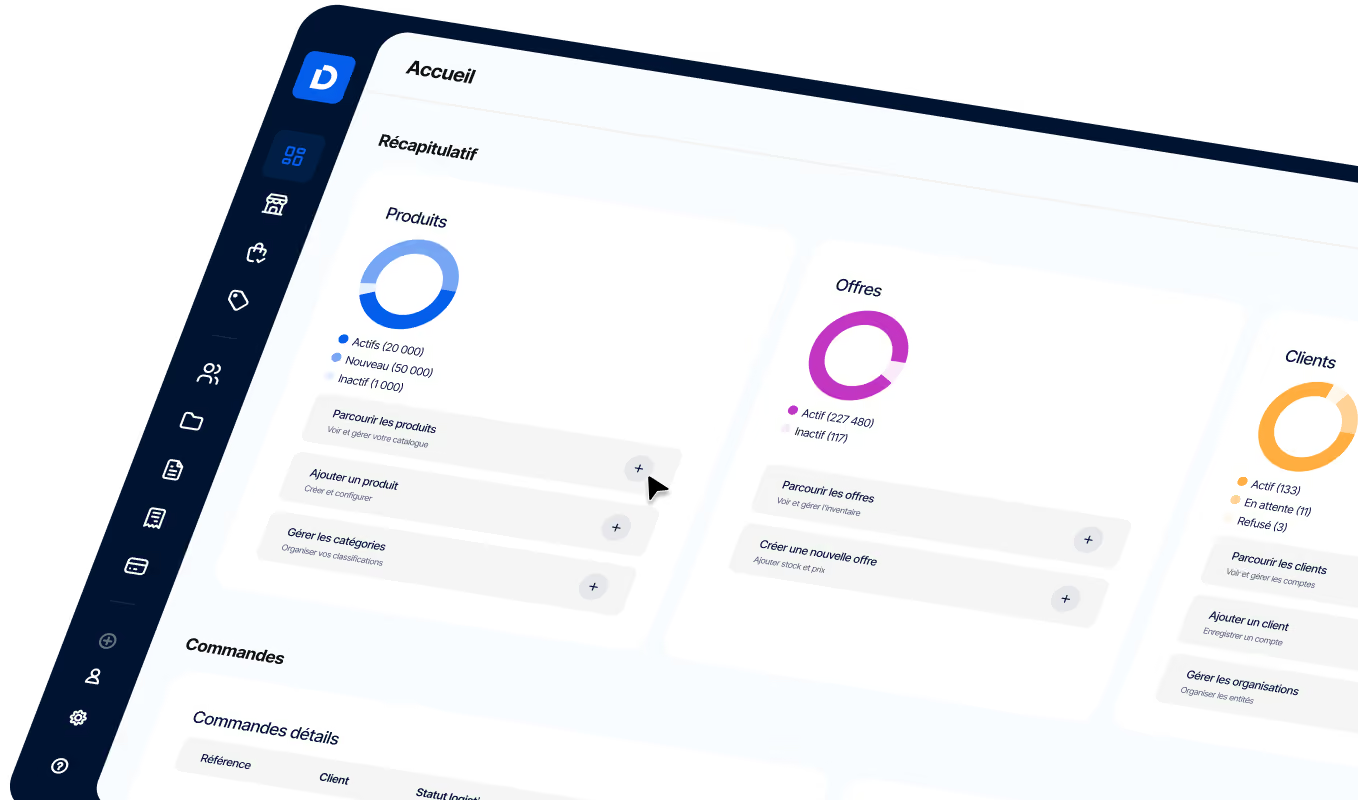
DJUST is a great example of SaaS software for B2B eCommerce. We offer software with B2B-specific features that can help your business grow revenue and meet the strict requirements of business buyers.
With our eCommerce software, you get customizable product catalogs and order approval workflows, a wide range of ready-to-connect integrations, support for multiple sales channels, and more. You also benefit from frequent updates, implementation support, and reliable data security.
In other words, we handle all the behind-the-scenes work that keeps your sales platform running so you can focus on growing your business.
Expert tip: Watch out for software that looks like SaaS but is really just cloud-based software that can’t scale with your business and doesn’t offer updates. We call these “fake SaaS” solutions because they have more in common with on-premise software than true SaaS solutions.
PaaS: Platform as a Service
Platform as a service (PaaS) differs from SaaS in that you don’t get ready-to-use software. Instead, you get a development platform to build your own cloud-based software or applications.
PaaS platforms usually include access to servers, a development environment, and data storage. You don’t need to invest in your own servers, but you’ll still need your own software developers.
PaaS platforms can be a good fit for companies that need very specific eCommerce functionality or want greater control over their eCommerce software. However, PaaS eCommerce platforms are more complex, take longer to implement, and are more expensive than SaaS eCommerce software.
Key features
- Web-based: Like SaaS software, PaaS platforms are available online from any web browser.
- Scalable: You can customize the computing resources you have access to and the amount of data storage you need.
- Built-in eCommerce features: eCommerce-specific PaaS platforms include core sales management features that you can build on.
- Customizable: PaaS platforms let you create custom features or integrations.
Benefits
PaaS platforms let you build your own eCommerce platform around your needs. That can be a good choice if you run a complex B2B business in retail or B2B construction, for example, because you can create unique features to support your sales process. You can also use a PaaS platform to build a custom back end that works for your eCommerce revenue model.
Most eCommerce-specific PaaS platforms include code snippets and tools to help with development, so you don’t have to start from scratch.
In addition, PaaS platforms can be especially useful if you need to integrate existing order systems. Your developers have the ability to build custom integrations or share data between applications.
PaaS solutions are also scalable, but in a different way than SaaS solutions. Instead of upgrading to add features, you can upgrade to increase performance or storage space on the servers your software runs on. That matters for fast-growing online businesses that need to handle large transactions, high product volumes, and more.
Limitations
PaaS platforms are much more complex than SaaS software for B2B eCommerce. While they come with a basic set of features to help you sell, process payments, and track orders, you’ll need to write custom code to adapt those features to your business. That means most companies will need a team of developers to build a storefront.
It also takes much longer to launch your eCommerce business plan with a PaaS platform. There’s no ready-made solution you can use, so you have to go through the development process before you can start selling, which can be costly and time-consuming.
On top of that, after your storefront launches, you’re responsible for maintaining and upgrading your software over time. And it’s up to your developers to integrate any new technologies, such as artificial intelligence, that you want in your software.
Examples
Examples of PaaS solutions for B2B eCommerce include Adobe Commerce (formerly Magento) and Four51 OrderCloud.
Both cloud development platforms include tools to help you manage orders and create personalized customer experiences. They also include an integrated development environment (IDE) so your development team can build fully custom features and data flows.
Adobe Commerce also has an app store with hundreds of ready-to-use integrations and marketing and sales tools. These apps can reduce the time needed to implement new features, but they also increase costs.
IaaS: Infrastructure as a Service
Infrastructure as a service (IaaS) gives you access to cloud servers you can use to build your own custom eCommerce platform.
IaaS is even more “DIY” than PaaS. You don’t get any built-in tools specifically for eCommerce.
As for IaaS providers, their servers can be used for anything — eCommerce is just one of many possible applications.
With IaaS, you’ll need a development team that can work from scratch. This really only makes sense for companies that want fully custom eCommerce platforms.
Key features
- Highly flexible: IaaS infrastructure can be configured for any programming language or data processing framework. You have full control over your development environment.
- Adjustable: You can easily add or remove computing resources from an IaaS plan as your needs change.
- Low cost: IaaS servers usually cost less than the servers used to run PaaS or SaaS platforms. However, you’ll pay much more in development costs.
Benefits
The main advantage of IaaS solutions is that they offer full control over your eCommerce platform. You choose the coding language and programming frameworks to use, which can improve eCommerce scalability and performance. You can also create and manage your own databases, build custom data flows, and design every aspect of the customer experience.
Limitations
Even if you spend less upfront on server costs, IaaS platforms have extremely high development costs compared with SaaS or PaaS solutions. There’s a lot of work involved in building your own IT environment, and you’ll need a full team of developers.
Because you have to build everything from scratch, IaaS solutions also take a long time to implement. At DJUST, we can implement a SaaS solution for your business in four months or less. PaaS solutions usually take 6 to 12 months, while IaaS platforms can take 12 to 24 months to launch. It can take up to two years before you can make your first B2B eCommerce sale.
Even after an IaaS solution goes live, it will require a lot of maintenance. You have to update not only your software but also all the development tools installed on your servers. Expect to invest a lot of money in ongoing maintenance costs.
Examples
Examples of IaaS solutions include Amazon Web Services EC2, Microsoft Azure, and Rackspace.
These three companies offer servers you can use for any purpose, including building a B2B eCommerce platform. They provide low costs for computing power and data storage but little development support and no eCommerce-specific tools.
In conclusion
Understanding PaaS vs IaaS vs SaaS solutions, their benefits, and their limitations can seem complicated, but our guide makes it simple.
SaaS eCommerce platforms like DJUST let you launch a B2B eCommerce platform quickly and without hiring developers. We believe SaaS is the best solution for most B2B eCommerce businesses because it’s less costly and less complex.
However, if you need more customization than SaaS software provides, a PaaS or IaaS solution may be a better fit. PaaS offers an eCommerce-focused development environment to help you build a custom platform, while IaaS gives you customizable cloud servers so you can develop an eCommerce solution from scratch.
-modified.avif)
.png)
.avif)
.jpg)