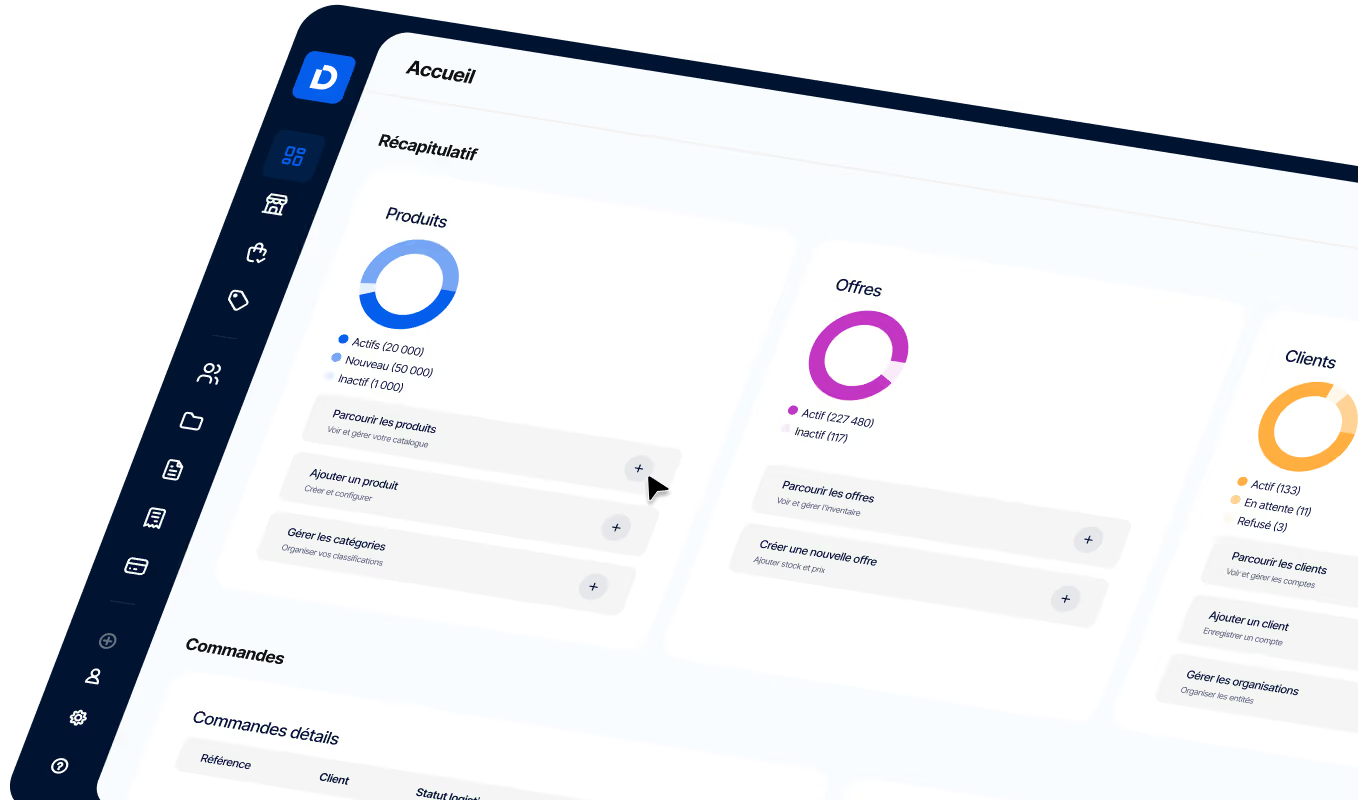
Simplify your approval workflow in 5 steps
Harness the power of unified commerce and learn how to tackle B2B workflow validation challenges in 5 steps.

Your B2B company has an approval workflow in place, but it feels like it’s moving through molasses. Your current setup is a patchwork of disconnected tools and manual processes. Approvals take forever, communication breaks down, and opportunities slip away.
Sound familiar?
The good news: there’s a solution — a unified, streamlined commerce platform that brings every step of your approval workflow under one roof.
This article will show you how to turn a clunky approval process into a well-oiled machine, saving time, reducing errors, and boosting revenue.
Short on time? Here’s the key takeaway:
- Approval workflows are critical for B2B companies to ensure accuracy and compliance in complex transactions.
- Many B2B businesses struggle with siloed systems and inefficient approval processes.
- Implementing a unified commerce approach can significantly simplify the approval workflow.
- Automation, clear communication channels, and real-time tracking are essential to improving efficiency.
- DJUST offers a complete solution that connects approval workflows with quote negotiation.
What is an approval workflow?
An approval workflow is the process of systematically reviewing and approving different stages of a commercial transaction or operation to ensure accuracy, compliance, and alignment with company policies.
In B2B, this process is especially important because of the high stakes involved in large-scale transactions, including high-value or customized products.
Benefits for the seller
An approval workflow benefits both sellers and buyers. For the company or seller, it makes it possible to define and enforce specific purchasing rules. A workflow management system lets you design a custom approval process for your online store, simplifying the customer experience.
For example, a shoe retailer may require all orders to be approved by its sales team before they are processed. This extra step ensures that every order meets company standards, that there is enough stock, and more.
For B2B companies, especially those selling expensive or customized products, the approval workflow acts as a safeguard against costly mistakes. It ensures that every aspect of the transaction aligns with business goals and legal requirements.
Benefits for the buyer
An approval workflow allows your customers to mirror their company structure within your online store. That means they can replicate their hierarchy, permissions, and purchasing processes for a seamless experience.
For example, a junior buyer at a retail company prepares a product list for the upcoming season. Before the order is placed, it must be reviewed and approved by a senior buyer, just as it would be within the company. This ensures purchases stay within budget and quality standards.
Each step in the approval workflow is carefully checked, often by multiple people. The goal is to minimize errors, reduce financial risk, and maintain quality throughout the transaction.
The challenges many B2B brands face with approval workflows
Many B2B companies struggle with inefficient approval workflows that hold back operations and growth. Here are some common challenges:
- Siloed systems: Different departments use separate tools for approvals, which leads to communication breakdowns.
- Manual processes: Relying on email chains and spreadsheets to track approvals causes delays and errors.
- Lack of visibility: Decision-makers struggle to access real-time information on approval status.
- Inconsistent procedures: Approval workflows aren’t standardized across the organization.
- Scalability issues: As transaction volume grows, existing processes become overwhelmed.
- Compliance risks: It becomes difficult to maintain audit trails and ensure adherence to industry regulations.
- Integration challenges: Legacy systems don’t integrate well with modern platforms. However, advanced solutions like DJUST are designed to work seamlessly with existing infrastructure, turning outdated data into a usable format.
- Mobile limitations: The lack of on-the-go access for approvals slows things down for busy executives.
These issues are especially pronounced in industries facing rapid change and complex supply chains. For example, fashion industry challenges include fast-changing trends and complex global sourcing, while automotive industry challenges involve long lead times and strict quality controls.
Expert tip: Don’t overlook the critical role of your B2B e-commerce catalog in the approval workflow. Catalog management software is essential for handling the complexity of B2B offers, which often include thousands of SKUs and complex pricing structures. A robust solution ensures the right products, prices, and terms are shown to each customer during workflow approval. This accuracy helps prevent pricing errors, approval delays, and potential revenue loss.
5 ways to simplify your approval workflow
To overcome these challenges and streamline your approval workflow, consider implementing these five strategies:
- Adopt a unified commerce approach
The foundation of an effective approval workflow is adopting a unified commerce platform. This approach connects every aspect of your B2B operations, from product information management to order processing, customer communication, and incident management, into one cohesive system.
With a platform like DJUST, you can create a seamless environment where the approval workflow runs alongside other critical business processes. This removes the need for multiple handoffs between systems, reducing the risk of errors and delays.
This integration serves both sellers and buyers. Sellers can implement custom approval workflows in the approval process, enforce specific purchasing policies across all sales channels, and ensure consistent order approval no matter how the order is placed. Buyers can mirror their organizational structure in your online store, replicate their internal hierarchy in the purchasing process, and enjoy a smooth buying experience that aligns with their internal policies.
Unlike traditional setups that may use separate systems for different functions, such as a standalone B2B product information management (PIM) system, a unified commerce platform does it all. This approach avoids the pitfalls of siloed solutions, where data inconsistencies and integration challenges can get in the way of effective workflow approval.
A unified commerce approach also addresses the challenge of maintaining a consistent B2B shopping cart experience across channels and devices. In the context of workflow approval, that means the same approval rules and processes are applied consistently — whether an order is initiated by a sales rep, a customer portal, or a mobile app.
Expert tip: When choosing a unified commerce solution, look for one that offers a composable accelerator. This feature lets you implement and customize your approval workflow quickly, without starting from scratch.
- Automate approval workflows
Automation is essential for speeding up your approval process. By setting up predefined rules and triggers, you can route approvals to the right people at the right time without manual intervention.
For example, in a B2B store, you can implement an automated workflow that:
- Flags orders above a certain value for financial review.
- Routes custom product requests to the engineering team.
- Triggers legal approval for transactions with new customers.
This level of automation keeps your approval process consistent and significantly reduces processing time.
- Implement real-time tracking and notifications
Visibility is crucial for effective workflow approval, so set up a system that provides real-time tracking of every step in the approval process. This transparency lets everyone involved see the current status of a transaction and spot any bottlenecks.
Real-time tracking in a B2B customer portal becomes even more powerful when combined with data analytics. By analyzing trends in your approval workflow, you can identify recurring bottlenecks, optimize approval thresholds, and even predict potential issues before they happen. This proactive approach lets you continuously refine and improve your approval workflows over time.
- Integrate approval with quote negotiation
In B2B transactions, pricing often requires negotiation. You can simplify this process by integrating your approval workflow with quote management.
For example, DJUST lets you:
- Create and edit quotes in the same platform used for order approval.
- Automatically apply volume-based pricing rules.
- Trigger approval workflows for discounts or special terms.
This integration ensures that all negotiated terms are properly approved before an order is finalized, reducing the risk of pricing errors or unauthorized discounts.
- Leverage mobile capabilities
The ability to approve transactions on the go is essential for many business customers. That’s why we recommend using a headless e-commerce platform with a responsive mobile interface for workflow approval.
With mobile access, decision-makers can:
- Review and approve transactions from anywhere.
- Access product detail page information to make smarter decisions.
- Provide feedback or request additional information without delays.
This flexibility speeds up the approval process and avoids delays caused by unavailable approvers.
Expert tip: When implementing mobile capabilities, make sure your pricing software fully integrates with your mobile interface. This will let approvers quickly review pricing information during transaction approval.
In conclusion
Simplifying the approval workflow is essential for B2B companies that want to stay competitive. By adopting a unified commerce approach, automating approvals, implementing real-time tracking, integrating quote negotiation, and leveraging mobile capabilities, you can significantly improve operational efficiency.
Remember, the goal isn’t just to approve transactions, but to do it in a way that supports business growth and customer satisfaction. With platforms like DJUST, you have the tools to turn your approval workflow into a strategic advantage.
-modified.avif)
.png)
.avif)

.jpg)