B2B Logistics Costs: Tools and Best Practices
Discover how to sustainably reduce your B2B logistics costs with the right levers, data, and a high-performing e-commerce platform.
Article summary
- Logistics costs are a strategic issue in B2B: warehousing, transportation, labor, and errors all directly affect profitability and customer satisfaction.
- Optimization starts with data and processes: visibility into flows, KPI-driven management, and precise inventory and transport planning help reduce extra costs without major investment.
- Digitalization is a key lever: connected WMS, TMS, and OMS systems reduce errors, automate decisions, and improve operational predictability.
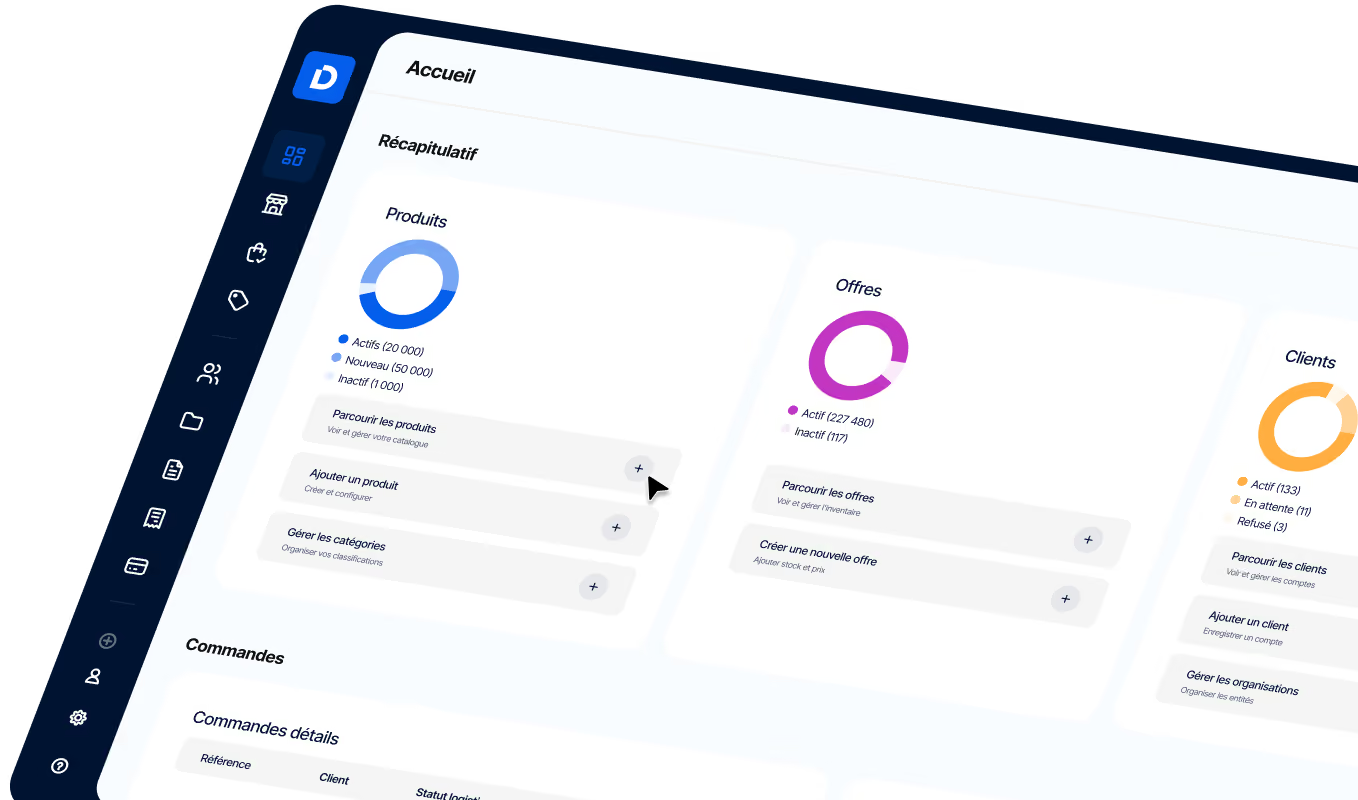
- A B2B e-commerce platform like DJUST streamlines the supply chain: centralized orders, automated rules, and inventory sync help limit hidden costs and manual intervention.
Why controlling logistics costs matters
In B2B logistics, it’s no longer just what happens behind the scenes. It directly affects order profitability, customer satisfaction — meaning orders arrive on time and without errors — and your ability to absorb additional volume without constantly hiring.
Cost control isn’t about doing things as cheaply as possible. It’s about doing better with the resources you already have. To get there, you need structured decision-making and strong use of data.
The main logistics cost drivers
Every business is different, but a few cost centers account for most of the spend:
- Storage: rent, equipment, maintenance, inventory.
- Labor: order picking, receiving, quality control, internal transport.
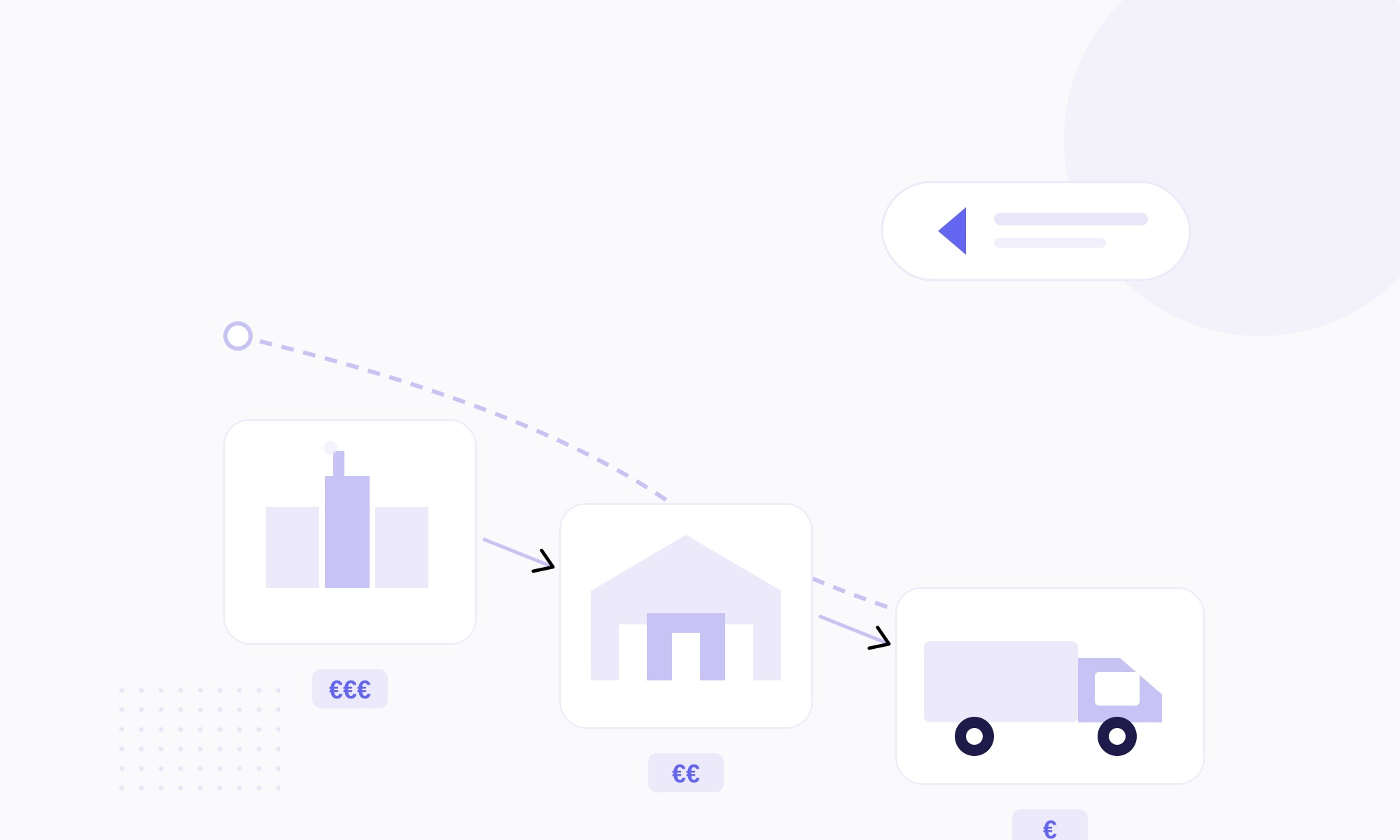
- Transport and distribution: carrier fees, fuel, returns.
- Systems and tools: WMS, TMS (Transport Management System), ERP, licenses, and integrations.
- Errors: overstock, missing parcels, reshipments.
Some companies also underestimate “hidden” costs — moments that don’t show up directly as expenses but are still key areas to optimize. These usually include time lost checking orders, re-entering data, or handling customer requests. All of this could be avoided with a high-performing B2B portal.
Current challenges: inflation, transport, and customer expectations
Several structural trends are putting pressure on B2B logistics:
- Inflation and energy volatility: storage costs rise mechanically.
- Rising transport costs: driver shortages, carbon regulations, fuel prices.
- Customer pressure: shorter lead times, more precise deliveries, split orders.
- More channels: B2B e-commerce, field sales, EDI, B2B marketplace solution.
These challenges sometimes lead to quick decisions that don’t take all the data into account. The result is unnecessary spend: overstock, half-full transport, avoidable back-and-forth, split orders... Effective optimization starts with the habit of analyzing the situation, taking time to understand it, and then acting accordingly by pulling the right levers.
Effective levers to reduce your logistics costs
Optimizing inventory and warehouse management
A few effective ways to optimize time and space with immediate, measurable gains:
- Improve order picking. A new layout — dedicated zones for fast-moving products, a logical picking path, order consolidation — can reduce up to 20% of internal travel.
- Reduce dead stock. ABC analysis, alert thresholds, forecasts based on real data, or a multi-warehouse inventory management solution help align stock levels more closely with demand and improve responsiveness with less waste.
- Digitize operations. A WMS (Warehouse Management System) guides pickers and helps optimize storage locations. By also ensuring goods traceability, it improves inventory reliability and reduces the risk of shipping errors.
Transport optimization: planning and carrier selection
Smart transport planning means grouping orders and optimizing routes to make the best use of vehicle capacity and time constraints. A TMS can automatically define the best routes, manage loads by vehicle, and adjust planned volumes based on demand and real-world constraints.
Too many companies operate blind. Good transport KPI tracking — on-time delivery, failure rate, cost per parcel/pallet — makes it possible to renegotiate, arbitrate, or diversify partners when something looks off.
Pooling, outsourcing, and flow optimization
Optimization also depends on a better understanding of real costs and internal constraints. Pooling flows across sites, branches, or subsidiaries can sometimes be a simple solution to implement. Taking the time to rethink routes and delivery frequencies can make consolidation possible by setting a daily receiving limit.
If you see that your internal costs have increased compared with last year, or if your volume variability has become too high, outsourcing part of your operations is a practice that can improve your organization.
Digitization: WMS, TMS, and management tools
Companies that invest in advanced management see fewer order errors, fewer unjustified returns, better predictability, and fewer unexpected warehouse overloads, especially with a WMS (Warehouse Management System).
Using a WMS, a TMS, and an Order Management System (OMS) together creates a continuous value chain. A order management solution like DJUST, for example, makes it possible to sync order flows, automate shipping rules, and reduce re-entry.
Lean methods and waste reduction
In B2B logistics, every form of waste has a direct impact on costs: unnecessary travel, waiting time, overstock, picking errors, or avoidable re-handling. Lean principles help identify and eliminate these sources of friction by standardizing operations, smoothing flows, and reducing non-value-added tasks.
When combined with digital tools that centralize orders, automate rules, and improve data reliability, these principles become even more powerful. A platform like DJUST supports this approach by reducing re-entry, limiting upstream errors, and providing better visibility into flows, which helps deliver concrete, lasting gains faster.
Practical steps to launch your optimization
Step 1: Map your flows and costs
Before optimizing, you need to understand how flows really move. Where does the information start, who handles it, how many times are products moved, and where are the bottlenecks?
Step 2: Identify savings opportunities
The biggest gains are often unexpected, through costs you’d rather avoid:
- Picking errors,
- Supplier or customer disputes,
- Unplanned additional transport,
- An unreliable carrier that has never been challenged.
Step 3: Implement the right tools and processes
Successful optimization doesn’t rely on tools alone. It relies on:
- Solid, easy-to-understand processes,
- Effective change management,
- A clear roadmap,
- Upskilling the team.
Choosing the right tools is fully part of this optimization effort. In logistics, the goal isn’t to multiply solutions, but to build a coherent ecosystem: which OMS to manage orders, which WMS to orchestrate the warehouse, which TMS to handle transport, which connectors to ensure data continuity, and above all which governance model will make the whole setup reliable.
This is exactly where platforms like DJUST add value, by unifying and syncing flows while integrating with existing systems instead of replacing them.
Step 4: Track KPIs and adjust continuously
Logistics optimization starts with rigorous management. That means relying on reliable dashboards that consolidate key indicators such as picking error rate, cost per order, shipment fill rate, or the gap between promised and actual lead times.
The best-performing companies operate with a continuous improvement mindset: every variance becomes either a warning sign or an adjustment lever. To be effective, this management must rely on synchronized data across business tools, so operational decisions stay aligned with business goals, much like a structured project roadmap managed over time.
The benefits of optimized B2B logistics
To meet expectations around delivery speed, better logistics service becomes a real competitive advantage, strengthening customer trust and the perceived quality of service.
Lower direct costs
Careful inventory management avoids tying up cash unnecessarily in goods that take up space. When loads and routes are structured intelligently, there is less unnecessary handling, fewer picking errors that lead to returns or costly reshipments, and less dependence on urgent transport, which is often charged at a premium.
Better customer service and lead times
When operations run smoothly, orders are picked and shipped on time, which mechanically reduces the number of disputes linked to delays or errors. That increased reliability improves customer satisfaction, with goods arriving on time and without surprises or picking mistakes.
Better visibility and overall management
With the right tools — whether real-time tracking systems, unified platforms, or consolidated dashboards — data becomes a true strategic asset. Instead of acting case by case or reacting only to emergencies, teams can anticipate needs, simulate different workload scenarios, adjust transport plans based on end-customer demand forecasts, and optimize both human and material resources.
How DJUST can help you reduce logistics costs
Centralizing orders to reduce errors and returns
Instead of multiplying order capture channels (Excel, email, phone, EDI...), DJUST centralizes everything in a single interface. The result: this centralization immediately optimizes costs linked to errors and returns, and even disputes.
Automating workflows to streamline picking and shipping
DJUST automates order rules by enabling:
- Minimum order quantities,
- Carrier-specific shipping rules,
- Stock availability,
- Contract pricing.
Fewer manual decisions mean less repetitive work and in fine more fluid logistics operations.
Optimized management of catalogs, pricing, and volumes to limit extra costs
This fine-tuned management helps avoid picking errors and stockouts, two major sources of extra cost. To do this, the platform lets you manage multiple catalogs, customer-specific volumes, and variable pricing terms.
Better visibility into stock and flows
Thanks to native integrations, DJUST syncs stock and orders in real time. This helps teams anticipate needs, reduce dead stock, streamline supply-to-sales communication, and cut logistics emergencies.
Headless architecture to easily connect WMS, TMS, and ERP
The headless model offers the flexibility needed to build a coherent, scalable digital chain by integrating:
- WMS,
- TMS,
- ERP,
- transport solutions,
- B2B marketplace platforms,
- internal tools.
A high-performing B2B portal that reduces requests and support costs
By giving customers the ability to view their negotiated prices directly, place orders without errors, track delivery status, and download related documents themselves, the company sharply reduces traditional requests by email or phone. This autonomy not only lowers the number of calls and emails teams need to handle, but also the manual corrections that create delays and extra costs.
The result: teams can focus on higher-value tasks, improving overall efficiency and reducing logistics support costs.
-modified.avif)

.jpeg)