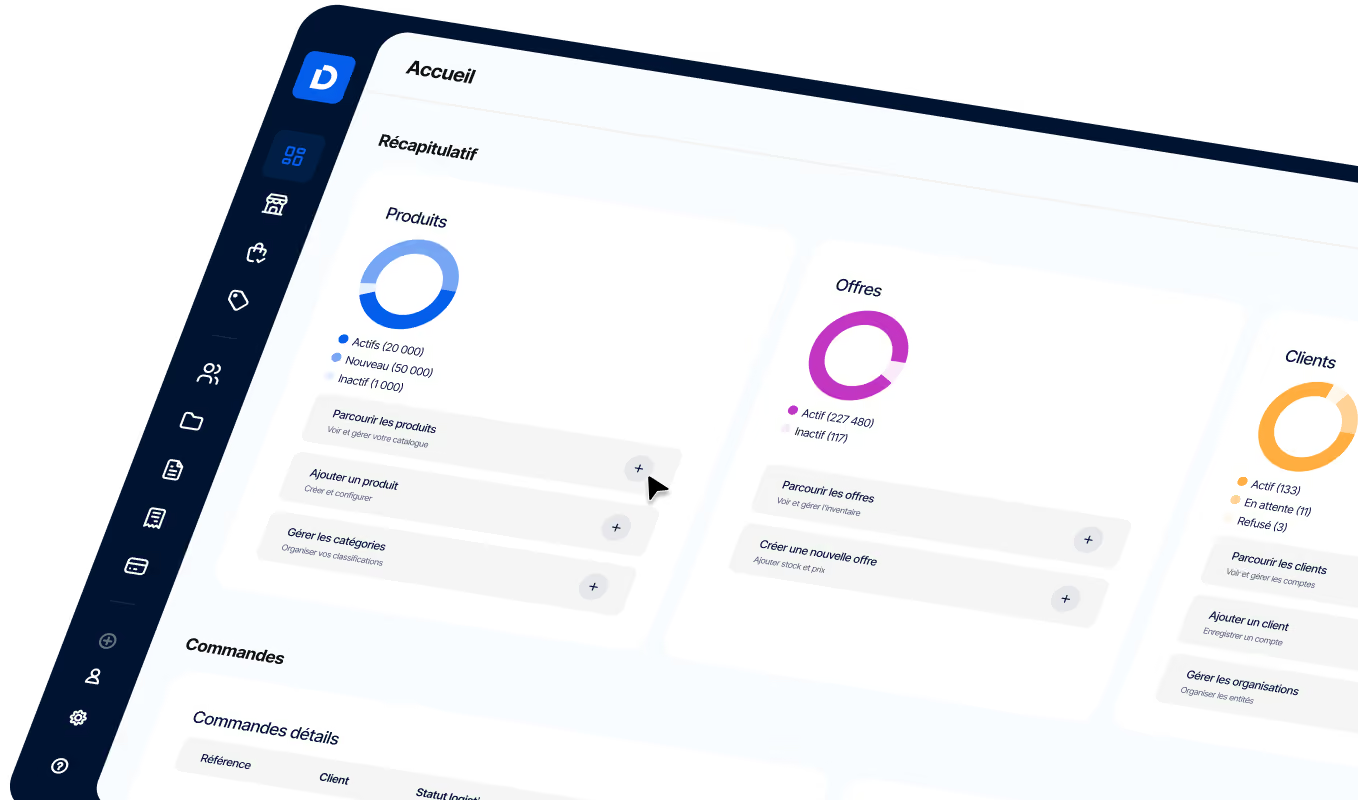
B2B Commerce for Construction Materials
In the years ahead, 84% of construction companies expect to sell 100% of their products online. Find out how, why, and what’s at stake.

Most construction companies are well aware of the digital transformation underway. Many building materials businesses even have plans to disrupt the status quo with new technologies, but there seems to be a gap between vision and reality.
According to a recent survey, 84% of construction companies expect to sell 100% of their products online in the future, while 89% believe digital technologies will change the way they do business. 75% of construction professionals plan to increase their investment in digital transformation. Notably, 60% of construction companies acknowledge that their industry is already behind others when it comes to digital technology adoption.
Key challenges in the construction industry
With the growing number of modern B2B buyers who expect seamless online ordering and sales, the construction industry is lagging behind when it comes to meeting and exceeding customer expectations. Only 5% of respondents in Sana Commerce’s survey said their online experience on construction e-commerce sites had no issues. One of the main challenges for the building materials industry is maintaining and growing supplier relationships. Other issues identified include poor data visibility, inaccurate dates and overly complex replenishment systems, a lack of payment methods, and complicated checkout processes.
How digital can help improve relationships
Digital selling helps strengthen customer and supplier relationships because it gives buyers self-service access anytime, anywhere, and on their terms. There are no restrictions tied to call center hours or physical store opening times.
Transparency
There’s nothing worse than trying to order a product that’s out of stock. Buyers need to be able to plan ahead, and giving them full visibility into building materials inventory will not only delight them, but also help businesses keep stock under control.
Integrating a B2B eCommerce platform for building materials with any ERP or backend system will make visibility and transparency easier and, ultimately, provide effective data insights.
Efficiency
Many companies still live in the “comfort zone” of manually entering data into their system or even into an Excel spreadsheet. This often leads to errors. Reducing mistakes by putting an efficient sales channel in place for building materials will strengthen a relationship built on reliability and efficiency.
Personalization
There are many myths about B2B eCommerce, but contrary to popular belief, digital B2B eCommerce helps build a personal relationship between buyers and sellers. With the right B2B eCommerce platform, each buyer and customer will only see their own product list, pricing, and promotions, which boosts productivity.
What the building materials industry needs from B2B eCommerce in the future
Synchronized product information
Builders, architects, and designers need detailed product information to ensure project success. It’s not enough to provide weight, height, and material data; descriptions need to be contextualized and as specific as possible. Since product information can be updated with additional details, any B2B eCommerce platform must be able to sync all content across every relevant channel automatically, saving time and eliminating errors.
Multiple buyer profiles
Unlike B2C customers, B2B buyers represent a range of roles, with different seniority levels within the company. Access controls need to be configured accordingly.
With that in mind, the B2B eCommerce platform must have the functionality to provide different access levels for the user hierarchy it supports. That could mean assigning each account an administrator who can create separate customer users and grant individual permissions as needed. This helps prevent junior staff from acting outside their remit, while managers can see everything from invoice history to available credit.
Easy-to-use checkout
Long forms and five-step checkout processes are just a few examples of how some construction companies overcomplicate payment, slowing conversion on B2B eCommerce sites. Simplifying checkout is a great way to reduce cart abandonment and get buyers to complete their purchase the first time.
Express checkout features are a must-have for any B2B site and are likely to be especially appreciated by returning B2B customers. You can give buyers the option to place quick orders based on previous favorites, or fill out a short bulk order form using the SKU, part number, or another more convenient identifier.
Multiple secure payment options
In the building materials industry, a business relationship is often already in place with the customer, and not every payment method needs to be handled online.
To meet the needs of modern B2B buyers, construction companies should integrate offline payment methods such as:
- Credit cards
- Purchase orders
- Credit line approval
- Checks (for large amounts)
- Bank transfer / ACH
- Credit notes
- ....
The platform should make it possible to configure multiple payment options while tailoring them to each customer.
By offering B2B buyers customized, flexible ordering methods, you ultimately give them a seamless experience on your digital platform.
Choosing the right B2B eCommerce platform
The mistake distributors have made in the past was to replicate B2C e-commerce platforms that are no longer fit for purpose. The building materials industry should look for a flexible e-commerce platform designed specifically for B2B and able to adapt to the business and the ever-changing demands of customers. Headless technology with built-in API capabilities will allow construction companies to be operationally efficient internally and, more importantly, deliver and exceed seamless customer experiences.
With the global building materials market valued at $271.98 billion and expected to reach $376.72 billion by 2026, building materials companies need to start rebuilding their digital sales channels to meet growing demand and complexity.
Get in touch today to learn more about how we’ve helped leading construction companies and how we can help your business.



.jpeg)