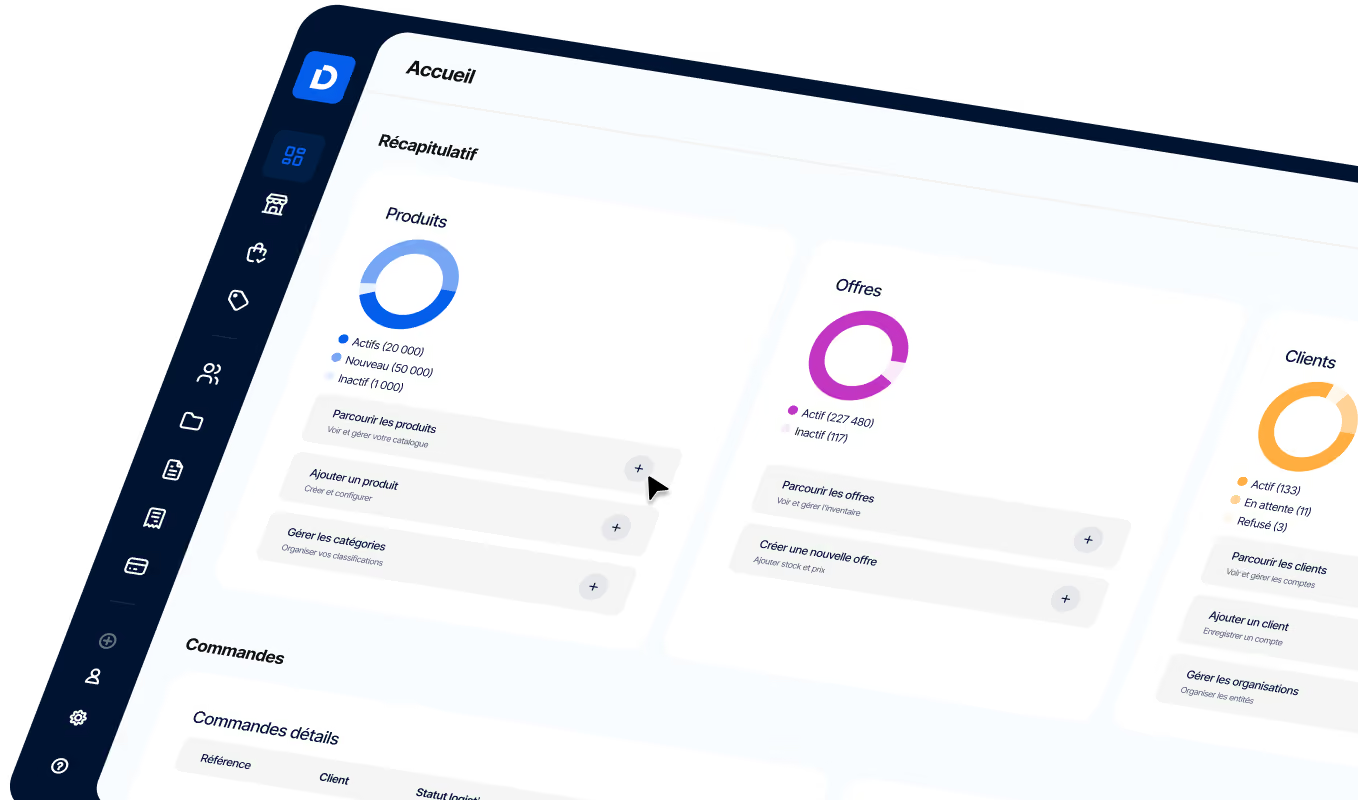
Product detail pages: key elements and examples
Discover the essentials of a product detail page (PDP) and how it can strengthen your e-commerce strategy with detailed product information.

Although B2B e-commerce stores offer many advantages, they don’t replicate the human interactions your customers are usually used to. Until now, they had to get product information and other details about a potential transaction from your sales team.
As a result, they may hesitate at first to place an online order on your B2B store. If this barrier isn’t addressed, it can lead to lost business opportunities.
One way to avoid that is to optimize your product detail pages. That way, your customers can access all the information about your products, just as they would during a sales meeting or a call.
Short on time? Here are the key takeaways
- A well-optimized B2B product page helps customers make informed decisions and build trust.
- Key elements of an effective PDP include high-quality product visuals, an overview, descriptions with colors, sizes, and other specifications, pricing, customer testimonials, and CTAs.
- PDP content should be easy to scan while still being relevant, informative, and transparent.
What is a product detail page (PDP)?
A PDP, or product detail page, is a web page that presents the description of the specific product a customer is viewing on an e-commerce site. It summarizes all the important details about a product to help the buyer make an informed decision. Some of the main elements an ideal product page should include are:
- Color
- Size and dimensions
- Ingredients or material
- Features and benefits
- Unique selling points (USPs)
- Delivery options
- Refund policies
- Stock information
- Customer testimonials
What’s the difference between a PLP and a PDP?

Why is the PDP important for e-commerce sites?
But aren’t a few product photos and a handful of key details enough? Not if you want to maximize the value of your B2B store.
It needs to be optimized with carefully designed product pages that attract high-value customers. Here are a few reasons why:
- A sufficiently detailed PDP includes all the information needed, including images and videos, colors, dimensions, and other technical specifications. This level of detail helps your B2B customers make informed purchasing decisions and improves satisfaction.
- A properly optimized product detail page shows your commitment to transparency and strengthens the credibility of your B2B e-commerce store. It reduces a prospect’s initial doubts and helps turn them from a visitor into a customer.
- PDPs let you highlight your product’s unique features and benefits and differentiate it from competing offers.
- Well-designed PDPs also improve organic search performance, making it easier for potential customers to discover your B2B e-commerce store through search engines.
- Providing accurate, detailed product information helps set the right expectations and reduces returns caused by mismatched expectations. That streamlines your operations and saves the customer the hassle of a return.
The key elements of an effective product detail page
The secret to creating the best product detail pages is combining the essential elements to give an accurate picture of the product. Here are the must-have components:
1. High-quality product visuals
Studies show that 75% of customers rely on product photos to make purchasing decisions. This behavior also applies in B2B, especially in fashion and food.
Your product detail page should feature high-resolution images that showcase the item’s best qualities. You can also add 360-degree views and a product video in use to give buyers a complete picture.
In short, high-quality product visuals reduce hesitation around online buying and drive conversions.
2. Product overview
A picture is worth a thousand words, but a clear product overview that spells out its benefits and USPs helps the customer understand why this item is the best fit for their business. The overview should stay concise — around 50 to 80 words — so customers can scan it quickly and get a basic understanding of the product. Optimize it with high-volume keywords and avoid jargon.
3. Detailed product description
The product description section goes deeper into the product’s specifications, features, and functionality, helping the customer make precise, strategic purchasing decisions.
You should anticipate and answer any questions customers may have about the product with informative content. The description should cover available colors and dimensions, materials, key features, benefits, warranty, and more.
4. Pricing and availability information
Your B2B product page should clearly display pricing. This reinforces your brand’s transparency and credibility. Make sure you keep the page updated to show current discounts, promotions, and special offers. The PDP should also indicate the product’s availability status, such as “In stock,” “Low stock,” or “Out of stock.”
Clearly state whether the price includes taxes or whether they’ll be added separately. We recommend letting customers enter their location so they can get an exact tax calculation.
Also add a brief explanation of the checkout process, the payment methods offered, and any additional steps.
5. Delivery options and return policies
The product detail page should include a dedicated section for delivery options, with information on fees and lead times. Spell out your return policies to reduce hesitation at the point of purchase.
Examples of the best product detail pages
Here are a few examples of some of the most successful B2B product detail page designs to inspire you:
1. DeSter
DeSter, a benchmark company in sustainable food packaging and serviceware, has perfectly optimized its PDPs on its e-commerce store.

For example, their dedicated reusable cup page starts with the most important information: the price. It then presents a relevant description that highlights the product’s benefits. Up-to-date stock information gives customers maximum transparency. Plus, the real-time visitor count creates a sense of urgency and encourages faster conversions.

The buyer can scroll down the page to get more information about the product and the brand.
So how did DeSter create such a well-designed product description page? With DJUST’s benchmark B2B e-commerce features.
2. Auchan Pro
Another company that created effective PDPs with our e-commerce solution is Auchan Pro.

For example, the page above for their Chips Paysannes includes all the information a customer needs to make an informed purchase decision. The page is well organized and easy to scan. From pricing to ingredients and country of origin, everything is listed, along with delivery information.
3. Cureball Plastics
Cureball Plastics’ product detail pages are especially well designed and provide plenty of information about the items.

For example, the B2B product page design above presents the description of Cureball’s general-purpose ABS plastic sheets. The most important information — the product price and sheet dimensions — appears first. Other details, such as applications, features, color, shape, grade, and more, are then organized in dropdown menus. Buyers can easily access the information they need and add the product to their cart.
4. BuildDirect

BuildDirect is another B2B e-commerce store with standout PDPs. For example, the B2B product page above offers several color options, lets the buyer view the product in 3D, and project it into their space using augmented reality.

The brand’s PDP also highlights the benefits of its Vinyl Plank coating by emphasizing its key features.
Best practices for optimizing a product detail page
Now that we know what a compelling product description page looks like, here are a few best practices for optimizing your product detail pages:
- Add 360-degree and room-view options to product images to give buyers a realistic sense of the product.
- Use high-impact words to highlight the product’s USP. For example, if you sell eco-friendly building materials, use terms like “sustainable” and “recyclable” in the product overview.
- Invest in a customizable B2B PIM to simplify PDP creation. Use an accordion or dropdown format so your busy B2B customers can quickly scan the information.
- Choose price list management software that lets you offer volume-based pricing on PDPs. This will help increase average order value.
- Add limited-time offers and the current number of page visitors to create urgency.
Common PDP mistakes to avoid
You may have done everything right when designing your e-commerce product detail pages, but one small mistake can derail your entire strategy. To maximize your chances of success, here are some common PDP pitfalls to avoid:
- Using low-resolution images can make your products look unappealing. Adding only one or two images is also a mistake, because it doesn’t give customers enough context to click “Add to cart.”
- Generic descriptions don’t showcase the product’s uniqueness, which reduces interest and trust. Use action-oriented wording that shows exactly what the item can do for the customer’s business.
- The absence of product ratings and customer testimonials can be seen as a red flag by your B2B customers.
- A cluttered page with too much information or poorly organized content can overwhelm users. Use an accordion or dropdown format to keep the PDP clear and easy to scan.
- Failing to include relevant keywords in product titles, descriptions, and metadata can prevent search engines from indexing your page properly.
- Unclear or missing exchange and return policies can create hesitation and lead to cart abandonment.
In conclusion
The key to conversion in an online store is making the buyer feel like they can see and touch the product as if it were right in front of them. A properly optimized B2B product detail page can help you do that with high-resolution images, accurate descriptions, and authentic customer testimonials.
Wondering how to design your own B2B e-commerce store? Look no further than DJUST. We offer a unified commerce platform with a composable accelerator that lets you:
- Set up a custom B2B customer portal tailored to your specific needs
- Easily integrate your existing back-end systems
- Use catalog management software to define dynamic pricing and product descriptions
- Connect your existing sales and marketing tools to streamline your processes
The result? You create an optimal e-commerce experience that earns your customers’ trust and loyalty.
FAQ
What Are the Key Metrics Used to Measure the Success of Product Detail Pages?
Some key metrics used to measure the success of product detail pages include:
- Page load time
- Page views
- Time on page
- Bounce rates
- Scroll depth
- Click-through rate
- Add-to-cart rate
- Conversion rate

What Tools Can I Use to Analyze My PDP Performance?
Here are some tools you can use to analyze the performance of your PDP:
- Google Analytics to monitor page views, bounce rates, average time on page, conversion rates, etc
- Crazy Egg for heatmaps, scroll maps, and user session recordings
- Semrush for keyword and SEO analysis and competitor analysis
- Ahrefs for SEO, site audits, and backlink analysis
How Often Should Product Pages Be Updated?
There’s no fixed rule for how often PDPs should be updated. The best practice is to update the product page whenever a specific product changes. Stock information should also be updated in real time.
-modified.avif)
.png)
.avif)

.jpg)